
Time to Market Used Cars: Edit Photos Before Reconditioning, Sell Days Sooner
October 28, 2026 · Dealer Guides
Most dealerships photograph cars only after reconditioning, adding days of invisible delay. This guide moves shooting to intake and editing into the prep window, so listings go live the day a car is ready.
Key takeaways
- Shoot at intake, not after reconditioning finishes
- Editing runs parallel while the workshop preps
- Photograph honestly what prep cannot change yet
- Days saved compound across every ageing listing
You cut time to market used cars by photographing each car on the day it arrives and using a car photo editing service for dealers that edits while reconditioning is still under way, instead of waiting until preparation is finished. The workshop work and the photo work run in parallel, so the listing is written, photographed, edited and ready to publish at the exact moment the car is ready to sell. Done honestly, the photo stage stops adding days of its own, and the car reaches the market days sooner without a single misleading image.
This guide is written for the people who own that delay: used car managers, dealer principals, group inventory managers, and the photographers and listing administrators who move a car from the transporter to the marketplace. It explains where the days between buying a car and advertising it actually go, what those days cost in terms you can calculate from your own books, how a parallel intake workflow removes the photo delay without cutting corners, what can honestly be photographed before reconditioning and what must wait, and the editing turnaround standard that makes the whole system hold together.
The serial workflow most dealerships still run
Most dealerships still prepare a car in a strict line. The car arrives and is booked in. It waits for appraisal sign-off, then waits for a workshop slot. Mechanical work happens, then any bodywork, then a valet. Only when the car is standing finished does anyone think about photographs, because the habit says photos show the finished car. A photographer is booked or a salesperson is handed a phone, the shoot waits for a dry day or a free hour, the raw photos sit in a folder, someone edits them or uploads them as they are, and finally the listing is built. Photography is the last trade to touch the car, so every delay upstream lands on it, and it adds a delay of its own at the very end of the line.
Look at that line honestly and the problem is obvious. Almost none of the photographic work actually depends on the reconditioning being finished. Framing, angles, background, light, colour, cropping and consistency are properties of the photograph, not of the workshop schedule. The industry simply inherited an order from the print era, when a car was photographed once, at the end, for a newspaper advert, and kept the order long after the reason for it disappeared. The result is a queue in which a finished, saleable car can sit invisible to buyers for days purely because its pictures are not ready.
What time to market used cars actually measures
Time to market used cars is the number of days between a car becoming your stock and that car being visible to a buyer with a complete listing. Not the day it is washed. Not the day the workshop signs it off. The day a shopper on a marketplace can see it, judge it and enquire about it. Every day before that day, the car is capital standing still: it has been bought, transported, insured and stored, and it has earned nothing.
The costs inside those days are your own numbers, and they are worth writing down once. There is the funding cost, whether that is floorplan interest or your own cash that cannot be used for the next car. There is insurance and storage. There is depreciation, because a used car is worth a little less each week it ages and each time its registration year or mileage band rolls closer to a threshold buyers filter on. And there is the opportunity cost of the pitch it occupies, physical and digital: while an unsold car waits unlisted, it cannot be replaced by a car that is selling. None of these figures needs an industry study. Take your own funding rate, your own average stock value and your own average days to list, and multiply. Most dealers who do that sum once never run a serial photo workflow again.
The quiet damage done by ageing, unlisted stock
A car that is ageing before it is even advertised suffers twice. The first hit is the holding cost described above. The second hit arrives later: when the car finally goes live, marketplaces and buyers judge it against fresher stock. Many dealer groups run an ageing policy that starts discounting a car after a set number of days in stock, and on most stock systems that clock starts at acquisition, not at the day the listing went live. Days spent waiting for photographs therefore consume part of the car's full-price life before a single buyer has seen it. The car reaches its first price drop sooner, having had fewer full-price selling days than it should have had.
There is also a simple market effect. Buyers search by newest listings, and marketplace sorting rewards fresh, complete adverts with strong photo sets. A car listed the day it is ready joins that fresh wave immediately. A car listed four days later joins it four days older, against competitors who bought similar stock later but listed it sooner. Speed to market is not vanity. It decides which of two identical cars a buyer sees first, and often which one they buy.
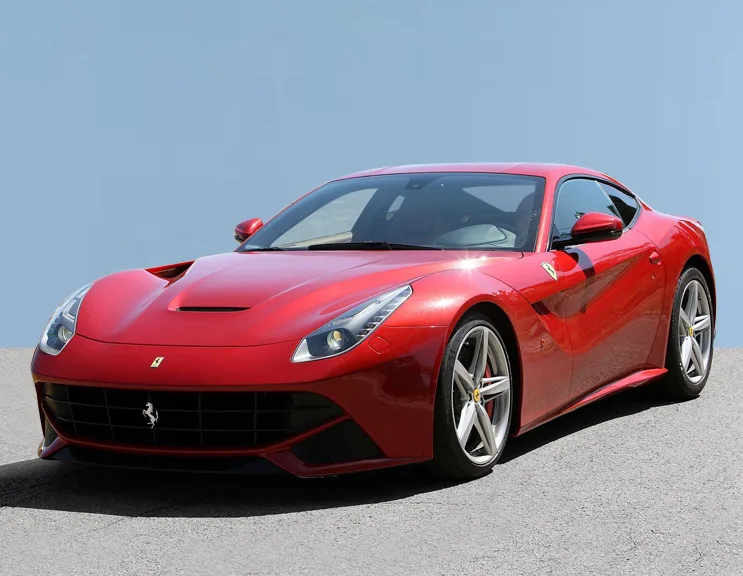
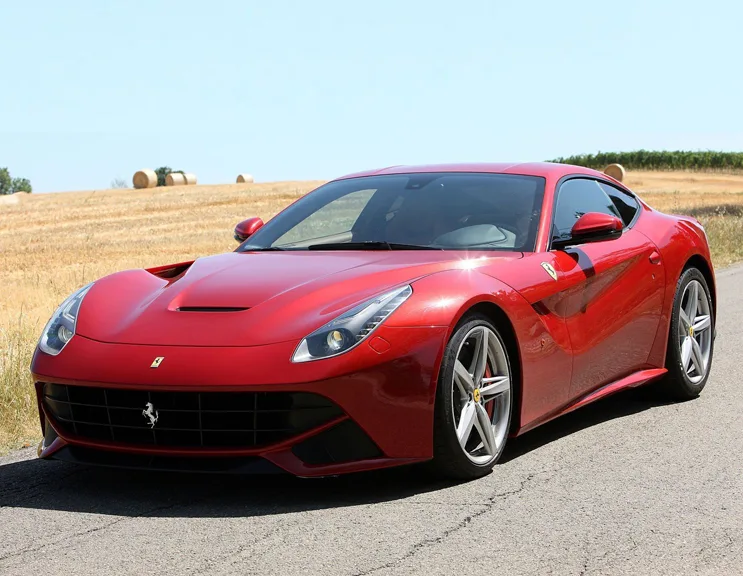
Intake photo to listing-ready same day: hover or drag to compare
 BEFORE
AFTER
Drag the slider or move your mouse over the image to compare.
The parallel workflow: shoot at intake, edit during prep
The alternative is to run photography and editing in parallel with reconditioning, and time to market used cars falls by exactly the length of the photo delay you remove. The workflow is simple to describe. On the day the car arrives, before it enters the workshop queue, it gets a short, disciplined photo session covering the full standard set: exterior angles, interior, dashboard, wheels, boot and detail shots. The raw files go to editing the same day, by upload or a shared Drive or Dropbox folder. While the workshop does its work over the following days, the editors do theirs: the set is cut out, cleaned, colour-balanced, placed on the dealership's standard background and sized for every marketplace. When reconditioning finishes, the listing is already built and waiting. The car is published the same day, often within the hour.
Nothing in that sequence requires the car to be finished when it is photographed. It requires the photography to be planned as an intake task instead of a finishing task, and it requires the decision to outsource car photo editing to a desk with a turnaround measured in hours rather than days. That is the whole change. The workshop does not speed up. The valeters do not speed up. The queue simply stops being a queue, because two of its stages now happen at the same time.
What can honestly be photographed before reconditioning
An intake shoot can honestly capture almost everything a listing needs, because most of what a buyer judges in a photograph is the car's identity and condition in ways preparation does not change. All exterior angles can be taken: front three-quarter, rear three-quarter, sides, front and rear, because the panel shapes, trim, glass and lights are what they are. Wheels and tyres can be photographed, including tread and any kerb marks you intend to show. The interior can be shot in full: seats, dash, steering wheel, infotainment, rear seats, boot, headlining. The dashboard can be photographed with the ignition on so the mileage and warning state are recorded as they were at intake. Engine bay, door shuts, service book and key count can all be documented on day one.
The editing that follows an intake shoot is equally honest. A professional car dealer photo editing workflow fixes the photograph, not the car: it removes the cluttered yard behind the vehicle, corrects the dull light of a grey intake morning, balances colour so the paint reads true, straightens and crops the frame, and presents every car in the same consistent style. Car background replacement puts the car on the dealership's clean standard scene whether it was photographed in the intake bay or the front line. Dirt on the lens, a windswept forecourt, a neighbouring car crowding the frame: these are faults of the photo, and removing them misleads nobody.
What must wait until preparation is done
Parallel working has a hard boundary, and respecting it is what keeps the system honest. Anything that reconditioning will physically change about the car cannot be shown as finished before it is finished. If a wheel is being refurbished, the intake photo of that wheel cannot be presented as the refurbished result. If a dent, scuff or bumper corner is being repaired, it must not be airbrushed away in editing and shown as repaired while the repair is still in the bodyshop. If the car will be sold with different wheels, a roof box removed, a private plate taken off or a tow bar fitted, the hero photographs must reflect the final specification, not the intake one.
A good car retouching service draws exactly this line for you: retouching cleans the presentation, it never performs the repair in pixels. Dust, water spots, reflections and light are presentation. Scratches, dents, kerb damage, worn bolsters and cracked trim are the car. The practical rule for the intake shoot is to photograph everything, flag the items on the reconditioning list, and hold back only the specific frames that show work still to be done. When the work is complete, those few frames are re-shot. Everything else, usually the large majority of the set, was already edited and waiting.
When preparation changes the car after the photos
The most common objection to intake photography is that the finished car will differ from the photographed car. It will, in small ways, and the workflow has to name those ways in advance rather than discover them at publish time. The usual changes are a small, predictable set. Wheels come back from refurbishment brighter, or a damaged wheel is replaced. The valet transforms the interior from transport condition to retail condition, which matters most for close-up shots of seats, mats and the boot. Plates change when a cherished number comes off. Occasionally a specification item changes: a spare wheel added, a parcel shelf sourced, a second key cut.
Handle this with a short re-shoot list attached to the car's file. At intake, the photographer marks which frames are final and which are provisional. When reconditioning signs the car off, whoever does the final check compares the car against the provisional list and re-shoots only those frames, typically three to six photographs taking a few minutes. Those frames go for a fast edit while the listing is assembled from the set that is already finished. The version discipline matters: one folder, one final set, provisional frames clearly renamed when replaced, so nobody publishes an intake interior by mistake. With that small discipline, the objection disappears, because the published listing always shows the car exactly as the buyer will find it.
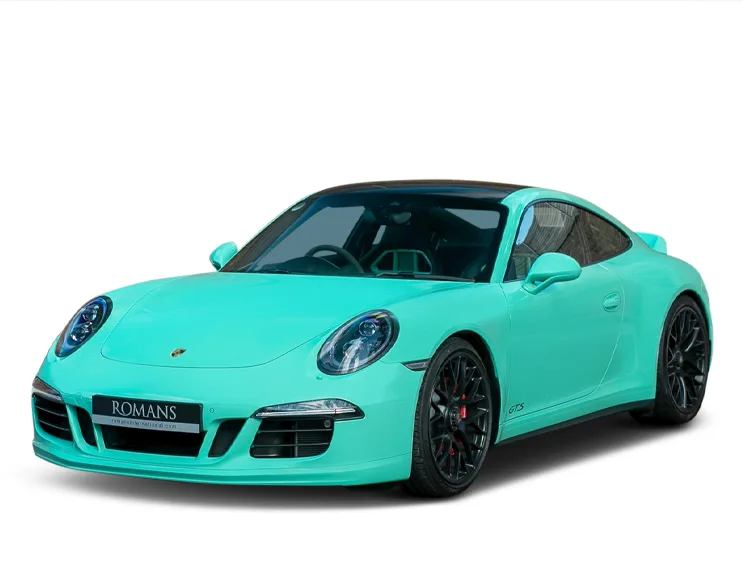
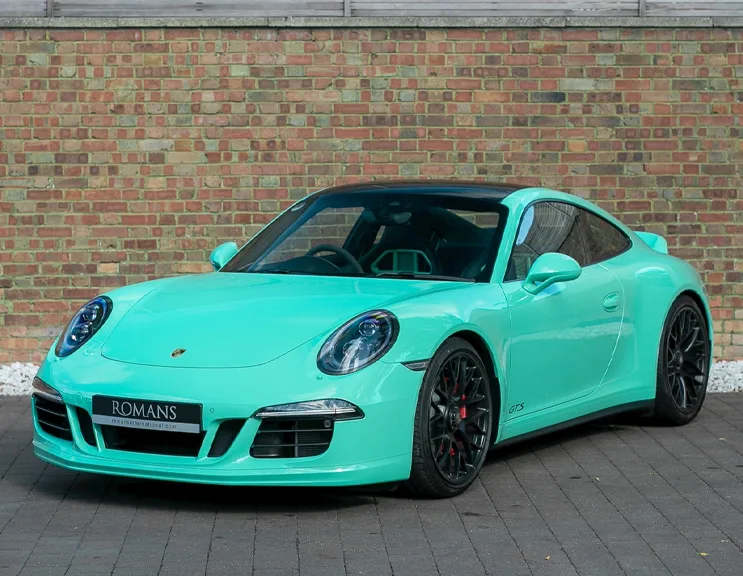
Dull arrival photo, polished for launch: hover or drag to compare
 BEFORE
AFTER
Drag the slider or move your mouse over the image to compare.
Who does what on intake day
A parallel workflow fails or succeeds on the handoffs, so give every step an owner. The appraiser or buyer flags incoming cars the day before arrival where possible, so intake day is expected rather than improvised. The photographer, staff or contracted, owns the intake shoot and works to a written shot list, the same list for every car, so no listing waits on a missing angle. The person who books reconditioning owns the flag list of work that affects photographs, because they are the only one who knows at intake what will change. The editing partner owns the edit queue and the style standard: same background, same crop, same colour treatment for every car, so sets shot weeks apart still look like one inventory. The listing administrator owns the publish moment and the final check against the re-shoot list.
Notice what nobody owns in this system: waiting. In the serial workflow, the photographer's diary, the weather and the workshop's overrun all silently own the schedule. In the parallel workflow the only hard dependency is the final check, and it takes minutes. Small dealerships run the same system with fewer people wearing more hats. The roles matter more than the headcount.
A day-by-day intake timeline
Day zero is arrival day. The car is booked in, given a quick wash so the shoot is presentable, and photographed to the standard list before it joins the workshop queue. The raw set is uploaded that day, with the reconditioning flags attached. Day one, the edited set comes back finished: backgrounds replaced, colour and light corrected, and every frame sized for the marketplaces, using car image resizing so each platform gets exactly the dimensions and file weight it handles best. The listing draft is built on day one, description written and photos loaded, even though the car is still in prep.
Days two to four are reconditioning days in this example, though your own average may be shorter or longer. The listing sits complete and unpublished, costing nothing. The moment the car passes its final check, the provisional frames on the re-shoot list are re-taken and sent for a fast turnaround edit, the listing is checked against the finished car, and it is published the same day. Compare that with the serial version of the same week, where the shoot is booked only after the final check, waits for a slot, is edited after that, and the car goes live close to a week after arrival. Same car, same workshop, same valeters. The only difference is when the photographs were taken.
The editing turnaround standard that makes it possible
Parallel working stands or falls on editing speed, because time to market used cars only improves if the edited set reliably returns before reconditioning finishes. The standard to demand is simple: routine batches back within 24 hours, every day, without chasing — 24 hour car photo editing as routine, not as a favour. That is achievable because dealer editing is a production discipline rather than an art project. Each car follows the same path: a precise cutout drawn with a car clipping path service, the standard background applied, a natural ground shadow built under the car, colour and light balanced against a reference, and the finished set exported at marketplace sizes. When the style is agreed once and saved as your profile, an editor never has to guess your look, and a set never waits on a decision.
Reliability matters more than raw speed. A car photo editing company that returns most sets overnight but loses one set a week will quietly rebuild your queue, because the lost set belongs to a car whose reconditioning has finished. Ask how work is checked, how a set is flagged if a photograph is unusable, and how re-shoot frames are prioritised when they arrive mid-batch. The answers tell you whether the parallel workflow will hold in a busy week or only in a quiet one. Consistency is the other half of the standard: a buyer browsing your inventory should not be able to tell which cars were shot at intake on a grey Tuesday and which were shot on a bright front line on Friday.
Running the numbers with your own figures
Do not adopt this workflow on anyone's promises, including ours. Adopt it on your own arithmetic. Take four numbers from your stock system. First, your average days from acquisition to listing today. Second, how many of those days are photography and listing preparation, which most dealers find by checking when cars were signed off against when they went live. Third, your average stock value. Fourth, your funding cost, your floorplan rate or the return that cash would earn elsewhere. Multiply the photo days by the daily funding cost of your average car, then by the number of cars you stock in a year. That is the direct annual cost of the serial photo queue, before counting earlier price drops on ageing stock, and it is the saving the parallel workflow puts on the table.
Then price the change honestly against it. Intake photography uses the photographer you already have, at a different hour of the car's life. Editing is a per-image cost: our full dealer edit is $0.59 per image, background replacement $0.69, clipping path $0.49, retouching $0.50 and resizing $0.19, with 5 percent off at 100 images and 10 percent off at 500. Set the annual editing bill for your volume against the annual holding cost of the days removed. For most stocking dealers the comparison is not close, and where it is close, the earlier full-price selling days usually settle it. Either way, you will know, and knowing beats believing.
How Cars Photo Editor fits into the parallel workflow
We built our service around this kind of production schedule. Cars Photo Editor is a hand-editing service, founded in 2016, working for dealers and automotive photographers across the USA, the UK and Europe. No AI tools edit your photographs here: an editor draws the path, replaces the background, builds the shadow and balances the colour by hand, then checks the finished set against your originals before it is returned. Standard turnaround is within 24 hours for typical dealer batches, which is the rhythm a parallel intake workflow needs, and your style is saved as a profile so every car arrives back looking like your inventory, whether it was shot at intake or on the front line.
The right way to judge us is with your own cars and your own clock. Send 5 to 10 photographs from a real intake, including the awkward ones, as a car photo editing free trial. Time the return. Check the edges, the shadows and the colour against the vehicle standing on your lot. Then run one car through the full parallel sequence and count its days to market against the car next to it that went through the old queue. If the numbers argue for the change, keep it. If they do not, you have lost nothing but a few days of sharper evidence.
Put your next car online days sooner, free
Send us 5 to 10 of your own listing photos (files or a Drive or Dropbox link) and we will edit them free, by hand, so you can judge the quality on your own inventory before you spend anything.
Start Your Free TrialSpeed to market: common questions
How many days should it take to get a used car ready and listed for sale?
Reconditioning itself varies with the car and the workshop, but the listing work should add no days of its own. If a car is photographed at intake and edited during preparation, it can be published the same day reconditioning finishes, instead of several days later.
Can you photograph a car before it has been cleaned and repaired?
Yes, with one rule: photograph everything, but flag anything preparation will change, such as a wheel being refurbished or a dent being repaired. Those specific frames are re-shot after the work is done, and editing must never be used to fake a repair that has not happened.
How long does it take to edit car photos for a dealer listing?
Car photo editing with 24 hour turnaround is the working standard: a typical dealer batch is returned within 24 hours. A full set follows a fixed production path of clipping path, background replacement, shadow building, colour and light correction, and resizing to each marketplace's sizes.
How much does car photo editing cost per image?
At Cars Photo Editor, a full dealer edit is $0.59 per image, background replacement $0.69, clipping path $0.49, retouching $0.50 and resizing $0.19, with 5 percent off orders of 100 or more images and 10 percent off at 500. The first 5 to 10 trial images are free.