
Dealer Brand Consistency Photos: One Look, Every Lot for Dealer Groups
October 28, 2026 · Dealer Guides
When every rooftop in a group shoots and edits differently, buyers see the inconsistency before they see the cars. This guide sets one standard for backgrounds, framing, color and branding that any lot can follow.

Key takeaways
- A written standard survives staff turnover and acquisitions
- Backgrounds, framing and color must match everywhere
- Shadows give away inconsistent editing fastest
- Central editing keeps every rooftop on brand
Dealer brand consistency photos are what a dealer group ends up with when every rooftop publishes cars that look like they came from one business: the same background family, the same framing and color targets, the same branding and plate treatment on every listing, whichever site took the picture. The way to get there is not a better camera at each location. It is one short written photo standard, applied the same way to every car, whether the editing sits in-house or with a car photo editing service for dealers, checked on a schedule, and held in one place so it survives staff changes, new rooftops, and busy months.
This guide is written for the people who carry this problem at group level: dealer principals, group marketing managers, used car directors, and the inventory photographers who get blamed for an inconsistency that was never really theirs. It explains why groups drift apart visually even when everyone is trying hard, what a workable group photo standard actually contains, how to govern it so it outlives the person who wrote it, and how to bring a newly acquired rooftop into the fold without reshooting a single car. It is practical on purpose, because consistency is not a design opinion. It is an operating discipline.
Why dealer brand consistency photos are a group problem, not a site problem
A single dealership can achieve a consistent look almost by accident. One photographer, one forecourt, one set of habits, and the listings settle into a family resemblance even if nobody ever wrote anything down. A group has no such luck. Each rooftop develops its own habits because each rooftop solves its own problems. One site has a bright south-facing lot and shoots at midday. Another has a shaded corner and a photographer who prefers mornings. A third site is short-staffed, so whoever is free takes the photos on a phone between other jobs. None of these people are careless. They are each doing reasonable work under local conditions, and the sum of their reasonable work is a group that looks like five unrelated businesses sharing a logo.
The drift is made worse by the way groups grow. Acquisitions arrive with their own photographer, their own backdrop wall, their own idea of what a listing photo should be. Staff move between sites and carry habits with them. A talented photographer leaves and their replacement, given no written standard, invents one. Meanwhile the group's marketing department spends real money on brand: signage, websites, sponsorships, television. Then a buyer opens a search results page and sees the group's own cars presented in five different visual languages. The most frequently seen expression of the brand, the listing photos, is the one expression nobody standardized. That is why this is a group-level problem with a group-level fix, and why asking each site to try harder has never worked.
What the buyer sees: the trust leak in your own search results
Buyers do not experience your group the way your org chart is drawn. They experience it as a grid of thumbnails. When a shopper searches for a particular model in a region where your group has three rooftops, your own listings appear side by side, effectively competing against each other. If one car's photos are bright, level, and set against a clean branded background while the next car from your sister store is dark, tilted, and photographed against a fence and a skip, the buyer does not think "same group, different photographer." The buyer thinks one of these businesses is more professional than the other, and clicks accordingly. Your group is leaking trust from one of its own stores to another, and in the worst cases to a competitor whose single-site consistency looks, from the thumbnail grid, like a bigger and more serious operation than your group.
There is a second, quieter cost. Groups negotiate manufacturer relationships, build group websites, and run group campaigns on the promise of one brand with several doors. Every inconsistent listing quietly argues against that promise. Consistency in photos is the cheapest brand discipline a group can buy, because the photos already exist and are already being taken every day. The only thing missing is a standard for what happens to them.
The anatomy of a group photo standard
Dealer brand consistency photos are built from five decisions, made once at group level and then applied without debate to every car. A workable standard fits on one page, and each of the five decisions is simple to state and easy to check.
The first decision is the background family. Every exterior photo sits in one of a small set of approved scenes: for most groups, a clean studio-style treatment, a branded showroom or forecourt scene carrying the group's identity, or a deliberately neutral outdoor setting. The practical route for groups whose sites look nothing alike is car background replacement, where each car is cut out by hand and placed into the group's chosen scene, so the physical differences between rooftops stop mattering. One family, with at most a variant or two for special stock, is the rule. Five scenes is not a family; it is the drift starting again.
The second decision is framing and shot order. The standard fixes the hero angle, the crop margins around the car, the horizon height, and the order of the gallery: front three-quarter, rear three-quarter, side profile, interior circuit, detail shots. When every car in the group is framed the same way, buyers learn to read your listings quickly, and a missing shot becomes obvious to whoever is checking.
The third decision is color targets. White cars should be white, not cream or blue. Paint colors should match the car in the showroom. The standard names the target in plain language, editors correct exposure and color against it, and nobody applies personal filters. Color is where individual taste does the most damage, so the standard removes taste from the question.
The fourth decision is branding overlays. Most groups want their identity on the image itself: a logo lockup, a border or corner treatment, sometimes a location line. This is where car dealer branding templates earn their keep, because a fixed, approved template applied identically to every photo ends the era of each site exporting its own version of the logo at a different size in a different corner. The standard states which template is used, where it sits, and which photos, if any, are exempt.
The fifth decision is plate treatment. It varies by market and by law: some groups blur plates, some replace them with a branded plate graphic, some leave them visible where that is normal practice. What matters for consistency is that the group picks one treatment and applies it everywhere, so a buyer moving between two of your rooftops never wonders why one store hides plates and the other does not.
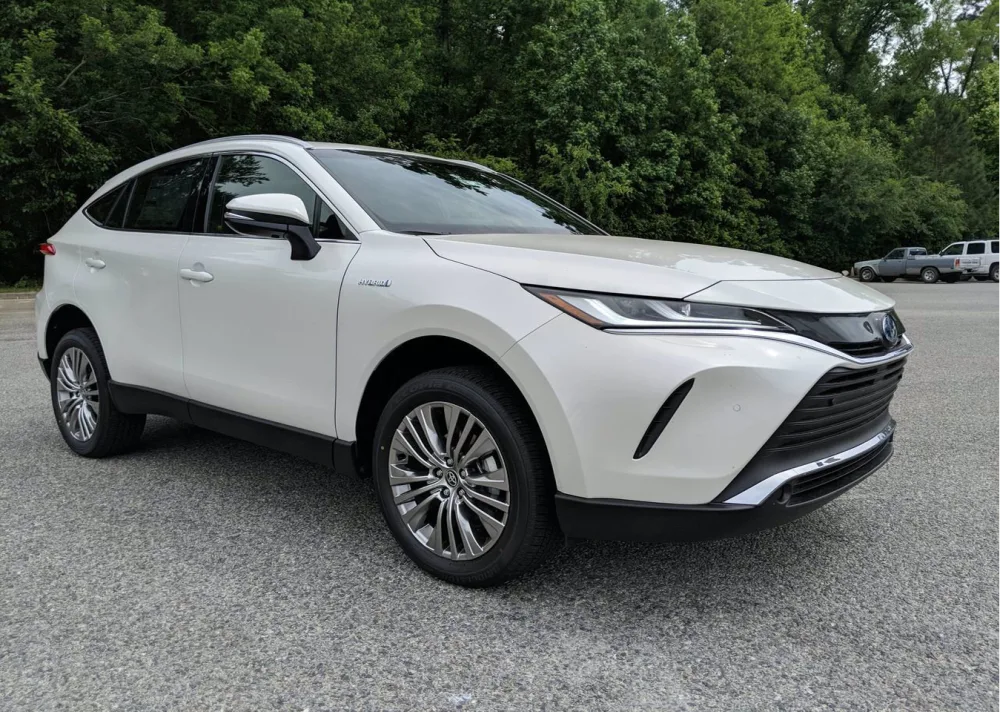
Same studio background on every rooftop: hover or drag to compare

 BEFORE
AFTER
Drag the slider or move your mouse over the image to compare.
The detail that gives it away: shadows and ground contact
Ask an experienced editor what separates a convincing standardized photo from an obvious composite and they will rarely mention the background. They will mention the ground. A car placed into a group scene needs a shadow that matches the scene's light: a soft contact shadow under the tires and a shaped shadow under the body, falling in the same direction as every other car in the set. When shadows are missing, too hard, or pointing different ways across a group's listings, buyers feel that something is off before they can name it, and the whole standard loses credibility. This is why a proper car shadow service belongs inside a group standard rather than being treated as an optional extra: the shadow is the signature of the scene, and it has to be drawn the same way, car after car, rooftop after rooftop. Groups auditing their own consistency should zoom into the ground line first. It is the fastest honest test of whether a standard is actually being applied or merely agreed with.
Governance that survives staff turnover
Standards do not fail because they are wrong. They fail because they live in one person's head, and that person goes on holiday, changes jobs, or simply gets busy in the last week of the month. Group governance for photos needs four unglamorous things. First, the one-page standard itself, written down, with pictures: approved examples of each shot type, the background family, the template, the plate rule. If it cannot fit on one page with examples, it is a wish, not a standard. Second, a reference set: a small library of finished listings that show the standard met, which any new photographer or editor can copy shot for shot. Third, saved style profiles with whoever does the editing, so the standard is stored as settings and templates rather than as memory. When a group works with a photo editing partner, the partner holds the profile centrally and every batch is edited against it, whichever rooftop sent the photos. Fourth, approval rights: one named person at group level owns the standard and approves any change to it, and one named person per site can reject a batch that misses it. Changes happen through that owner, in writing, so the standard evolves deliberately instead of drifting accidentally. With those four pieces in place, a photographer leaving is an inconvenience. Without them, it is a reset to zero.
Central editing versus local editing: the honest comparison
Once a group accepts that editing is where consistency is won, it faces a structural choice. Local editing, where each site processes its own photos, keeps control close to the cars and can be fast for tiny volumes. Its weakness is built in: five editors, or five photographers editing between other duties, will produce five interpretations of any standard, and the busiest site will quietly stop editing at all during peak weeks. Central editing, where all rooftops send photos to one desk, produces one interpretation by construction. That desk might be an in-house group studio or an external partner providing car dealer photo editing against the group's saved style profile — in effect white label photo editing, since nothing in the finished listing ever names the desk behind it. Its costs are real: photos travel, so the process needs a simple sending routine, usually a shared folder or link per site, and turnaround has to be agreed and measured rather than assumed. The hybrid most groups land on is central editing with local photography: sites focus on shooting the standard shot list well, one desk handles background, color, shadow, branding and plate treatment for everyone, and group marketing audits the output. It is the structure that makes consistency the default outcome instead of a monthly rescue project, and for most groups it is cheaper than the hidden cost of five partial editing efforts.
Onboarding a newly acquired rooftop
Acquisitions are where group standards usually go to die politely: nobody wants to walk into a new business and criticize the photos on day one, so the new rooftop keeps its old look for a year. It does not have to work that way, because the beauty of an editing-led standard is that the new site does not need new equipment, a new backdrop wall, or a reshoot of its standing inventory. The working sequence is short. In the first week, audit what the site already does: shot list, framing, backgrounds, branding, plates. Keep anything that already matches the group standard and say so; there is always something. From the second week, the site's new photos simply flow to the central desk and come back in group dress: same background family, same template, same plate treatment. Standing inventory can be converted in batches — bulk car photo editing work, hero photos first — as cars are re-priced or re-prepared anyway. The site's photographer gets the one-page standard and the reference set, and the first month's batches get a friendly review against them. Within one stocking cycle the acquisition looks like it has always been part of the group, and nobody had to have an awkward conversation about taste, because the standard, not a person, did the asking.
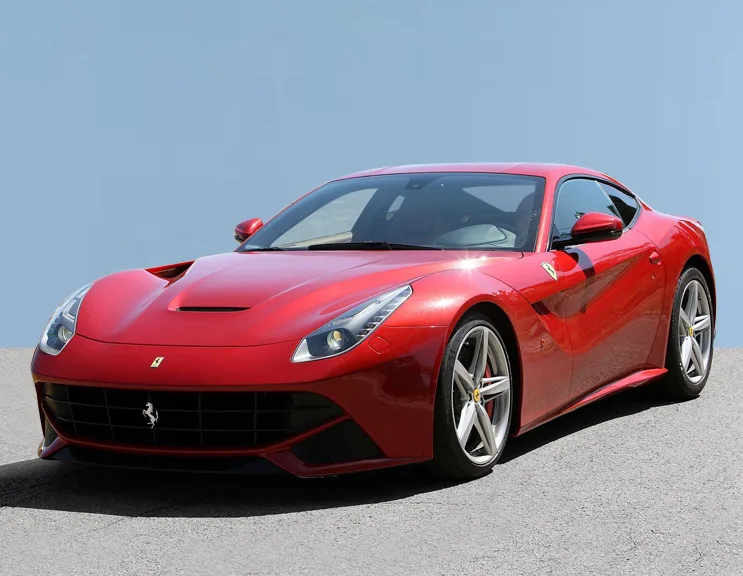
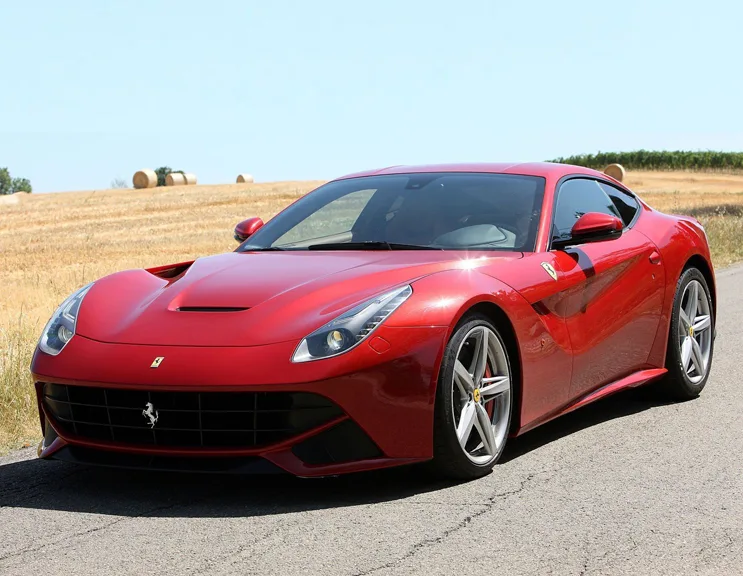
Whole set edited to one standard: hover or drag to compare
 BEFORE
AFTER
Drag the slider or move your mouse over the image to compare.
Auditing dealer brand consistency photos without blame
A standard that is never measured becomes a poster. The audit that works is boring, regular, and aimed at the process rather than at people. Once a month, take a random sample of live listings from every rooftop: ten cars per site is plenty. Score each set against the five decisions: right background family, right framing and shot order, color on target, correct template, correct plate treatment, shadow consistent at the ground line. Publish the results to the sites as a simple group table. The point of the table is not to shame the lowest rooftop; it is to find where the process breaks. If one site's color is always off, the cause is usually its shooting conditions, and the fix might be a shaded shooting spot or a different time of day, not a lecture. If template use is patchy everywhere, the template is probably too hard to apply and needs to live with the editing desk instead of the sites. Groups that audit this way find that scores climb and stay climbed, because the audit keeps the standard present in everyone's month without turning it into a disciplinary matter. Consistency maintained by inspection is fragile; consistency maintained by a working process, lightly audited, is just how the group looks.
Before and after: a group relaunch described honestly
Since this article cannot show you a particular group's photographs, here is the honest word picture of what a relaunch involves and what it does not. Before: a buyer searching the group's region meets five visual identities. One rooftop shoots against a smart backdrop wall. One uses a turntable room with a grey sweep. Two shoot on the lot, one of them well, one of them in whatever weather the day provided. The acquired site still carries its previous owner's branding on its photo borders. Logos appear in three sizes. Plates are blurred at two stores, branded at one, visible at the rest. After one stocking cycle under a standard: every hero photo in the group sits in the same scene family, framed at the same angle with the same margins, under the same template, with the same plate treatment and shadows that fall the same way. A buyer scrolling the group's listings can recognize a group car before reading the location line. That is the whole transformation, and its honesty matters: the relaunch did not make any individual car better, did not fix slow reconditioning or keen pricing, and did not photograph a single car again. It removed the visual noise between the buyer and the stock, which is the only thing photo consistency has ever promised.
The other half of one look: promotional graphics
Listings are where buyers meet the group most often, but they are not the only place the group's face appears. Seasonal campaigns, price-drop weekends, new rooftop openings and recruitment adverts all produce graphics, and they drift in exactly the same way listing photos do when each site makes its own. The standard should therefore cover them: one set of approved layouts for campaign work, built once at group level, so a spring event looks like the same event at every rooftop. This is the role of car banner design: fixed, on-brand banner and promotional templates that sites can have populated with their own cars, prices and dates without redesigning the layout each time. When the banners on your social pages and the photos in your listings share one visual language, the group stops looking like a federation and starts looking like a brand.
How Cars Photo Editor works with dealer groups
We are a hand-editing service, and the group work described in this article is our daily bread: no AI tool edits your photos here, and none ever has. A group engagement starts by building your style profile with you: your background family, framing rules, color targets, branding template, and plate treatment, saved as the reference every batch is edited against. Each rooftop then sends photos the simple way, as files or as Drive or Dropbox links, and receives them back in group dress, with background replacement, shadow work, color and branding applied to the profile rather than to an editor's mood. Pricing is per image and published: full dealer editing is $0.59 per image, background replacement $0.69, shadow work $0.29, with branding templates and banner design quoted as custom work, and volume discounts of 5 percent at 100 images and 10 percent at 500 across a group's combined volume. Standard turnaround is within 24 hours for typical batches, and we have worked this way since 2016 for dealers and automotive photographers across the USA, the UK, and Europe. The sensible first step is the car photo editing free trial: send 5 to 10 photos from two different rooftops, the more different the better, and judge whether what comes back looks like one business. That comparison, on your own cars, tells you more than this article can.
Give every rooftop the same look, free to test
Send us 5 to 10 of your own listing photos (files or a Drive or Dropbox link) and we will edit them free, by hand, so you can judge the quality on your own inventory before you spend anything.
Start Your Free TrialDealer group photo consistency: common questions
How do dealer groups keep their car photos consistent across different locations?
With a written one-page photo standard covering the background, framing, color, branding and plate treatment, applied by one central editing desk against a saved style profile, and checked with a small monthly audit of live listings from every site.
What should a dealer group photo standard include?
Five decisions: the approved background family, the framing and shot order for every car, color targets, the branding template and where it sits, and one plate treatment for the whole group. It should fit on one page with example photos.
Is it better for a dealer group to edit photos centrally or at each dealership?
Centrally, in most cases. Local editing produces one interpretation of the standard per site and collapses at busy times, while a central desk applies one interpretation to every rooftop. A common hybrid is local photography with central editing, whether the desk is your own or an outside car photo editing company.
How long does it take to make a dealer group's photos look consistent?
New photos can follow the standard from the first batch once the style profile is built, and standing inventory is usually converted within one stocking cycle, hero photos first. A newly acquired rooftop needs no reshoot: its existing photos are re-edited into the group look.