What Does Car Photo Editing Cost in 2026? A Dealer's Pricing Guide
October 28, 2026 · Dealer Guides
What car photo editing really costs in 2026: live per-image rates from 29 providers, the hidden costs of subscriptions and in-house editing, volume discounts, and worked monthly examples at real dealer volumes.
Key takeaways
- Hand editing runs nineteen cents to sixty-nine per image
- Subscriptions move the checking work onto your own staff
- Cost in-house editing with a stopwatch and wage bill
- Compare monthly totals at your real volume, not stickers
For most dealers in 2026, car photo editing cost runs from $0.19 to $0.69 per image when the work is done by hand: $0.19 for resizing, around $0.50 for retouching, $0.59 for a full dealer edit, and $0.69 for background replacement at our published rates, with volume discounts of 5 percent at 100 images and 10 percent at 500 bringing the real figure lower. Software subscriptions look cheaper per photo but hand the checking work back to your staff, and in-house editing looks free until you cost the staff time honestly. This guide puts all three models on one page so you can compare them with your own numbers.
This guide is written for dealer principals, used car managers, and dealer groups comparing a car photo editing service for dealers against the alternatives. Every market figure in it comes from a review of 29 providers' published price lists carried out in October 2026, and every one of our own figures is a live published price you can check on our services pages today. Where the market gives a range rather than a number, we print the range. Where a cost depends on your dealership, we show you the arithmetic instead of inventing an average.
The three pricing models in this market
Almost every quote you will receive this year is one of three models wearing different clothes, and most pricing confusion comes from comparing one model against another as if they were the same product.
The first model is per-image hand editing. A person does the work, you pay for each finished image, and the price is the whole price: no subscription, no seats, no software to learn. This is the model most established editing services use, and it is the model behind every per-image figure quoted in this guide.
The second model is the software subscription. An automated tool charges per user, per month, or per batch of photos, and the per-photo figure looks tiny. What the subscription buys is processing, not finished work: your staff still upload, review every output, catch the failures, and redo or quietly accept the ones that look wrong. The invoice is small. The labour line moves to your payroll instead of disappearing.
The third model is in-house editing: a valeter, a salesperson, or a dedicated photographer opens the photos and edits them between other jobs. It is usually recorded as costing nothing, because no invoice arrives. It is not nothing, and a later section costs it honestly, using your own wage figures rather than ours.
What each service line actually costs per image
Car photo editing cost is a basket of different jobs at different prices, so a single "cost per photo" quote from any provider should make you ask which jobs it includes. Here is the basket, line by line, with our live prices and the market ranges from the October 2026 review beside them.
A full car dealer photo editing pass, the complete treatment most front-line stock receives, is $0.59 per image on our price list. Car background replacement, the single most requested job in dealer photography, is $0.69 per image, because it contains the cutout, the scene placement, the rebuilt shadow, and the light matching all in one. A car retouching service pass, cleaning and refining the car itself, is $0.50 per image. A standalone car clipping path service, the precise hand-drawn outline on its own, is $0.49 per image. Color correction and lighting correction are $0.39 each, a transparent background is $0.49, a natural shadow is $0.29, and a reflection shadow is $0.39. Car image resizing and cropping to marketplace specification is $0.19 per image, the cheapest line on the list.
The market ranges tell you where those figures sit. In the published list prices we reviewed in October 2026, manual resizing and cropping topped out at $0.20 to $0.30 per image, and several large providers bundle it free with other work, which is why any quote charging editing-level money for resizing deserves a hard question. Simple shadow work from offshore providers ranged from $0.15 to $0.30 per image, while reflection shadow work, the more skilled version, ranged from $0.49 to $0.69. Entry prices across direct competitors started as low as $0.19 per image for the simplest jobs. The pattern to notice is that the market prices the judgment-heavy work, the cutout, the shadow, the color truth, in a fairly tight band, and prices the mechanical work, resizing above all, near the floor. A provider whose prices invert that pattern is telling you something about where their costs, and probably their shortcuts, sit.
Two parts of the basket sit outside the per-image pattern and are worth naming so they do not ambush a budget later. Spare parts photography is priced like the vehicle work it resembles: on our list, parts editing is $0.59 per image, parts background removal is $0.49, and parts retouching with color correction is $0.59, because a parts buyer judges condition from a photo exactly as a car buyer does. Dealer branding work, templates, logos, and promotional banner graphics, is quoted as a project rather than per image at most providers, including us, because the work is design, done once and reused, rather than editing repeated per photo. If a quote bundles a branding project into a per-image rate, ask what you actually receive for it, because design amortized across a year of listings costs very little per car when it is priced as what it is.
Why two quotes for the same photo can differ fivefold
Dealers regularly collect two quotes for identical work and find one is a fifth of the other. That gap is rarely a mystery once you know what sits inside a per-image price, and it is almost never pure profit at the top or pure efficiency at the bottom.
The largest component is the cutout method. A hand-drawn clipping path, placed point by point around mirrors, spokes, rails, and glass, takes a trained editor real minutes per vehicle. An automated cutout takes seconds. On a clean car against a plain background the results can look similar in a thumbnail. On a dark car at dusk, a car with a roof box, or glass that shows the original background through it, the automated version frays, halos, or guesses, and someone has to fix it or ship it. The cheap quote has usually decided, in advance, to ship it.
The second component is the check. A service that compares every finished photo against the original, verifying color truth, edges, shadow direction, and that nothing about the car itself has been altered, is paying for a second pair of eyes on every image. A service that exports whatever the process produced is not. The check is invisible in the quote and very visible on your vehicle detail pages.
The third component is what the price includes. Some lists charge the clipping path again on top of every service that needs one, so a background replacement quietly becomes two charges. Some charge extra for the shadow, extra for resizing to each marketplace, extra for rush. Others publish one total price per image with the path included where the work needs it. Before comparing any two totals, list what each one actually contains, line by line, or you are comparing a price against a down payment.
The full dealer edit at $0.59: hover or drag to compare
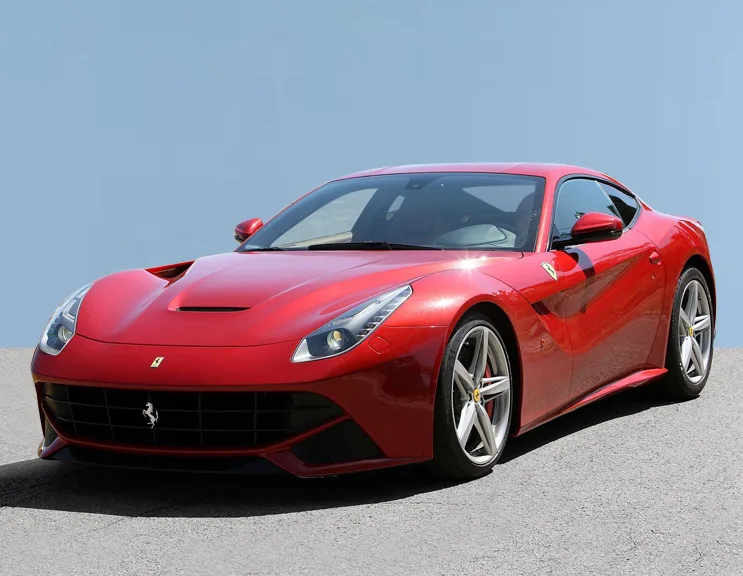
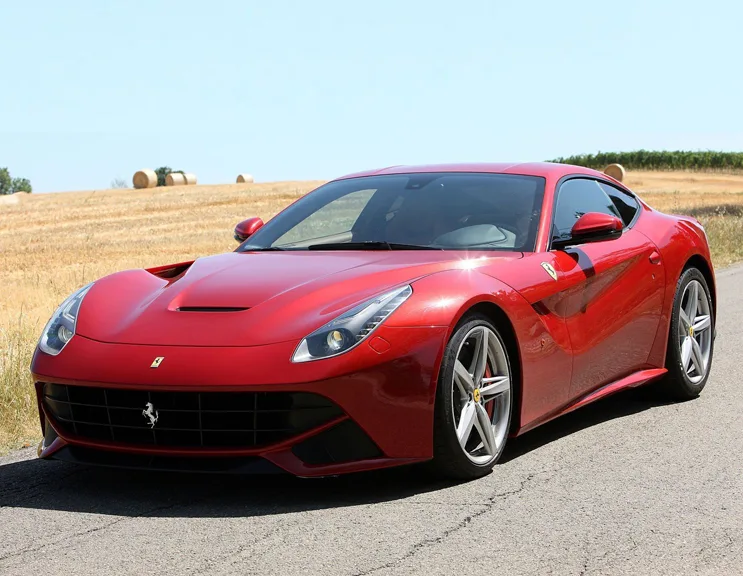 BEFORE
AFTER
Drag the slider or move your mouse over the image to compare.
The hidden costs on every side
Each model carries costs that never appear on its own invoice, and an honest comparison counts all of them.
With software subscriptions, the hidden cost is review labour. Automated output fails on a minority of real inventory photos, and the failures are not flagged; they are simply published unless a person looks. So a person has to look, at every photo, which means the subscription has not removed the human from the process; it has moved the human to your payroll and given them the worst job in it, inspecting machine work at volume. Add the re-dos, the occasional reshoot when an original problem was processed instead of noticed, and the listings that underperform while looking almost right, and the small subscription is carrying a larger shadow price.
With the cheapest per-image services, the hidden cost is rework and risk. Photos that arrive with halo edges, wrong colors, or a shadow pointing against the scene light go back for correction, and correction rounds cost your team time and your listings days. Worse is the photo nobody sends back: the one that slightly misrepresents the car. A color pushed too far, a mark processed away, a trim detail softened into ambiguity. That photo's cost is paid at the viewing, in front of the buyer, where it is most expensive.
With in-house editing, the hidden costs are delay and inconsistency. The person editing is usually borrowed from another job, so photos queue behind valeting, handovers, and customers, and time-to-market stretches. And because the work is fitted around everything else, the standard drifts with whoever is on shift, which is how one inventory ends up looking like three different dealerships.
In-house editing, costed honestly
The fairest way to price in-house editing is with your own stopwatch and your own wage bill, and the arithmetic is simple enough to do on the back of a stock list.
Time one full set, honestly, from opening the files to uploading the finished gallery: the cutout or background work, the color correction, the resizing for each marketplace, the checking. Multiply the minutes per car by the number of cars you list each month. Then cost those hours at the loaded rate of whoever does the work, wage plus the employer costs on top, and add the value of what that person is not doing while they edit: cars not valeted, handovers not covered, photos not taken. Most dealers who run this calculation carefully are surprised in one direction only. The per-image price they were comparing against an editing service turns out to be smaller than the staff-time cost of a single photo's editing, before any question of skill or consistency is raised. That is why the decision to outsource car photo editing is usually made by the dealers who have costed the alternative most carefully, not by the ones who have not. If your number comes out the other way, because you already employ a photographer-editor with idle hours in the week, in-house may genuinely be your cheapest model, and this guide has still done its job: you now know it from arithmetic rather than assumption.
How volume discounts actually work
Car photo editing cost falls as volume rises, and understanding the shape of that fall helps you spot a discount structure designed to look generous rather than be generous. Editing has real economies of scale: a provider who knows your background standard, your plate treatment, and your marketplace mix stops re-learning them on every batch, and large batches schedule more efficiently than drips of five. Honest discounts pass some of that saving on.
Our structure is deliberately simple: 5 percent off at 100 images and 10 percent off at 500 images, applied automatically, on the published per-image prices. The market norm, from the published list prices we reviewed in October 2026, ran a little richer at the top end, around 10 to 15 percent at 100 images and 15 to 25 percent at 500, though the richest headline discounts usually hang on the highest list prices, so the discounted figure, not the percentage, is what to compare. This is also where bulk car photo editing changes the decision entirely: a dealer sending a few hundred images a month is not buying a slightly cheaper photo, they are buying at a different rate card, and should negotiate and compare on monthly totals rather than per-image stickers.
Two cautions. First, check whether the discount applies per order or per month; a per-order threshold quietly punishes dealers who send steady daily batches instead of one monthly lump. Second, check whether combining services on one image stacks charges; on a well-built price list the clipping path inside combined work is counted once, never twice, because it is one operation serving the whole image.
A worked monthly example, at real dealer volumes
Monthly car photo editing cost becomes concrete the moment you attach it to a real stock list, so here are two, worked entirely at the live prices printed above.
Take a mid-sized dealer listing steadily through the month and sending 500 images for the full dealer edit. At $0.59 per image the list total is $295. At 500 images the 10 percent volume discount applies, so the invoice is $265.50 for the month, for every front-line photo cut out, color-corrected, finished, and checked by a person. If the same dealer also sends those 500 images for resizing and cropping to a second marketplace specification, that is $95 at list, $85.50 after the same discount. The entire editing bill for the month is smaller than the margin movement on a single car priced to sell a week sooner.
Take a smaller operation: 120 background replacements a month, heroes and full sets for fresh stock. At $0.69 per image the list total is $82.80; past the 100-image threshold the 5 percent discount brings it to $78.66. For context inside your own business, that monthly figure is roughly the cost of keeping one extra car in stock for a few extra days once funding, insurance, and depreciation are counted, which is the expense badly presented listings quietly run up. Neither example includes a subscription seat, a software learning curve, or a staff hour, because there are none to include: the per-image price is the whole cost of the model.
To run the same comparison on your own dealership, you need four numbers, all of which you already have. Your image volume last month, from your marketplace feed or your photographer's folders. Your candidate's discounted per-image total at that volume, from their published list rather than a sales call. Your subscription quote, plus an honest estimate of the staff minutes your team will spend reviewing its output each week, costed at their wage. And your in-house figure, from the stopwatch method in the section above. Put the four monthly totals in a row and the decision usually makes itself; where it does not, the difference is small enough that quality and turnaround should decide it, which is what the trial is for.
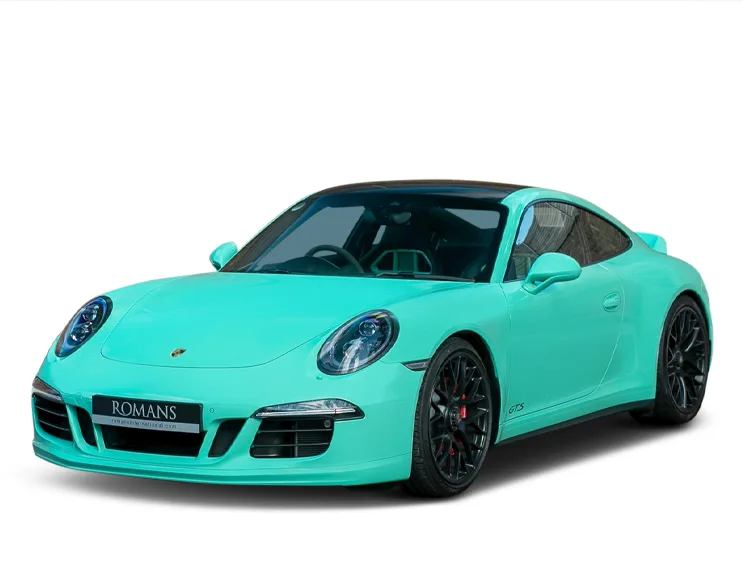
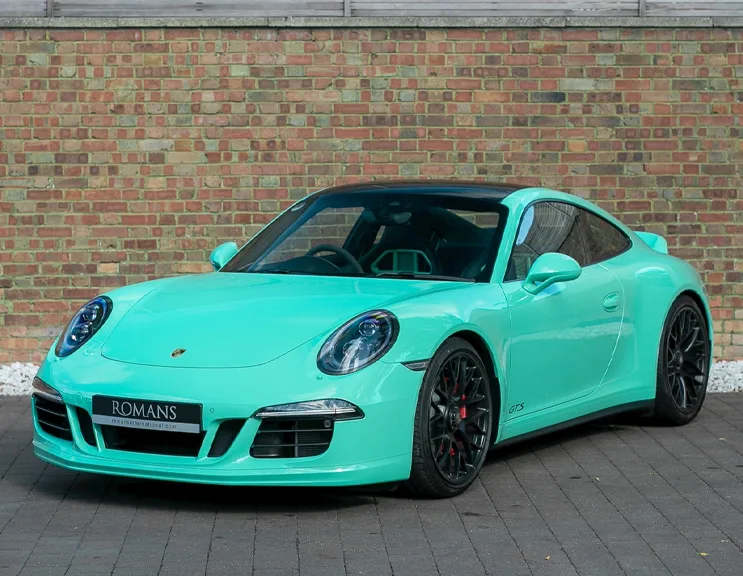
Retouching pass, checked against the original: hover or drag to compare
 BEFORE
AFTER
Drag the slider or move your mouse over the image to compare.
The questions that reveal a cheap quote's real price
Price lists are easy to print and hard to compare, so when a quote looks strikingly cheap, these are the questions that find out what it leaves out. Ask whether the clipping path is hand-drawn or automated, and ask to see it at full zoom on a dark car, not a thumbnail of an easy one. Ask whether a person checks every finished photo against the original, and what exactly they check. Ask whether the shadow is included in background work or charged as an extra. Ask whether the per-image price changes when services combine on one image, and whether the cutout is charged once or per service. Ask what the turnaround is at your real volume, not at trial volume, and what happens when a batch arrives on a Friday. Ask for the trial on your hardest photos, a black car, a white car, a dusk shoot, a cluttered trade-in, because any provider can make an easy photo look good and the trial set is where your inventory's real cost reveals itself. A provider who answers all of these plainly, in writing, at a price inside the market ranges in this guide is probably quoting you the whole job. A provider who goes vague at the checking question has told you where the saving comes from.
How Cars Photo Editor prices it, and how to test us
Our own position in this market is simple enough to state in one paragraph. We are a hand-editing service, working since 2016 for dealers and automotive photographers across the USA, the UK, and Europe: no AI tool edits your photos here. Every price is published per image, the clipping path is included where a service needs it rather than added at checkout, volume discounts of 5 percent at 100 images and 10 percent at 500 apply automatically, and standard turnaround is within 24 hours for typical batches. You pay for finished, checked images, and the trial exists because we would rather be judged on your cars than on this guide.
So test the arithmetic the way this guide has taught you to test everything: with your own stock. The free trial car photo editing offer covers 5 to 10 of your photos, edited and returned for your approval before you pay anything. Send the difficult ones, time how long your side of the process takes, and hold the results against the 25-point standard you would apply to any listing. Then take the monthly examples above, substitute your real volumes, and compare the total against your subscription, your cheapest quote, and your in-house stopwatch figure. Car photo editing cost is not a mystery in 2026. It is a small set of published numbers, a few honest ranges, and the discipline to count the costs that do not arrive on an invoice.
See your real per-image price, free to test
Send us 5 to 10 of your own listing photos (files or a Drive or Dropbox link) and we will edit them free, by hand, so you can judge the quality on your own inventory before you spend anything.
Start Your Free TrialCar photo editing cost: common questions
How much does car photo editing cost per image in 2026?
At published hand-editing rates, from $0.19 per image for resizing to $0.69 for background replacement, with a full dealer edit at $0.59, retouching at $0.50, and a standalone clipping path at $0.49. Volume discounts of 5 percent at 100 images and 10 percent at 500 reduce those figures further.
Is it cheaper to edit car photos in-house or outsource them?
It depends on your staff cost, which is why we recommend timing one full set and costing those hours at the loaded wage of whoever does the work. For most dealers the staff-time cost of editing a single photo exceeds the entire per-image price of outsourcing it, before skill and consistency are counted.
How do I choose a car photo editing company without overpaying?
Compare totals, not stickers: check whether the clipping path and shadow are included, whether combined services charge the cutout once, what the volume discount does at your real monthly volume, and whether a person checks every finished photo against the original. Then judge a free trial on your hardest photos.
Can I get car photo editing with 24 hour turnaround as standard?
Yes. At Cars Photo Editor, standard turnaround is within 24 hours for typical dealer batches at the published per-image prices, with no rush fee for the standard service, and the free trial of 5 to 10 images runs on the same standard so you can measure it before you commit.