AI vs Human Photo Editing: What Dealers Should Know
October 28, 2026 · Dealer Guides
Automation is fast and improving, but nobody automated checks a photo against the real car. This guide compares both approaches step by step and gives dealers a decision framework based on volume, stock and risk.
Key takeaways
- Automation wins speed; hand editing wins judgment
- Nobody automated checks photos against the car
- Hidden rework costs sit inside cheap subscriptions
- Test any provider with your hardest photos
For most dealers, ai vs human photo editing is not a technology question but a trust question: automated tools are faster and cheaper per click, while hand editing is slower and checked by a person who compares every finished photo with the real car. The honest answer is that automation handles clean, simple batches well and fails quietly on the difficult minority of photos that carry your reputation, so the right choice depends on your volume, your stock, and how much a wrong-looking photo costs you.
This guide is written for the people who carry that cost: dealer principals, used car managers, inventory photographers, and the marketing staff who answer for listing performance. It compares the two approaches step by step and without slogans. It explains what automated enhancement actually does, where it genuinely wins, where it fails on real inventory rather than on demo photos, what a human editor does differently, and who checks the finished image before it represents a vehicle in front of thousands of buyers. It also covers the hybrid workflow most professional studios quietly run, and ends with a decision framework and the questions worth asking any provider, of either kind, before you commit your inventory to them.
Why this argument is happening now
The ai vs human photo editing debate reached dealers through marketing, not through the editing desk. A wave of software companies now sells automated enhancement to dealerships, and some of that marketing is built on a simple story: manual editing is slow, expensive, inconsistent, and obsolete, and software has replaced it. Parts of that story are true, and this article will say which parts. But parts of it collapse the moment you place the two outputs side by side on the photos your lot actually produces, rather than on the clean studio examples every demo uses.
Dealers are right to ask the question. Photo volume keeps rising, marketplace galleries keep getting longer, and nobody has spare staff hours to burn. The mistake is answering the question from a brochure. The two approaches do different work, fail in different places, and cost money in different ways. Understanding that is worth more than any vendor's comparison chart.
What automated enhancement actually does, step by step
Strip away the branding and an automated enhancement pipeline does four things. First, it analyzes the image statistically: overall brightness, contrast, color balance, and where the software believes the subject sits. Second, it applies corrections from learned patterns: brighten shadows, saturate color, sharpen edges, straighten horizons. Third, on background tools, it segments the car from its surroundings using a machine-learned outline and composites the cutout into a new scene. Fourth, it exports at your chosen size, identically for every file in the batch.
Notice what is absent from that list: at no point does the system know what the car actually looks like. It has never seen the vehicle under your lights. It does not know that this particular red photographs orange in afternoon sun, or that the trim level in frame three has chrome window surrounds that the trim in frame one does not. It is matching patterns, and on pattern-friendly photos, clean cars on plain backgrounds in even light, the match is convincing. The output problem begins exactly where your inventory stops being pattern-friendly.
Where automation genuinely wins
Fairness matters here, because a comparison that concedes nothing convinces nobody. Automated tools are very good at three things, and dealers should use them for those things without apology.
The first is raw speed. A batch of photos can be enhanced in seconds or minutes, and for a same-day listing push on simple stock, seconds are worth money. The second is batch basics: cropping to a fixed ratio, resizing for marketplace specifications, straightening, and a first-pass exposure lift across a uniform set of photos taken in the same place at the same time. When the input is consistent, automated consistency is real. The third is availability. Software does not sleep, does not take holidays, and does not queue your Friday afternoon arrivals behind someone else's Monday backlog.
If your operation lists a small number of cars, photographs them carefully in one controlled spot, and needs a tidy result today, automation may honestly be all you need. The rest of this article is about the much larger group of dealers whose photos, stock, and standards make the question harder than that.
There is one more quiet strength worth naming: mechanical consistency of format. A marketplace feed wants every image at the same ratio, the same maximum dimensions, and the same file discipline, across thousands of photos and several destination platforms at once. Software does not get bored doing this, does not skip car forty-one, and does not care that the batch arrived at midnight. Formatting is a rules problem, and rules problems are exactly what automation was built for. The disputes in this article are never about formatting. They are about judgment, and judgment begins where the rules run out.
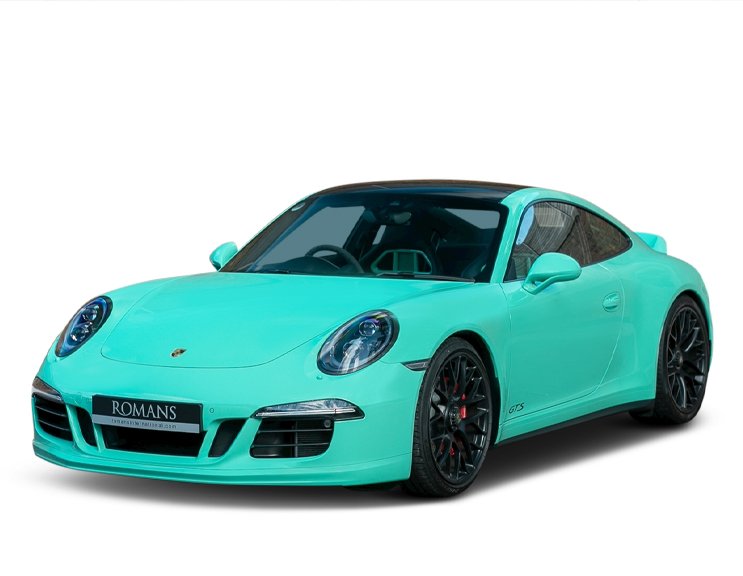
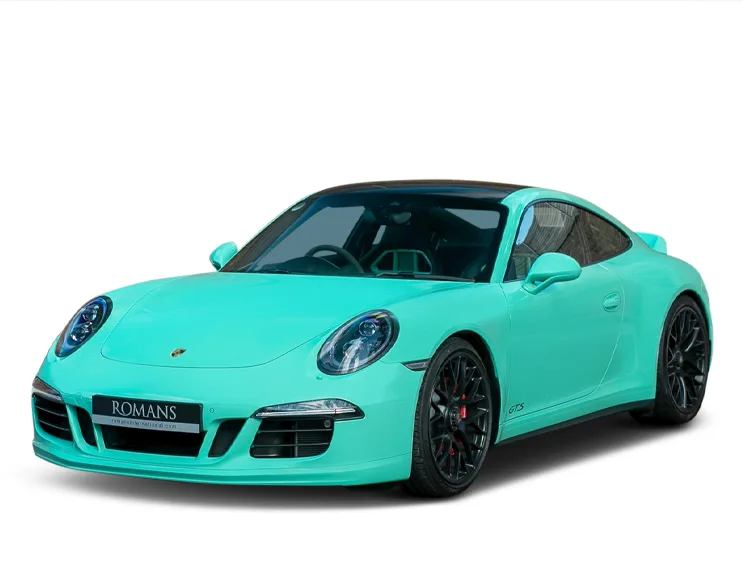
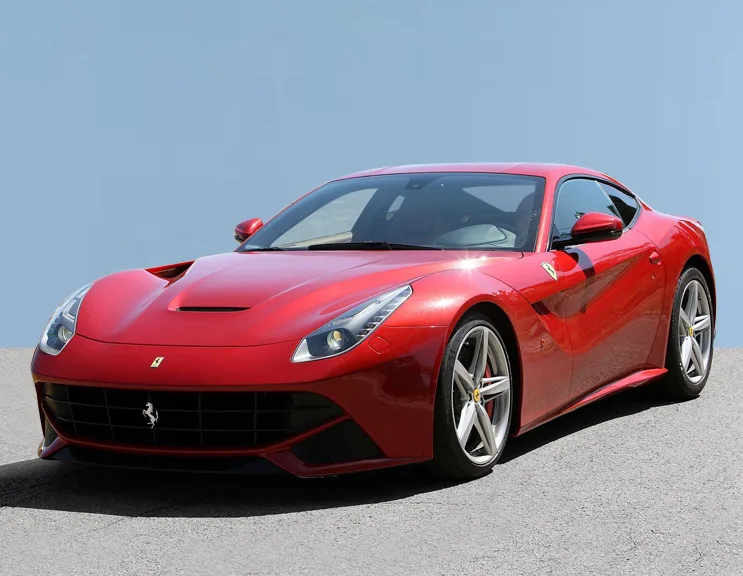
Hand retouching on glass and edges: hover or drag to compare
 BEFORE
AFTER
Drag the slider or move your mouse over the image to compare.
Where automation fails on real inventory
The failures of automation are not random. They cluster in the same five places, and any dealer can test for them in one afternoon with real stock photos.
Glass is the first. A car's windows are partly transparent: the original background shows through them, tinted and darkened. Automated cutouts routinely guess wrong here, filling glass with scene color, erasing pillars, or leaving a bright fringe where glass meets roof. A buyer may not diagnose the error, but the car reads as artificial, and artificial is poison in a listing. Edges are the second failure zone: mirrors, antennas, roof rails, and the gaps between wheel spokes are thin, complex shapes, and pattern-matching outlines chew them or halo them. Third is color truth. Automated color is statistical color: it pushes every image toward an average idea of vivid, which is why white cars come back cream, silver comes back blue, and a burgundy car can return wearing a red its manufacturer never sold.
Fourth is the shadow. Software that removes a background must invent the contact shadow that grounds the car in the new scene, and invented shadows point the wrong way, float, or vanish. A car that floats half an inch above its own listing photo undermines every word of the description beneath it. Fifth, and most important, is consistency judgment. Automation treats each photo as a separate statistical problem, so across a set of thirty photos of one car, exposure and color temperature drift from frame to frame. A human editor works to a reference: this car, this color, this scene, held steady across the whole set. The drift is subtle in any single photo and glaring across a gallery, which is exactly how buyers consume your photos.
What hand editing does differently, step by step
The ai vs human photo editing difference becomes concrete when you watch the same photo travel through both routes. A hand editor begins with the cutout, drawing a car clipping path service path around the vehicle by hand, point by point, so mirrors keep their shape, wheel spokes stay open, and glass is handled as glass: what shows through the windows is treated honestly instead of being painted over. When the car moves into a new scene, car background replacement by hand includes the shadow built deliberately under the tires and body, matched to the light direction of the scene, so the car sits in the picture rather than on it. Where a scene needs the car to settle further, a car shadow service pass shapes that grounding shadow and any reflection with intent rather than probability.
Color work is where the difference compounds. A human performing a full car dealer photo editing pass works from the knowledge that the photograph lies in known ways: this camera warms reds, that lot's floodlights green the shadows, this silver needs protecting from the blue the sky throws onto it. A car retouching service then handles what statistics cannot judge: which reflections on the paint are flattering and which are a ladder and a fence, which marks are dirt that valeting missed and which are the car's real condition that must stay visible. Deciding what may be cleaned and what must be shown is judgment, and judgment is the entire product of hand editing.
That is also why photographers and studios so often keep a human photo editing partner behind their own name, and why agencies buy white label photo editing rather than raw automation: the deliverable they resell has to survive a client's scrutiny, not just a thumbnail grid.
The honesty question: who checks the photo against the real car
Every marketplace a dealer uses, Cars.com and CarGurus in the United States, AutoTrader in the UK, mobile.de and AutoScout24 in Europe, works on the same rule: edit the surroundings freely, never misrepresent the vehicle. Color, trim appearance, specification, and condition must be what the buyer will find on your lot. Distance-selling law in the UK and advertising rules in parts of the US give that rule legal weight beyond platform policy.
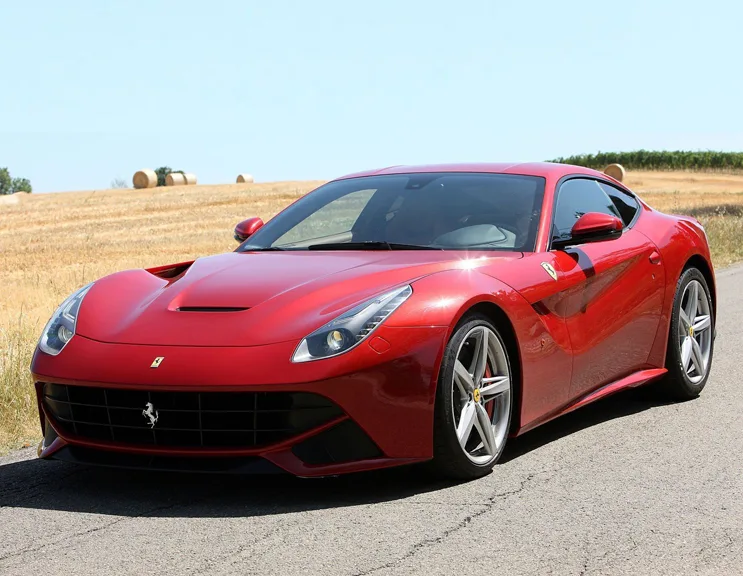
So the compliance question in the ai vs human photo editing choice is not which tool you used. It is who, if anyone, compared the finished photo with the real car before it went live. In an automated pipeline the honest answer is usually nobody: the same system that made the change approves the change, and a statistically pleasing result can still be a factually wrong car. In a hand-editing workflow, the check is a named step. The editor finishes against the original, and anomalies get flagged rather than shipped: this badge says a trim the description does not, this panel's color shift looks like damage, this interior shot shows a warning light. A dealer choosing to outsource car photo editing is, more than anything else, choosing to have that check performed by someone whose job is to catch what software waves through.
None of this makes automation dishonest. It makes it unsupervised, which is a different and more useful word. A dealer who runs automated enhancement and then has staff spot-check every set against the vehicles is running a defensible process. A dealer who publishes raw automated output at volume is delegating their compliance to a pattern matcher, and the first buyer who arrives to find a different-colored car will explain the cost of that better than this article can.
Cost structures, compared without invented figures
Automation is usually sold as a subscription: so much per month, per user, or per batch of photos, with the per-photo figure looking very small. Hand editing is sold per image: at Cars Photo Editor the full dealer edit is $0.59 per image, background replacement $0.69, retouching $0.50, clipping path $0.49, and services start at $0.19 for resizing, with discounts of 5 percent at 100 images and 10 percent at 500. Any dealer can hold those two structures side by side, and should, but the sticker comparison hides three costs that decide the real one.
The first is review labor. Automated output that nobody checks is cheap and risky; automated output that your staff checks photo by photo costs staff hours that never appear in the subscription price. The second is rework: the failure rate on easy photos is near zero for both routes, but on hard photos, dark cars at dusk, glass-heavy interiors, cluttered trade-in shots, automated failures return as reshoots, manual fixes, or quietly worse listings. The third is performance. A car photo editing service for dealers is bought per sold car in the end: if one route's galleries earn fewer clicks and weaker enquiries, its lower unit price is an expensive saving. The only honest comparison is a controlled test on your own stock, which is why any serious car photo editing company will edit a trial set free and let your own click data argue for it.
Run the arithmetic on your own volume before deciding either way, because the answer changes with scale. A dealer sending two hundred front-line photos a month for the full hand edit is looking at a known, countable figure at $0.59 an image, less once the volume discount applies, and zero staff hours spent reviewing output because the checking is inside the service. The same dealer on a subscription is looking at a smaller invoice plus an unknown number of staff hours and an unknown number of quietly underperforming listings. Neither figure is automatically the right one. What is not defensible is comparing the subscription price against the per-image price and calling the difference a saving, when the two prices buy different amounts of finished, checked work.
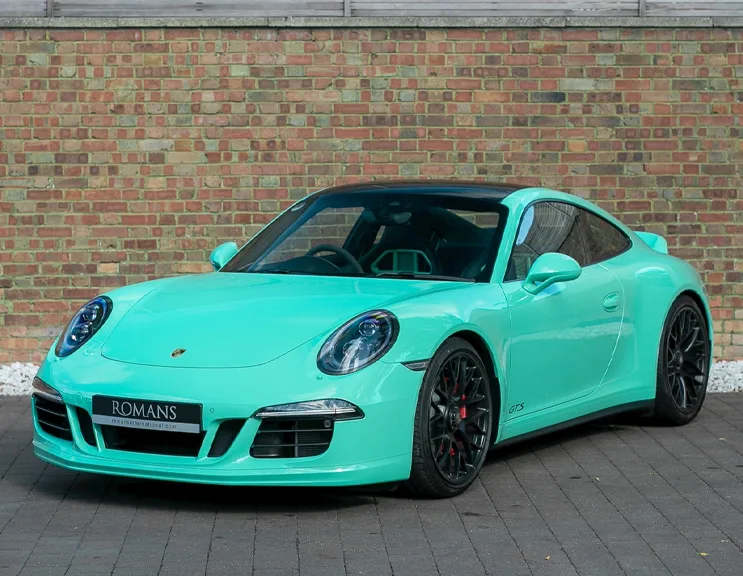
Checked frame by frame by hand: hover or drag to compare
 BEFORE
AFTER
Drag the slider or move your mouse over the image to compare.
The hybrid reality inside most studios
Ask working studios how they actually produce volume and a third answer appears, because the ai vs human photo editing argument is mostly a marketing artifact. In practice, pipelines are layered. Software does the mechanical first pass well: sorting, renaming, resizing, a baseline exposure lift on uniform sets. Humans do the judgment work: cutouts on anything difficult, color truth, scene building, and the final check. Some dealers run the same split in-house without naming it, letting a tool tidy the easy eighty percent and sending the hard twenty percent, the hero shots, the dark cars, the front-line stock, to human editors.
There is no contradiction in that, and no dealer should feel bounced into a camp. The contradiction only appears when a vendor claims the judgment layer is unnecessary, or when a traditionalist claims the mechanical layer is cheating. Both claims are sales talk. The practical question for each photo set is simply which layer its difficulty requires, and whether someone competent is making that call.
A decision framework by dealership type and volume
For a small independent lot listing a handful of cars a week, photographed in one spot by one person, automated enhancement with a disciplined human spot-check is a reasonable, honest setup. Your volume is low enough that the check is real, and your stock turns on price more than presentation.
For a franchised or large used-car operation listing dozens of cars a week from several photographers and several corners of a lot, the failure cluster described above stops being theoretical. Input varies, galleries are long, and group standards matter. This is the profile where hand editing earns its price: consistency across photographers and weather, difficult stock handled individually, and a compliance check that exists on paper and in practice.
For dealer groups, the deciding factor is usually identity. If the group's strategy depends on looking like one business across rooftops, the look has to be produced to a reference, not averaged by software per photo. Groups typically centralize editing, human or hybrid with a human final pass, for exactly this reason.
For photographers and studios selling to dealers, the question is reputational. Your client buys your eye. Automation inside your pipeline is your business; delivering unchecked automated output under your name is a risk your clients did not agree to carry, which is why so many studios quietly keep human finishing as their non-negotiable layer.
For marketing agencies producing dealer campaigns, the deciding factor is accountability to the client whose name sits on the work. Campaign images run larger, live longer, and get examined harder than a single listing photo, and an agency that cannot say who checked an image cannot fully stand behind it. That is why agency workflows so often pair in-house creative direction with human editing capacity behind it: the agency keeps control of the look, and a person remains answerable for every file that ships.
Questions to ask any provider, of either kind
Before committing inventory to any editing route, ask these questions and weight vague answers accordingly. What happens to glass, mirrors, and wheel spokes in your process, and can I see examples on a black car and a white car. Who compares the finished photo with the original vehicle, and what do they flag. How do you hold color and exposure consistent across a thirty-photo set of one car, and across a month of my inventory. What is your real turnaround on my typical batch, including revisions. What does the price become at my actual volume, including the staff time your route requires from my team. Can I test you on my hardest photos first, the dusk shots and the cluttered trade-ins, rather than my easiest. And for software specifically: what does your system do when it is unsure, guess quietly, or flag the photo for a human. Providers who welcome the hard-photo test are telling you something. Providers who insist on demoing with their own sample images are telling you something else.
How Cars Photo Editor works
We are the human side of this comparison, and we say so plainly: no AI tool edits photos at Cars Photo Editor. Every image is edited by hand by an editor who draws the path, builds the shadow, matches the color to the real car, and checks the result against your original before delivery. We have worked this way since 2016 for dealers, dealer groups, and automotive photographers across the USA, the UK, and Europe, with standard turnaround inside 24 hours on typical batches.
If you are weighing the switch, or weighing us against the tool you already run, do not decide from this article. Use the free trial car photo editing offer: send 5 to 10 of your own photos, and deliberately send the ones your current process handles worst. Compare the outputs at full size, check the glass, the edges, the shadows, and the color against the vehicles standing on your lot. That comparison, on your stock, is the only version of the ai vs human photo editing argument that should move your money.
Judge hand editing on your own cars, free
Send us 5 to 10 of your own listing photos (files or a Drive or Dropbox link) and we will edit them free, by hand, so you can judge the quality on your own inventory before you spend anything.
Start Your Free TrialAI or human editing: common questions
Is AI photo editing good enough for car dealer listings?
For clean, evenly lit photos of simple stock, automated enhancement is often good enough, especially with a human spot-check before publishing. It becomes unreliable on glass, complex edges, true paint color, and consistency across a full gallery, which is where hand editing earns its cost.
What is the difference between AI and human photo editing for car photos?
Automated editing applies statistical corrections and learned patterns to each photo independently, in seconds. Human editing works to a reference: the editor draws the cutout by hand, builds shadows deliberately, corrects color against the real vehicle, and checks the finished photo against the original before it ships.
How much does human car photo editing cost compared with AI tools?
AI tools are usually subscriptions with a low per-photo figure but hidden review and rework costs. Hand editing at Cars Photo Editor is priced per image, from $0.19 for resizing to $0.59 for a full dealer edit and $0.69 for background replacement, with 5 percent off at 100 images and 10 percent at 500, and a free trial of 5 to 10 images.
Can I use AI tools and hand editing together?
Yes, and many studios do. A common hybrid lets software handle mechanical work like resizing and baseline corrections on uniform sets, while human editors handle difficult cutouts, color truth, hero photos, and the final check against the real car before anything is published.