Honest Photos Sell: Transparent Car Listings That Show Wear Without Killing the Click
October 28, 2026 · Dealer Guides
Buyers forgive visible wear; they punish surprises. This guide separates presentation flaws editing may fix from condition facts it must never touch, with fair-photography techniques and a per-car honesty checklist for dealers and editors.
Key takeaways
- Fix presentation flaws; never touch condition facts
- Buyers punish surprises, not visible wear
- Photograph wear fairly with honest light and angles
- Description and photos must tell one story
Yes, honest photos sell cars. Transparent car listings — listings whose photos show the vehicle's real condition clearly, in clean, well-lit, professionally prepared images — win the click precisely because they do not hide anything: presentation flaws like dirt, bad light, and clutter are edited away, while condition facts like wear, marks, and tyre life are shown fairly and never concealed. The dealers who grasp that distinction get the enquiry and keep the sale; the dealers who blur it get the viewing that ends in an argument.
This guide is written for the people who carry the risk on both sides of that line: used car managers and dealer principals who answer for complaints and returns, inventory photographers who decide what the camera sees, and the editors who decide what the finished file keeps. It sets out the trust economics of honest presentation, the working difference between a presentation flaw and a condition fact, how to photograph wear so it reads truthfully without looking worse than it is, where marketplaces and consumer law draw their lines in the USA, the UK, and Europe, and a per-car honesty checklist that a dealership and its car photo editing service for dealers can share word for word.
Why buyers punish surprises, not wear
Transparent car listings work because of a simple asymmetry in how buyers think. A used car buyer expects wear. Nobody shopping for a five-year-old hatchback with sixty thousand miles believes it left the factory last week, and a visible scuff on a bumper corner, honestly photographed, rarely kills a sale on its own. What kills sales is the surprise: the moment at the viewing when the buyer finds something the photos did not prepare them for. At that moment the buyer's question changes. It stops being "is this wear acceptable at this price" and becomes "what else have they not told me." The first question is a negotiation. The second is a walk-away, and usually a review.
This is why the economics run opposite to the instinct many dealers start with. The instinct says every visible flaw costs a click. The reality is that a flaw shown well costs far less than the same flaw discovered. A shown flaw is priced in by the buyer before they ever travel; they arrive having already accepted it, and the viewing confirms the car is what they expected, which builds confidence in everything else the dealer says. A hidden flaw is discovered at the worst possible moment, in person, with money on the table, and it contaminates the whole car. Dealers who sell at volume learn this the expensive way: the cars that generate complaints, returns, and one-star reviews are rarely the worst cars on the lot. They are the cars whose photos promised the most.
There is a second, quieter effect. Buyers shortlist by comparison, and they compare listings against each other, not against perfection. A listing that shows a clean car honestly, including a photographed scuff and a close-up of tyre tread, reads as more credible than a listing of impossibly perfect photos from a dealer they have never met. Credibility is what converts a browser into a viewing, because a viewing costs the buyer time and travel. They spend that effort on the seller they believe.
The two kinds of flaws: presentation and condition
Every problem in a car photo belongs to one of two families, and the whole of honest editing is keeping them separate. Presentation flaws are faults of the photograph, not the car: dirt and road film on the paintwork, a cluttered lot behind the vehicle, harsh midday shadows, a grey sky washing out the color, reflections of the photographer in the door, a crooked horizon, another customer's car in the frame. None of these tell the buyer anything true about the vehicle. They only make a good car look neglected, and removing them is not deception; it is translation. A car retouching service earns its fee exactly here, cleaning bodywork and glass, removing distractions, and restoring the car to what a buyer standing in front of it on a bright day would actually see.
Condition facts are the opposite family: they belong to the car, not the photograph. Kerb rash on an alloy, a stone chip on the bonnet, a worn driver's seat bolster, a scuffed loading sill, tyre tread depth, a small dent in a rear door, a cracked fog lamp lens. These travel with the vehicle to its next owner, they affect what the car is worth, and they are the substance of the purchase decision. A condition fact may be photographed well or badly, but it may never be edited out, softened away, or cropped out of existence. The moment an editor removes a condition fact, the photo stops being a presentation of the car and becomes a misrepresentation of it, with the dealer's name underneath.
The practical test is one sentence: would a buyer standing in front of this car, in good light, see what this photo shows? Presentation editing passes the test because it removes what the camera added. Condition editing fails it because it removes what the car has. Every editing instruction a dealer gives, and every editing decision an editor makes, can be checked against that sentence in seconds. At Cars Photo Editor this is the standing rule behind all car dealer photo editing we deliver: fix the photograph completely, touch the car's condition not at all.
Between the two families sits a small grey zone worth naming, because it is where most disputes start. Temporary marks that will genuinely be removed before sale, because the car is booked for a smart repair or a wheel refurbishment, may be photographed as the car stands, with the listing text stating the work is scheduled. What may not happen is editing the mark out of the photo on the promise of a repair. If the repair slips, and on a busy lot repairs slip, the photo is now false and the text cannot save it. Photograph the car as it is, describe the work as it will be, and update the photos when the work is done. That order protects everyone.
Transparent car listings: what the standard actually looks like
A transparent listing is not a listing full of ugly photos. That misunderstanding costs dealers money in both directions: some hide wear and collect complaints, while others, trying to be honest, publish dark, cluttered, unflattering photos and collect nothing at all. Transparency is a property of the information, not of the production values. The standard has four parts.
First, the full standard set is present, not a selection of flattering angles. Exterior angles all the way around the car, the interior circuit, the dashboard and controls, the boot and load space, the engine bay where the platform expects it, and the detail shots. Omission is the oldest form of photo dishonesty: a set that never shows the driver's seat bolster or the nearside rear wheel is telling an experienced buyer exactly where to look first when they arrive.
Second, every known visible defect has its own photograph, taken deliberately. Not buried as a distant detail the buyer might miss, but framed, lit, and close enough to judge. Dealers who do this consistently report the same experience: the defect photo is the one that sells the car, because it converts a suspicion into a known quantity and lets the buyer decide at home, calmly, instead of on the forecourt, angrily.
Third, the photos and the description say the same thing, in the same places. A defect that is photographed is also named in the text near the gallery, and anything the text claims, a new tyre, a recent service, a refurbished wheel, is visible or documented in the set. Photos and words that corroborate each other are what make a listing feel like evidence rather than advertising.
Fourth, the presentation quality is high and uniform: clean backgrounds, true color, even light, consistent framing across the set. High production values are not the enemy of honesty; they are its delivery vehicle. A scuff photographed in a clean, bright, professional image is easier for a buyer to assess than the same scuff in a murky snapshot, because the buyer can see exactly what it is. Honesty needs clarity, and clarity is editing.
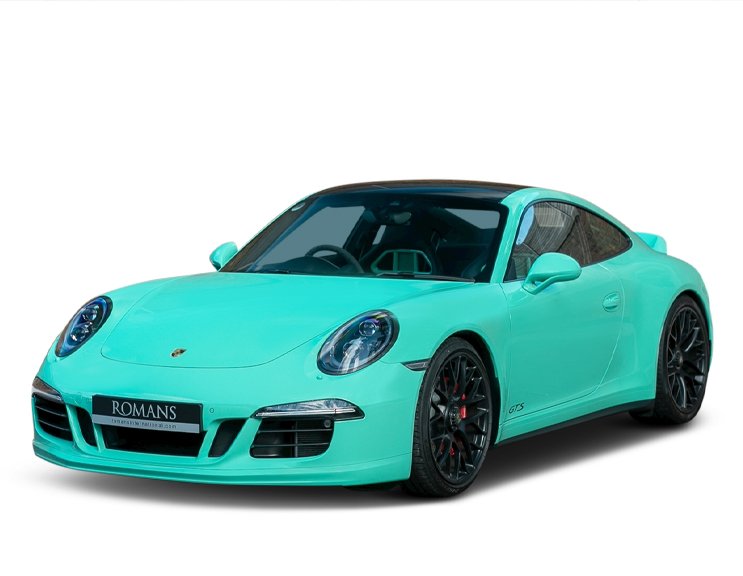
Presentation fixed, honest wear kept: hover or drag to compare
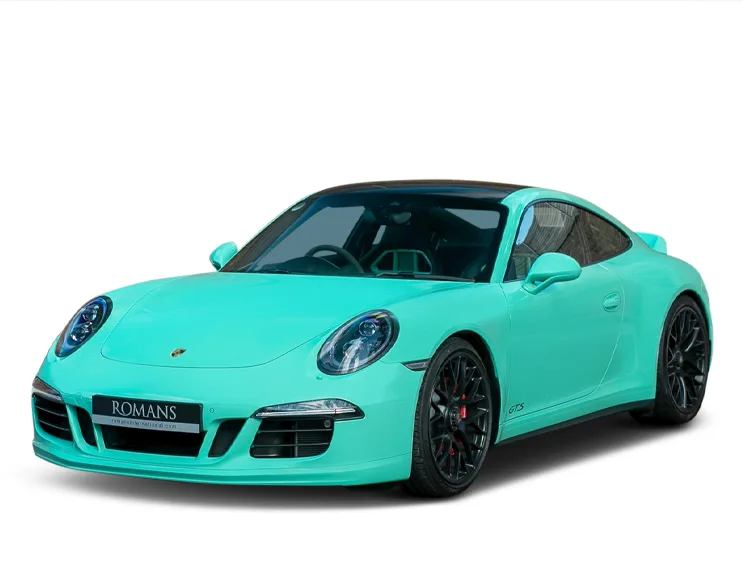
 BEFORE
AFTER
Drag the slider or move your mouse over the image to compare.
How to photograph wear fairly
Showing wear truthfully is a photographic skill, not a confession. The goal is a photo in which the defect looks exactly as it looks in person: no worse, because exaggeration kills clicks the dealer deserved, and no better, because flattery is just concealment with better manners.
Light is the first control. A scuff photographed in hard, raking sunlight looks twice as deep as it is; the same scuff under soft, even light reads at its true severity. This is why car lighting correction matters to honesty as much as to beauty: evening out harsh exposure recovers the true appearance of a panel instead of the dramatic one. Photographers should favor overcast conditions or open shade for defect shots, or bounce flash indoors, and avoid the low sun that turns every stone chip into a crater.
Angle is the second control. Photograph a defect straight on, at the distance a buyer would naturally inspect it, and include one wider shot that locates it on the car. The straight-on close-up shows severity; the wider shot shows context, a small mark on an otherwise clean bumper, and together they are fair. The two unfair angles are the extremes: the extreme close-up that fills the frame with a two-inch scuff, and the distant shot in which it conveniently vanishes. Both are distortions, and experienced buyers recognize both.
Color truth is the third control, and the one most often lost in editing. Paint color must be the car's color, because buyers judge both the car and its wear by it: a scratch reads differently on silver than on black, and a buyer comparing the photo to the car will notice a color shift before anything else. This is the daily work of a car color correction service: holding paint, interior trim, and tyre blacks at their true values across the whole set, so that wear is assessed against reality. An editor who warms up a photo for mood has also changed how every mark on the car appears. Truth is a color setting, and it should be locked before any other work begins.
Finally, shoot the wear in the same session and the same style as the rest of the set. Defect photos that look like they were taken on a different day, on a phone, in the rain, send their own message: that they were an afterthought, or an obligation discharged as cheaply as possible. In a consistent set, they read as what they are, one more piece of a complete and professional record.
The editing rules: what may be fixed and what must never be touched
An editing desk that serves dealers needs its rules written down, because a rule that exists only in someone's judgment will eventually be broken by a deadline. Our desk works to a short list, and we recommend every dealer ask their editor, internal or external, to adopt the same.
What may be fixed is everything the camera and the location added: exposure, white balance, and contrast; dirt, dust, water spots, and road film on the surface; reflections of people, signs, and surroundings in paint and glass; the background itself, whether tidied or fully replaced; distractions in the scene, from bins to other vehicles; framing, straightening, and sizing for the platform. When a background is replaced, the cut must follow the car exactly, which is why the work begins with a hand-drawn path from a car clipping path service: a careless automated cut that trims a mirror edge or smooths over a roof rail has already altered the vehicle, before any question of damage arises.
What must never be touched is the car as a physical object. No removing or reducing scratches, chips, dents, kerb damage, rust, or cracks. No rebuilding a worn seat bolster or re-dyeing a faded panel. No changing the apparent specification: badges, trim, wheel design, and fitted equipment stay as they are. No editing numbers: the dashboard photo shows the mileage the car has covered, and screens show what they show. No selective framing instructed to hide a known defect, and no set delivered with a defect photo quietly dropped because it tested badly.
And between the two lists sits the escalation rule: any editor who finds something in a photo that looks like undisclosed damage must flag it back to the dealer rather than decide alone. Editors see the car more closely than anyone in the business, pixel by pixel, and that makes the editing desk an early-warning system, if the relationship allows the warning to travel. Dealers should want this. The cheapest moment to learn about a cracked lamp or a bent sill is before the listing goes live, not during a viewing.
The description and the photos are one document
Buyers do not experience a listing as separate assets. They experience one claim: this car, in this condition, at this price. The photos are half of that claim and the words are the other half, and the two halves either support each other or indict each other.
The practical discipline is cross-referencing. Every material statement in the description should be findable in the photos or the documents: the service history photographed, the two keys in a shot, the tread depth visible in the tyre close-up. Every material defect in the photos should be findable in the words, named plainly in the condition notes rather than left for the buyer to spot and wonder whether the dealer had noticed. A defect the dealer names is a defect the dealer is trusted about. A defect the buyer finds unnamed is treated as a defect the dealer hoped to pass off, even when the truth is simple oversight.
Tone carries the same partnership. Listing copy that says "immaculate" about a car whose photos honestly show a kerbed wheel is not optimism; it is a contradiction printed in the dealer's own advert, and it trains buyers to discount every other word. The honest vocabulary is precise instead: very clean for its age, light kerbing to the nearside front wheel, shown in the photos. Precision reads as confidence. Buyers who have read a hundred listings can hear the difference in one sentence, and they reward it with the benefit of the doubt, which is the currency everything else in the transaction is paid in.
What over-editing actually costs
Dealers sometimes treat the honesty question as a moral preference, so it is worth pricing it as a business risk instead. The costs arrive in a predictable order. First, wasted viewings: buyers travel on the strength of perfect photos, find an ordinary car, and leave, and the dealer's staff time, fuel, and preparation cost are spent on an appointment that never had a chance. Second, negotiated damage: a buyer who finds one surprise re-prices the whole car in their head, and the discount they demand is always larger than the discount the honest photo would have cost, because it now includes a distrust premium. Third, complaints and reversals: distance sales unwound, deposits disputed, marketplace cases opened, each consuming management time out of all proportion to the mark that was hidden. Fourth, reputation: reviews name the practice, not the car, and a reputation for generous photography follows a dealership across every future listing it publishes. Set against this, the cost of honesty is a close-up photograph and one honest sentence. It is the cheapest insurance in the used car business.
There is also a cost inside the editing relationship. A dealer who instructs an editor to remove damage will eventually be refused by any reputable car photo retouching service, because the editor's name is on the work and the editor carries the same marketplace risk. The dealers who get the most from professional editing are the ones who make the honesty rule explicit and mutual, so that no editor ever has to guess whether this client wants the scuff softened, and no salesperson ever has to wonder what the photos promised.
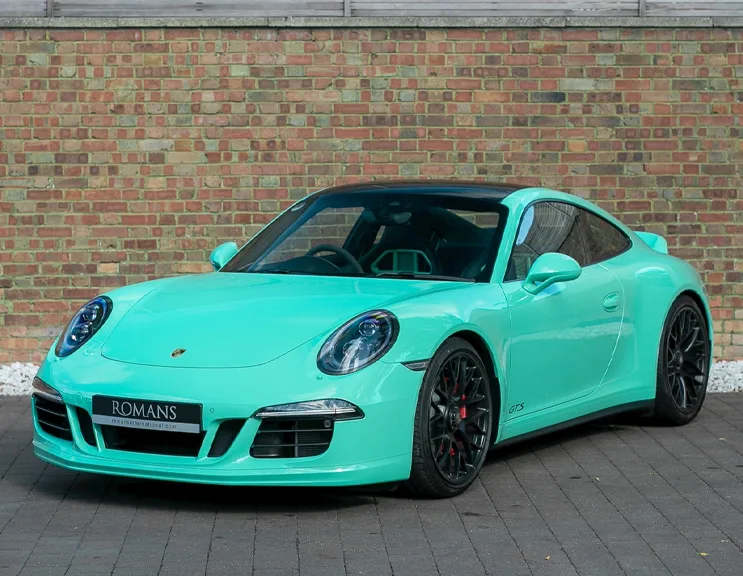
Colour corrected without hiding condition: hover or drag to compare

 BEFORE
AFTER
Drag the slider or move your mouse over the image to compare.
The legal and marketplace lines: USA, UK, and Europe
Rules differ by market and change over time, so always check the current requirements for your own accounts and jurisdiction. The direction, however, is the same everywhere we work: cleaning a photo is accepted practice; misleading a buyer about the vehicle is not, and the distance between those two things is exactly the presentation-versus-condition line this article has drawn.
In the United States, listing photos form part of the advertisement, and federal and state rules on deceptive advertising apply to images as much as to words. A photo that conceals known damage or misrepresents the vehicle's condition can support a deception claim even if every word in the description is literally true, because the overall impression is what counts. Marketplace policies on Cars.com and CarGurus likewise require photos of the actual vehicle, honestly representing it.
In the United Kingdom, consumer protection law prohibits misleading omissions as well as misleading statements, and distance selling gives buyers strong rights to reject a car that is not as described. Traders are expected to disclose material information a buyer needs, and a known defect hidden by photography sits squarely in that territory. AutoTrader's own guidance to dealers reflects the same standard: images must represent the vehicle fairly.
In Europe, consumer law across member states guarantees buyers conformity between the car and its description, and large marketplaces such as mobile.de and AutoScout24 enforce presentation standards that assume honest, complete imaging. Cross-border sellers should be especially careful: your listing may be judged in the buyer's country, under expectations you have never read, and "the photos made it look better" is not a defence in any of them.
No editor and no dealer should treat this section as legal advice. Treat it as a map of where the cliff edge runs, and notice that the safe path is not near the edge at all. It is the ordinary practice of showing the car well and showing it whole.
The per-car honesty checklist
For transparent car listings, the checklist is what turns a principle into a habit, because principles fail at volume and checklists do not. Run this per car, shared between the photographer, the salesperson, and the editor, before the listing publishes.
The set is complete: all exterior angles, the interior circuit, dashboard, boot, and detail shots are present, with no angle omitted because it shows wear. Every known defect has a deliberate photograph, straight on, in fair light, plus a wider shot locating it on the car. The description names every defect the photos show, in plain words, and every claim in the description is visible or documented in the set. Editing touched the photograph only: light, color, cleanliness, background, and framing, with paint color verified against the car. No mark, dent, or wear was removed, softened, or cropped away, and the dashboard and screens show their true readings. Any defect discovered during editing was reported back before publication, not decided at the desk. The originals are kept on file, so any published photo can be defended against the real vehicle at any time. And one named person has signed the set off, because honesty that belongs to everyone belongs to no one.
A group running several rooftops can hold this as a single standard, audited by sampling listings and comparing published photos against the cars on the lot. The audit almost never finds malice. It finds drift: a new photographer who frames tighter, a new salesperson whose copy reaches for "immaculate," an editor who helpfully cleaned one mark too many. Drift is exactly what checklists exist to catch.
How Cars Photo Editor works to this standard
We are a hand-editing service for dealers and automotive photographers, founded in 2016 and working across the USA, the UK, and Europe. It is worth stating our method plainly: every photo is edited by a person, by hand, and no AI tool edits your images here. That matters for honesty work in particular, because the presentation-versus-condition line is a judgment, and judgments are what people are for. Our editors fix light, color, backgrounds, and distractions completely, and they stop at the car's condition completely. When our desk finds apparent damage a dealer may not know about, we flag it before delivery rather than quietly working around it.
The service is priced per image, with a car retouching service at $0.50 per image, color correction at $0.39, lighting correction at $0.39, a clipping path at $0.49, and a full dealer edit at $0.59, with volume discounts of 5 percent at 100 images and 10 percent at 500. Standard turnaround is within 24 hours for typical batches. The right way to test an honesty standard is on your hardest car, not your easiest, which is why the car photo editing free trial covers 5 to 10 of your own photos: send the car with the kerbed wheels and the worn bolster, and judge whether the returned set shows that car at its honest best.
Honest photos, professionally presented, free to test
Send us 5 to 10 of your own listing photos (files or a Drive or Dropbox link) and we will edit them free, by hand, so you can judge the quality on your own inventory before you spend anything.
Start Your Free TrialHonest listing photos: common questions
Should you show scratches and damage in used car listing photos?
Yes. Photograph every known defect deliberately, straight on and in fair light, with a wider shot to locate it on the car. Buyers accept wear they can see and price in; they walk away from wear they discover at the viewing, because the discovery makes them doubt everything else in the listing.
How do I choose a car photo editing company that will not hide damage?
Ask the question directly and listen for a rule, not a reassurance. A trustworthy car photo editing company will state plainly that it edits the photograph, never the car's condition, will flag apparent damage back to you instead of removing it, and will keep your original files so any published photo can be checked against the real vehicle.
Can edited car photos get a sale reversed or a listing removed?
Yes, they can. Photos are part of the advertisement in the USA, the UK, and Europe, and images that misrepresent a vehicle's condition can support deception complaints, marketplace enforcement, and rejection of a distance sale where the car is not as described. Cleaning light, color, and backgrounds is accepted everywhere; removing damage is the act that creates the risk.
How fast can honest dealer photo editing be turned around?
Honesty does not slow editing down. Our standard is 24 hour car photo editing turnaround for typical dealer batches: the full presentation edit, backgrounds, color, and the defect shots treated with the same care, returned within a day, with the free trial of 5 to 10 images available first so you can test the standard on your own stock.