
Cross-Border Car Sales in Europe: Photos That Build Trust
October 28, 2026 · Dealer Guides
A buyer three countries away cannot walk around your car, so your gallery becomes the inspection. This guide builds the evidence set, document photography and one photo standard that holds across Europe's major marketplaces.
Key takeaways
- Distance buyers treat galleries as the inspection
- Publish VIN masked; share full frames carefully
- One master set survives every European platform
- Sequence photos so they narrate without words
In cross border car sales europe, the photo gallery is the inspection. A buyer in another country cannot walk around the car, start it, or crouch beside a wheel arch, so they buy the evidence instead: a complete and consistent set of photos covering every angle, the underbody, the tyres, the documents and the odometer, presented identically on every platform. Sellers who build that evidence set once and hold every car to it win enquiries from buyers who would never risk a thin or untidy gallery.
This guide is written for the sellers who live with that reality every week: export-focused dealers, dealer groups moving stock between countries, and the inventory and marketing staff who prepare their listings. It covers what a cross-border gallery must prove, how to photograph proof safely, how one photo set survives three different marketplaces and several languages, and where the honest line sits when national rules differ. None of it requires new cameras or a studio. It requires a standard, applied the same way to every car, which is why export sellers increasingly treat photography as a production discipline supported by a car photo editing service for dealers rather than as a chore fitted in around the phones.
Why distance changes how a buyer reads your photos
Cross border car sales europe start from an information problem that local sales never face. Your local buyer forgives a weak gallery because the visit repairs it: they will see the car on Saturday, hear it run, and judge the seller's face across a desk. The cross-border buyer has none of that. The car will be bought on the strength of photographs, a description in what may be their second language, and a transport quote. Every gap in the gallery is therefore read as a risk, and risk is priced. It comes back as a lower offer, a request for fifty more photos, or silence.
Distance buyers also read galleries differently. They zoom. Local buyers scroll thumbnails, but a buyer committing to a car five hundred kilometres away opens photos full-size and inspects edges, reflections, seat bolsters and tyre shoulders at one hundred percent. Editing that looks fine as a thumbnail but falls apart under zoom, such as a rough cutout edge or a colour cast on one panel, does real damage at distance because it suggests carelessness everywhere else. The same applies to inconsistency. If the hero shot is bright and polished and frame twelve is a dark snapshot taken in the rain, the buyer does not average the two. They believe the worse one and distrust the better one.
There is a second audience, too: the intermediary. Many cross-border purchases run through agents, buying services and transport companies who screen listings on the buyer's behalf. These professionals look at hundreds of galleries a month and discard the ones that make their job harder. A complete, orderly, honestly presented set is not just marketing in this channel. It is a screening pass.
The evidence set, part one: the complete angle circuit
The foundation of cross border car sales europe is a complete angle circuit, shot in the same order for every car so nothing depends on memory. The working set at export level runs to thirty or more frames: front three-quarter from both sides, direct front and rear, both full side profiles, each wheel in close-up, the dashboard and instrument cluster lit, front and rear seats, the boot with its floor raised where the design allows, the engine bay, the roof, and the details buyers of that model always ask about, from headlamp condition to the load bay on an estate or van.
Order matters as much as coverage. A cross-border buyer studies a gallery the way an inspector walks a car, in a circuit, and a gallery that jumps randomly between angles forces them to rebuild the car mentally. Keep the exterior circuit first, then the interior circuit, then documents and evidence frames at the end, and keep that order identical across your whole export inventory. Regular cross-border buyers, the traders and agents especially, learn your order and audit faster because of it.
Every frame in the circuit then goes through the same car dealer photo editing treatment: straightened, cropped to a consistent frame, colour and light balanced against the set, and placed against the same clean background treatment your business uses everywhere. Consistency across the set is what turns thirty separate photographs into one inspection. A single odd frame, warmer than the rest or cropped tighter, reads at distance like a substituted photo of a different car, which is precisely the suspicion an export gallery cannot afford.
The evidence set, part two: underbody, tyres and the honest wear points
Local listings can gesture at condition. Export listings have to evidence it, and the areas buyers ask about most are the ones ordinary galleries skip. Photograph the underbody wherever you have lift access, even a partial set: sills, floor edges, exhaust run and the areas around jacking points. Where a lift is genuinely unavailable, say so in the description and compensate with low-angle shots along both sills. A declared gap costs you nothing. A silent gap costs you the enquiry.
Tyres deserve their own discipline because they are the cross-border buyer's favourite proxy for how a car has been kept. Shoot each tyre's tread across its width, the sidewall with its size and date markings legible, and each wheel's face for kerb damage. Photograph the spare or the repair kit as it actually is. Brake discs visible through the spokes, the state of the mats and pedals, the driver's seat bolster, the steering wheel rim: these wear points are where an honest gallery separates itself from a cosmetic one. None of them need beautifying. They need light, focus and truthful colour, which is editing work, not photography luck.
This is also where the line between presentation and condition must be held by process, not by intention. Dirt on a sill is presentation. Rust bubbling on the same sill is condition, and it stays visible. We will return to that line in the rules section, because at cross-border distance the cost of crossing it is not a disappointed viewing. It is a returned car, a transport bill, and a dispute conducted in two languages.
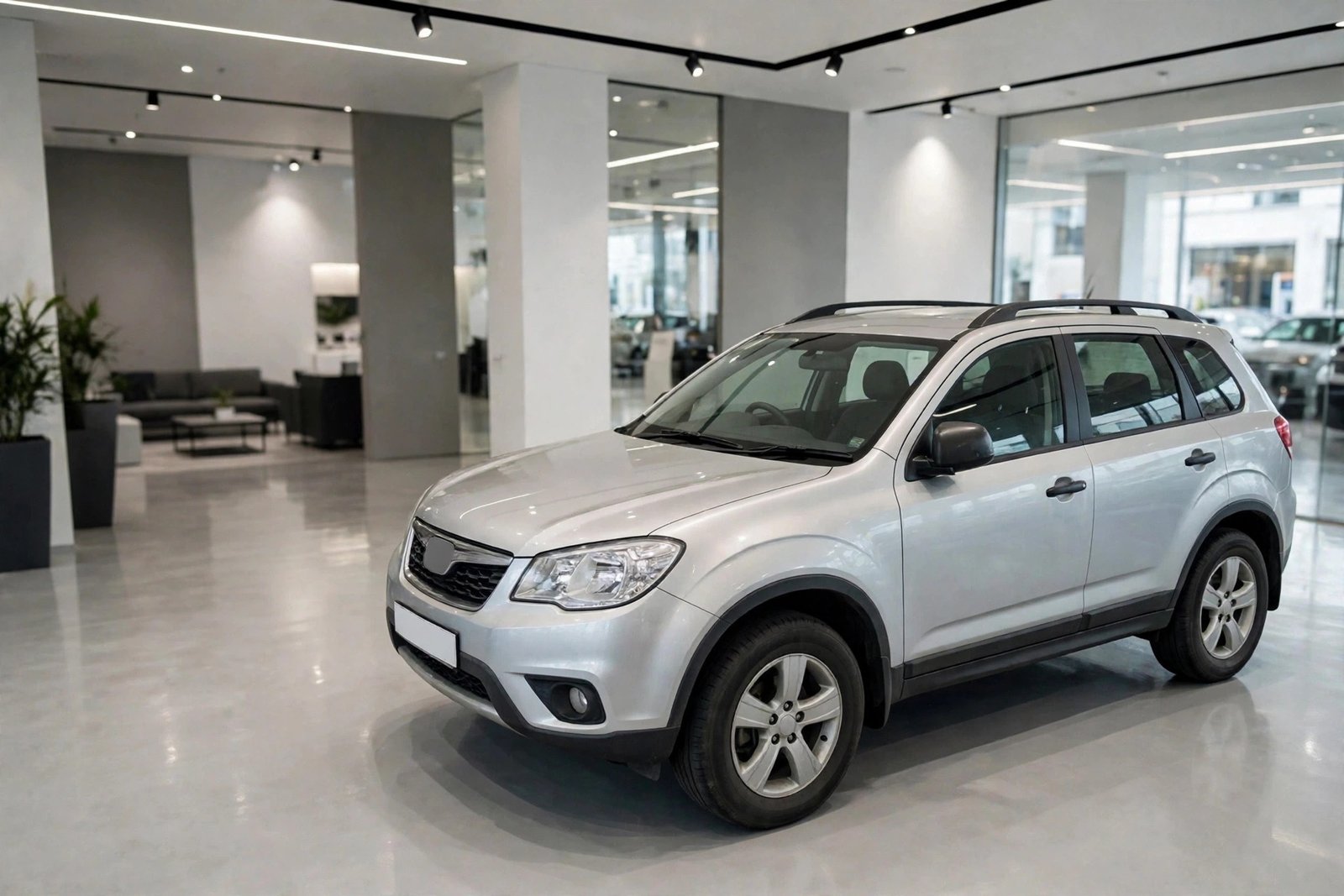
One background set for all marketplaces: hover or drag to compare

 BEFORE
AFTER
Drag the slider or move your mouse over the image to compare.
Documents, odometer and VIN: photographing proof without giving away the store
Few things build cross-border trust faster than a photographed document set, and few things worry sellers more, for understandable reasons. The working set is: the service book open at its stamped pages, the most recent inspection or test certificate where your country issues one, the invoice or history printout a main dealer can provide, and the instrument cluster showing the odometer reading with the car running and no warning lights lit. Shoot documents flat, square-on, in even light, at a resolution where stamps and dates can be read when zoomed. Blurred document photos are worse than none, because they look evasive.
The odometer frame matters disproportionately. It is the single most-checked number in any cross-border transaction, and it should agree exactly with the mileage in your listing text on every platform. If it does not, buyers assume the worst explanation, not the clerical one. Photograph it once, carefully, at listing time, and treat any later change, a delivery run or a test drive, as a reason to re-shoot it.
The VIN plate needs a balanced treatment. Serious buyers and their agents will want to verify identity, and a legible photograph of the VIN plate, the windscreen VIN where fitted, and the build sticker in the door shut is strong trust evidence that the car is what the paper says it is. At the same time, publishing every identifier in full resolution on open marketplaces is more exposure than many sellers are comfortable with, and practice varies. A widely used compromise is to publish a sharp VIN-plate photo with the final characters masked in the public set, and to release the complete frame directly to a verified enquirer during the transaction. What must never happen is altering a reading. Masking for privacy is a declared, visible act. Editing an odometer figure or a digit of the VIN is fraud in every jurisdiction you will ever sell into, and no editing instruction from anyone should be allowed to cross that line.
Keep the original, unedited document frames on file alongside the listing. If a question arises after the car has crossed a border, and at distance questions arise weeks later, the originals are your evidence that the published set was honest when it shipped.
One photo set across mobile.de, AutoScout24 and eBay Motors
Cross border car sales europe are mostly conducted on three stage sets: mobile.de, the national AutoScout24 sites, and eBay Motors, plus your own website. Each platform crops, compresses and orders your photos slightly differently, each has its own seller guidance, and the AutoScout24 property in France does not behave identically to the one in Germany or Italy. The beginner's response is to prepare different sets per platform. The professional response is one master set, built to the strictest common standard, from which every platform version is derived.
The master set approach works because the platforms agree on the fundamentals even where their mechanics differ: the actual car, complete in frame, honestly coloured, in a sensible order, at a resolution that survives their compression. Build the master at generous resolution with a consistent frame ratio, then let car image resizing produce each platform's sizes from it, rather than shooting or editing three variants by hand. When a platform updates its specifications, and they do, one master set is re-derived in an afternoon. Three hand-maintained sets quietly drift apart, and drift is fatal to cross-border trust because buyers cross-check you. A trader who finds your mobile.de gallery brighter and cleaner than the same car on AutoScout24 does not think about image pipelines. He thinks one of the listings is dressed up.
Backgrounds are the other consistency trap. A car photographed against your own forecourt in one listing and a generic studio scene in another invites questions you do not want. Pick one treatment for export stock and hold it everywhere: many export sellers use a car background replacement service to place every car in the same neutral scene, which also strips out number plates, neighbouring stock and location clues that date a photo. For your own website and for dealer-group configurators and email stock lists, the same master frames can also be delivered as a car transparent background cutout, so the car sits on your own page design rather than inside a marketplace frame. One shoot, one edit, several honest renderings.
Parts deserve a sentence here because export sellers rarely sell cars alone. The same business often moves wheels, trim, lamps and used components through eBay Motors and parts marketplaces, where the buying rule is even stricter: a plain, colour-true photograph on a clean ground, nothing else. That is why parts listings are prepared with spare parts background removal to a pure, consistent background, so a buyer in another country can judge a used lamp or alloy the way they would judge it in their hand. The discipline is identical to the car galleries: evidence first, cosmetics second.
Photos that speak when the description cannot
Every cross-border listing is read by buyers working in a second or third language, and many are machine-translated on the platform before they are read at all. Translation is good at specifications and hopeless at nuance. It cannot carry the sentence in which you explained that the mark on the bumper is a stone chip touched in by the previous keeper. Your photos have to carry condition communication that your words cannot guarantee will survive the journey.
That changes how a gallery is built. Sequence becomes narration: a wide shot that establishes, then the close shot that explains, in that order, every time. If a wheel has kerb damage, the gallery should move from the full car, to that wheel, to the close-up, so a buyer in any language reads the story correctly and sees that you showed it deliberately. Deliberate revelation is the strongest trust signal there is at distance, because it proves the seller's instinct is to show rather than to hide, and buyers extend that assumption to everything they cannot check.
It also disciplines text inside images. Offer banners, finance examples and feature callouts baked into photos are written in your language, priced in your market's format and regulated by your country's advertising rules, and they travel badly. Keep export hero photos free of baked-in promotional text; let the platform carry the words, where they can be translated and localised, and let the photographs carry the car. The same applies to measurement and trim badges: photograph them, do not describe them, because a badge photographed cannot be mistranslated.
Honest condition under different national rules
Consumer protection across Europe shares a direction, accurate description, real rights when goods are not as described, distance-selling protections that bite harder when the buyer never saw the goods, but the detail differs by country, and this article is guidance, not legal advice. A listing lawful in your market may be judged after export by the advertising and consumer standards of the buyer's market, and platforms review against their own rules on top of both. The only presentation policy that survives every combination is the strict one: the photographs must show the car as it is.
In editing terms, that divides the work cleanly. Presentation is always fair game: removing litter and neighbouring cars from the scene, correcting the grey cast of a winter afternoon so the paint shows its true colour, straightening a hurried frame, cleaning road film from a lower panel in the photograph where the car itself was washed that morning. Condition is never fair game: a scuff does not get cloned away, a worn bolster does not get smoothed, a warning light does not get deleted, an odometer does not get adjusted, and a mismatched panel does not get colour-blended into invisibility. A good car photo retouching service knows this boundary cold and will refuse instructions that cross it, because a retoucher who will hide damage for you today is telling every future buyer that your galleries cannot be trusted.
Adopt one written rule for your export operation and put it in the briefing pack: edit the scene as much as we like, edit the car almost not at all, and photograph the flaws we would want shown to us. It survives translation because it is simple, it survives staff changes because it is written, and it survives disputes because your originals, kept on file, will prove you followed it.
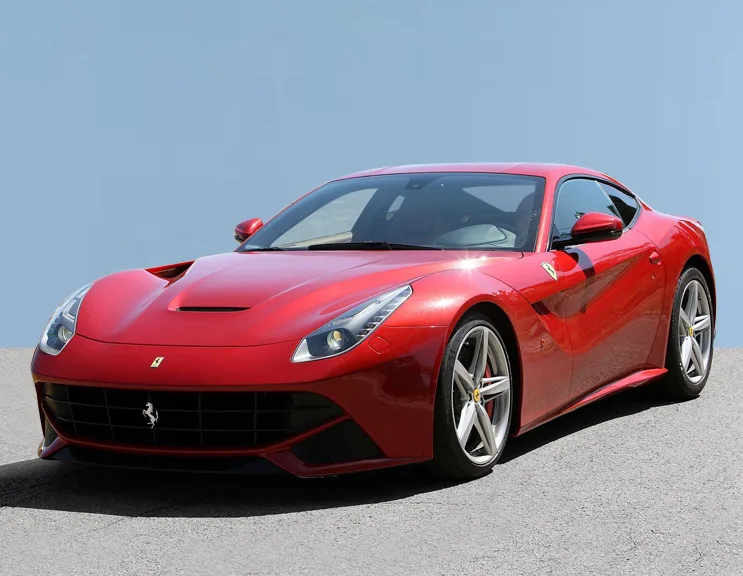
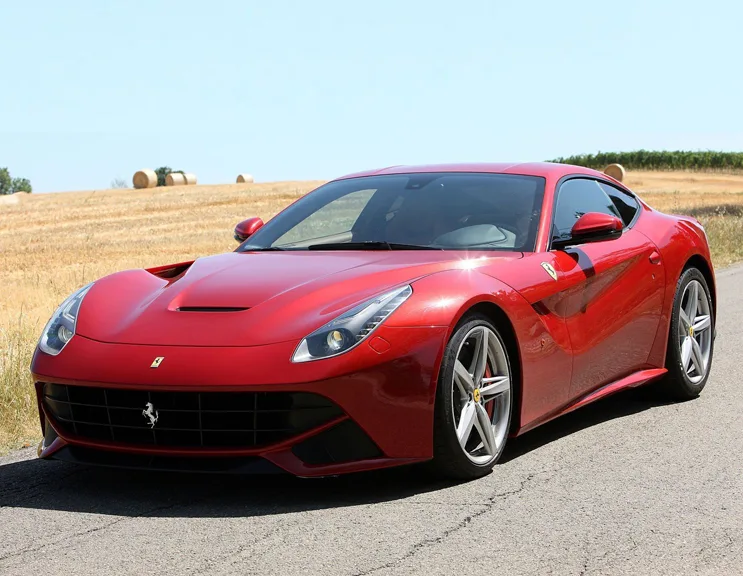
Evidence set edited for distance buyers: hover or drag to compare
 BEFORE
AFTER
Drag the slider or move your mouse over the image to compare.
Building one photo standard that survives translation
Cross border car sales europe reward the seller whose fiftieth listing looks like it came from the same disciplined desk as the first. That does not happen by taste. It happens by writing the standard down once, in a form that survives languages, platforms and staff turnover: the shot list in order, the frame ratio and resolution, the background treatment, the colour and light targets, the plate treatment for each market you sell into, the document set, the wear points that are always photographed, and the honesty rule above. One page of standard, plus a reference gallery of ten finished cars that define the look, is the whole machine.
Volume is where the standard is tested. An export group preparing dozens of cars a week cannot hold quality with whoever is free holding a phone, which is why groups outsource car photo editing to a desk that works to their written standard and returns sets checked against it. The commercial shape of that arrangement is bulk car photo editing: per-image pricing, a saved style profile per dealer or per group, and a turnaround measured in hours so export listings are not waiting on pictures while the market moves. The editing itself, the cutout, the car background replacement, the shadow built by hand under each car, the colour matched across the set, is done by editors working to the reference gallery, not by whoever drafts a template. A named car retouching service arrangement also gives you the second pair of eyes that distance selling needs: an editor who compares every finished frame against the original and flags any frame where the edit has drifted toward flattery.
Brief your editing desk the way you would brief a photographer in another country, because effectively you are doing exactly that. Send the standard, the reference set, and a first batch that deliberately includes your hardest stock: a black car, a white car, a car with honest wear, a document set. Judge that batch at full size, agree the feedback words, too warm, shadow too hard, crop too tight, and the system will run itself from there.
The cross-border pre-publish checklist
Before any export listing goes live, run the same short audit on every car. Is the angle circuit complete and in the house order. Do the odometer photo and the listing mileage agree exactly, on every platform. Are the document frames legible when zoomed. Are all four tyres evidenced, tread and sidewall. Has every known flaw been photographed deliberately, wide then close. Is the background treatment identical to the rest of your export stock. Do the platform versions all derive from the same master set, with no platform quietly carrying an older or prettier gallery. And does the whole set read clearly to someone who cannot read your language at all. Nine checks, a few minutes per car, and they catch nearly every failure this guide has described.
How Cars Photo Editor handles export stock
Cars Photo Editor is a hand-editing service: no AI tool edits your photos here. Since 2016 our editors have prepared listing galleries for dealers and automotive photographers across the USA, the UK and Europe, and export stock is handled to a written standard agreed with each seller: the cutout drawn by hand, the car placed in your consistent scene, the shadow built under it, colour and light matched frame to frame across the whole set, and every finished photo checked against your original before delivery. Per-image prices are published and simple: car dealer photo editing from $0.59, background replacement $0.69, retouching $0.50, transparent background cutouts $0.49, and resizing from $0.19, with 5 percent off at 100 images and 10 percent at 500. Standard turnaround is within 24 hours for typical batches.
Judge the standard on your own stock, the way your buyers will. The car photo editing free trial covers 5 to 10 of your own photos, edited and returned for your approval before you pay anything. Send export cars, send the worn one as well as the pretty one, and inspect the results at full size, zoomed in, the way a buyer in another country will. Then decide whether your galleries are building the trust your cars deserve.
Photos that sell across borders, free to test
Send us 5 to 10 of your own listing photos (files or a Drive or Dropbox link) and we will edit them free, by hand, so you can judge the quality on your own inventory before you spend anything.
Start Your Free TrialCross-border car sales: common questions
How many photos should a car listed for sale to another European country have?
Work to thirty or more: a complete exterior angle circuit, the interior circuit, each wheel and tyre in close-up, the underbody or sills where you have access, and a legible document set including the odometer. Cross-border buyers treat the gallery as the inspection, so gaps read as risks.
Is it safe to publish a photo of the VIN plate in a listing?
Publish a sharp VIN-plate photo with the final characters masked if you prefer, and release the complete frame to a verified enquirer during the transaction. Never alter a reading: masking for privacy is visible and declared, editing digits is fraud.
Can I use the same photos on mobile.de, AutoScout24 and eBay Motors?
Yes, and you should. Build one master set to the strictest common standard and derive each platform's sizes from it. Buyers and agents cross-check the same car across platforms, and galleries that differ between sites destroy trust.
How fast can edited photos for export listings be turned around?
Standard turnaround at Cars Photo Editor is within 24 hours for typical dealer batches, and the free trial of 5 to 10 images lets you verify quality and consistency on your own export stock before any payment.