
Cars.com and CarGurus Photo Rules US Dealers Must Follow
October 28, 2026 · Dealer Guides
Cars.com and CarGurus reward complete, honestly edited sets and punish misleading ones. This guide translates both platforms' photo expectations into one master set and a per-car compliance checklist your merchandising team can actually run.
Key takeaways
- One master set keeps every platform compliant
- The hero photo carries strict first-image rules
- Syndication multiplies defects, so fix the source
- Never edit across the misrepresentation line
Cars.com listing photos must show the actual vehicle you are selling, complete in frame, sharp, well lit, and honestly presented, in a full set led by a strong front three-quarter hero image. CarGurus works to the same core standard: real photos of the real car, no stock images standing in for a used vehicle, no edits that change what the car is, and no branding that hides the vehicle. A dealer who builds one clean, complete, honestly edited master set for every car — in-house or through a car photo editing service for dealers — will satisfy both platforms, and every other site that set syndicates to.
That short answer hides a lot of operational detail, and the detail is where listings succeed or fail. Photo rules on the big US marketplaces are not one document. They are a combination of published platform guidance, the technical requirements of the inventory feeds that carry your photos, the expectations of the merchandising tools that grade your listings, and the advertising law that sits behind all of it. This guide puts the whole rulebook in one place for US dealers: how many photos, in what order, at what quality, what you may edit, what you may never edit, and how to build a single set that stays compliant everywhere it travels. Platform specifics change over time, so treat the numbers here as stable guidance and confirm the current figures inside your own seller accounts before you rebuild a process around them.
Two platforms, one underlying standard
Cars.com and CarGurus reach the same buyers through different doors. Cars.com grew out of classified advertising and behaves like a national showroom: deep inventory, heavy search filtering, and vehicle detail pages built to hold a large gallery. CarGurus built its reputation on deal ratings and market analysis, and its listings are judged in a context where the photo set is part of how a deal is evaluated and compared. The merchandising cultures differ. The photo standard underneath does not.
Both platforms expect the same five things. The photos must be of the actual vehicle offered for sale. The set must be complete enough for a buyer to inspect the car properly. The images must be clear, current, and consistent with the written description. Editing must present the car honestly. And nothing in the frame, no overlay, banner, or background trick, may mislead the buyer about the car's condition, color, or specification. Every specific rule in this guide is one of those five expectations wearing work clothes. If you remember nothing else, remember that, because it lets you judge any new situation the written rules have not caught up with yet.
How many photos: the count rules and what complete actually means
Photo count is the first place cars.com listing photos separate serious dealers from casual ones. Both platforms allow generous galleries, and both are built on the assumption that a retail-ready used car will carry a deep set rather than a handful of snapshots. As working guidance, treat a complete exterior and interior circuit in the range of thirty to forty photos as the standard for a front-line used car, and treat anything under fifteen as an incomplete listing that will underperform and may fall short of what your feed provider and the platforms expect for a fully merchandised vehicle. Certified and higher-value stock justifies going beyond that range with detail and document shots.
The exact maximums and minimums are set in your platform and feed agreements, and they do change, so verify the current figures in your seller account. What does not change is the principle behind them: the gallery is the inspection. A buyer who cannot find the driver's seat wear, the tire tread, the infotainment screen, and the rear seats in your photos does not assume the best. They assume the worst and move to a listing that shows more. Completeness is also a condition issue. A set that shows every panel, every wheel, and the known imperfections is a set that protects the dealer when a buyer claims the car was not as described. The photos that feel like extra work are the same photos that end arguments.
Build the count from a fixed shot list, not from enthusiasm on the day. Exterior circuit first: front three-quarter, front, side, rear three-quarter, rear, then the other side and the remaining angles so the car is walked in a full circle. Wheels and tires individually. Then the interior circuit: dashboard wide, front seats, rear seats, steering wheel and controls, infotainment and climate screens lit, instrument cluster showing mileage, boot or cargo space. Then the detail circuit: engine bay, headlights, badges and trim, any feature the advert mentions, and honest shots of wear the buyer will find anyway. A fixed list makes thirty to forty photos a routine instead of a project, and it makes every listing in your inventory directly comparable.
Order matters: the gallery sequence both platforms reward
Gallery order is the second discipline inside cars.com listing photos, and it is the one dealers most often leave to chance. Both platforms display your photos in the order your feed sends them, and buyers experience that order as a guided tour whether you planned it or not. The first image is the thumbnail in search results and the hero on the detail page. The next handful decide whether the buyer keeps swiping. A gallery that opens with a rear view, a wheel close-up, or a dark interior shot has spent its best seconds on its weakest material.
The sequence that consistently works is simple. Lead with the best front three-quarter exterior, the money shot, taken at the angle every buyer recognizes as the car's portrait. Follow with the rest of the exterior circuit in walking order, so the buyer circles the car the way they would on a forecourt. Move inside with the dashboard wide shot, then run the interior circuit from the driver's seat outward. Finish with details, features, and documents. Never open with a stock image, a placeholder graphic, a sold banner, or a photo of a different trim. On CarGurus especially, where listings sit side by side with deal analysis, a weak first image does not just lose the click. It frames the price as optimistic before the buyer has read a word.
Order is also a syndication issue, covered in its own section below, because a sequence that is perfect inside your inventory system can arrive scrambled on a partner site if the feed renumbers or truncates. The defence is the same fixed shot list, with file naming or ordering metadata that survives the journey. Decide the order once, at the level of the master set, and let every downstream platform inherit it.
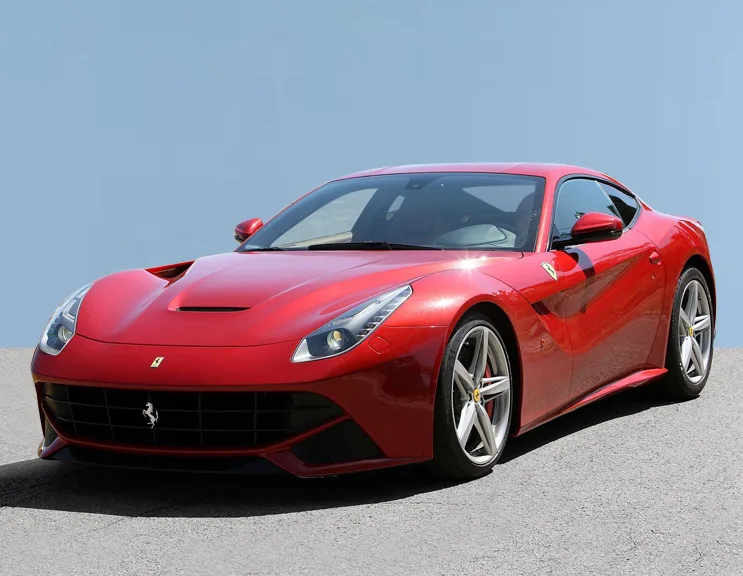
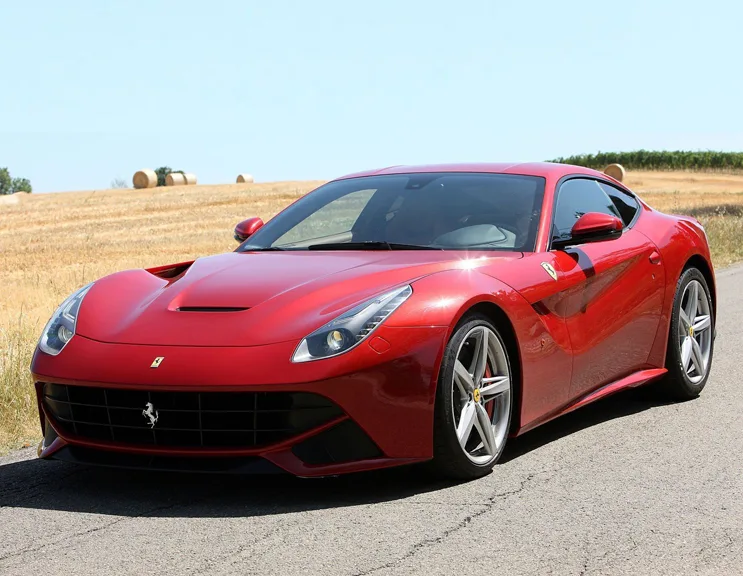
Compliant hero photo, marketplace ready: hover or drag to compare
 BEFORE
AFTER
Drag the slider or move your mouse over the image to compare.
The hero photo: first-image rules in detail
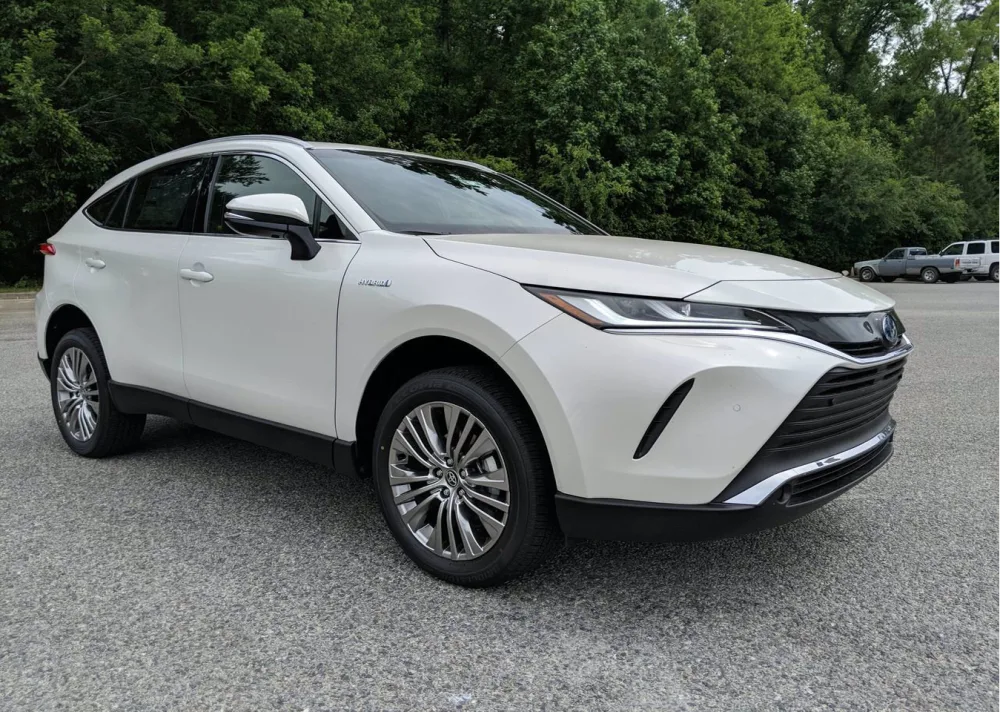
Everything said about order concentrates into one frame. Your cars.com listing photos stand or fall on the hero, and both platforms' display systems assume it will be a complete, attractive, honest exterior of the actual car. The working rules for that frame are stable across the industry. The whole car in frame, with a small margin, never cropped through a bumper or a mirror. Front three-quarter angle, showing the front and one full side, because that is the view buyers process fastest. Level horizon, wheels straight or turned slightly for stance, taken at roughly waist height rather than from above or below. Clean background that does not compete: no other cars crowding the frame, no signage from a neighboring business, no staff, no bins. Light that shows the true color, which means avoiding the deep shade and harsh midday glare that both lie about paint.
Two hero mistakes cause outsized damage. The first is the placeholder: a manufacturer stock photo, a library image of the same model, or a graphic that says photos coming soon. For a used vehicle, that is not a neutral gap. On both platforms it reads as concealment, it can fall foul of the requirement that photos show the actual vehicle, and it kills the listing's performance in the period when the car is newest to the market and most valuable. Photograph the real car before it is listed, even if a fuller set follows a day later. The second mistake is the over-processed hero: a car cut out and dropped into a dramatic scene with the wrong light and a floating shadow. That image is discussed fully in the editing sections below, but the short version is that the hero is the worst place to gamble, because it is the image every buyer, every platform reviewer, and every competitor sees.
Image quality and sizing: the technical expectations
Underneath the creative rules sits a technical floor. Cars.com listing photos are displayed at several sizes, from small search thumbnails to large detail-page galleries and full-screen views, and CarGurus does the same, so the file you supply is reprocessed repeatedly. Start with resolution to spare. As stable guidance, shoot and supply the largest clean files your camera or phone produces, keep the landscape orientation consistent across the set, and never upscale a small file to meet a size expectation, because upscaling invents softness that reads as a tired car. Sharpness is judged at the largest display size, not the thumbnail, so check your sets zoomed in, the way a careful buyer will.
Consistency of dimensions matters more than any single dimension. A set that mixes portrait phone shots, wide panoramas, and tight crops forces each platform to crop unpredictably, and the car ends up framed differently in every image, which looks amateur and can cut off parts of the vehicle. This is where a disciplined car image resizing step earns its place in the workflow: one aspect ratio, one framing standard, one output specification for the master set, applied to every photo before the feed ever sees it. At Cars Photo Editor that service starts from $0.19 per image, which is why resizing belongs in the standard pipeline rather than being treated as an optional extra. Compression deserves the same discipline. Heavy compression bands the sky, smears the paint, and turns fine detail like tire tread and seat stitching into mush. Supply clean files and let the platforms do their own compression once, rather than stacking yours underneath theirs.
Finally, keep the technical chain current. Photos must match the car as it stands today. A set shot before a wheel refurbishment, a repair, or a color-relevant change is an old set, and old sets are how honest dealers accidentally misrepresent cars. When the car changes, the gallery changes.
What syndication does to your photos
Most US dealers do not upload photos to Cars.com and CarGurus one listing at a time. The set is created once, in an inventory management or merchandising system, and then syndicated outward through feeds to both platforms, to the dealer's own website, and often to a tail of partner and aggregator sites. That single fact explains many photo problems that dealers blame on the platforms. The feed is the product. Whatever the feed carries, everywhere receives, including the mistakes.
Syndication does four things worth planning for. It fixes order at the source, so a scrambled sequence in your system is scrambled everywhere, and corrections must be made at the source and re-fed, not patched on one site. It applies each destination's own cropping and compression to the same master file, which is why a master set built to one generous, consistent specification survives everywhere, while a set built tightly to one site's current dimensions can be mangled by another's. It multiplies the audience for any defect: the dark photo, the wrong car's interior, the license plate you meant to treat, all appear in several places at once. And it delays fixes, because feed cycles run on schedules, so an error published on Monday may still be visible on a partner site on Wednesday even after you correct the source.
The practical conclusion is the master set doctrine that runs through this whole guide. Build one complete, correctly ordered, technically consistent set per car, hold it in one place, and syndicate that. Dealers who edit photos inside three different systems for three different destinations end up with three different versions of the truth, and the version a buyer finds is rarely the best one.
Branding, overlays and dealer graphics: what is allowed
Dealer branding on photos is a settled practice in the US market, within limits that both platforms police. A modest dealer logo, a border or frame treatment, and dealership identification applied consistently across the set are widely accepted on Cars.com and CarGurus, provided they sit at the edges of the frame and never cover the vehicle. What crosses the line is anything that competes with or conceals the car: large banners across the bodywork, price explosions and promotional graphics stamped over the vehicle, text that obscures panels, wheels, or known damage, and overlays on the hero image that turn the car's portrait into an advert flyer. Contact information belongs in the listing, not burned across the car.
Two working rules keep branding safe. Keep it peripheral and consistent: same size, same corner, same treatment on every photo, so it reads as a signature rather than a sticker. And keep the underlying photo clean and complete, so that if a platform or a feed partner strips or crops overlays, the image underneath still works on its own. Branding should also be honest in implication. A frame that says certified, warranty, or inspected must only appear on cars that genuinely carry that status. An overlay is a claim, and platforms and regulators treat it as one.
Dealers often ask us where the branding work belongs, and the answer is at the end of the editing pipeline, applied to the finished master set from a saved template so every car matches. The same cutout work that produces clean branding assets also serves the dealer's own website and advertising: a car transparent background version of a hero shot, produced from the same hand-drawn path, drops the car cleanly into web pages, email campaigns, and print material without a visible edge. Branding built from the master set stays consistent with the listing. Branding built separately never quite matches.
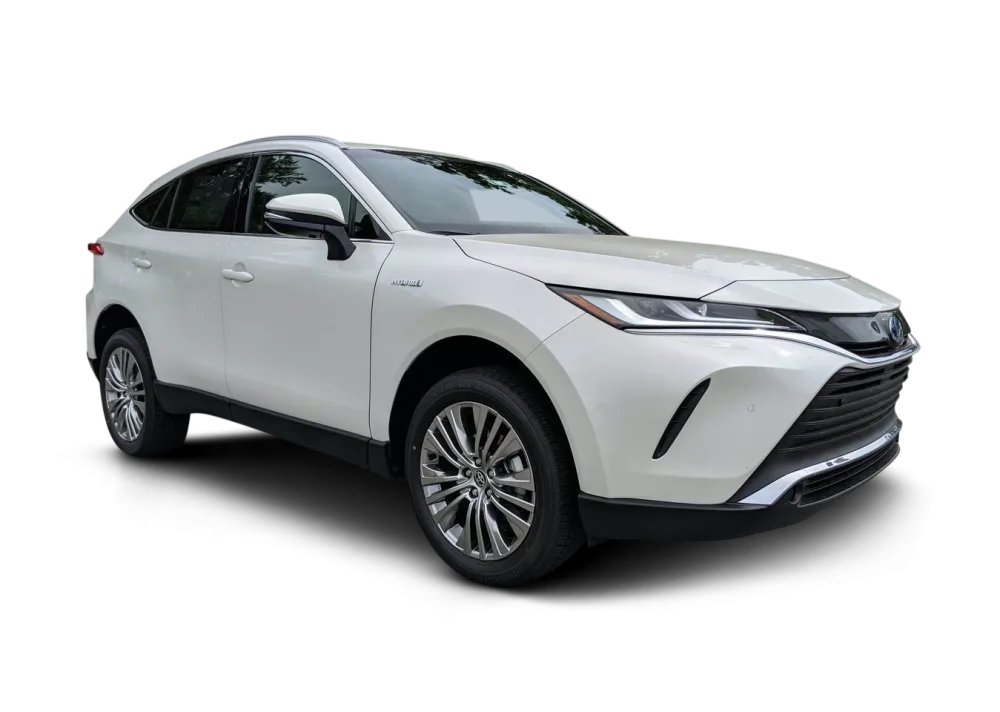
Background replaced within platform rules: hover or drag to compare
 BEFORE
AFTER
Drag the slider or move your mouse over the image to compare.
Prohibited edits and the misrepresentation line
This is the section with legal weight behind it, so it deserves plain language. Editing that cleans the presentation of a car is standard, accepted practice on both platforms. Editing that changes the car is misrepresentation, and it exposes the dealer to platform sanctions, state advertising enforcement, and the buyer's own remedies when the vehicle is not as pictured. The line is not hard to find once you look for it: you may edit everything around the car and the photographic qualities of the image, and you may not edit the car's own condition, specification, or identity.
On the permitted side: removing background clutter or replacing the background entirely, correcting exposure, white balance, and color so the paint reads true, straightening and cropping, removing photographic distractions such as reflections on glass or litter on the ground, and cleaning that reflects genuine valeting. A professional car retouching service works exactly this side of the line: dust, water spots, harsh reflections, and minor photographic blemishes are cleaned, while the car itself, its panels, its wheels, its trim, and its wear remain exactly as they are. On the prohibited side: removing dents, scratches, rust, curb damage, or paint defects; changing the car's color; adding features the car does not have, such as different wheels, a roof box, or a higher trim's badges; removing features it does have; altering the odometer reading shown in a cluster photo; and using another vehicle's photos, in whole or in part, for the car advertised.
Background replacement sits near the line and deserves its own sentence, because it is the edit buyers most often question. Replacing the scene behind a car is permitted, and a careful car background replacement keeps the car pixel-honest while the surroundings change. It becomes misrepresentation only when the new scene lies about the car: impossible light that changes the paint's apparent color, a luxury setting used to imply a trim or provenance the car does not have, or a shadow treatment that hides the car's stance or damage near the ground. Keep the original photos on file for every listing, and any edited image can be defended in seconds. Dealers who keep originals argue from evidence. Dealers who do not, argue from memory.
How merchandising feeds and photo services judge your set
Between your camera and the platforms stands an industry most dealers rarely think about: the inventory feed providers, merchandising platforms, and photo services that capture, process, and distribute dealer photography in the US. Their scoring shapes your results. Listings are commonly graded on completeness, photo count, presence of key shots, image quality, and time to market, and those grades influence everything from internal reports to how your inventory presents across the network. A set that is missing its interior circuit or its cluster shot is not merely less persuasive to buyers. It is measurably incomplete in the systems that move it.
Understanding this changes how you brief whoever handles your photos. The questions to ask any provider when you outsource car photo editing, or run it in-house, are the feed's questions. Is the shot list complete on every car, or only on the cars someone had time for. Is the order fixed at the source. Are dimensions and quality consistent enough that no destination's processing can embarrass the car. Is the turnaround fast enough that the set arrives while the listing is fresh, because a perfect gallery published in week two is worth a fraction of a good gallery published on day one. And is every edit on the permitted side of the line, documented against originals. A provider who can answer those five questions in operational detail is a provider whose work will survive syndication. One who talks only about making photos pretty has not understood the job.
This is also why turnaround belongs in a compliance discussion. At Cars Photo Editor, car photo editing with 24 hour turnaround is the standard for typical dealer batches, precisely because the feed does not wait. A compliant set that misses the feed cycle is, for that cycle, the same as no set at all.
One master set that stays compliant everywhere
Pulling the whole rulebook together, the compliant master set per car looks like this. A fixed shot list of thirty to forty frames covering the full exterior circuit, the full interior circuit, and the detail and document shots the description relies on. A deliberate order, hero first, walking order after, details last, fixed at the source so syndication inherits it. One technical specification for the whole set: consistent orientation, framing, resolution, and clean compression. Honest, presentation-only editing, applied uniformly, so every photo of the car looks like it came from the same session and the car in the photos is the car on the lot. Branding applied last, peripherally, from a saved template, carrying only claims the car genuinely supports. And the originals retained, filed against the stock number, for as long as the listing lives.
Most dealers reach that standard fastest by treating photography and editing as one pipeline rather than two departments. A complete car dealer photo editing workflow takes the photographer's full circuit and returns the finished master set: cut out cleanly where needed, the scene settled by a car background replacement service, color and light balanced across the set, resized to the house specification, branding applied, and checked photo by photo against the original before it goes anywhere near a feed. At Cars Photo Editor that full dealer edit is $0.59 per image, with the component services priced individually from $0.19, volume discounts of 5 percent at 100 images and 10 percent at 500, and every edit done by hand. No AI tool touches your photos here, and that matters in a compliance context: a human editor can be briefed on the line in the previous section, and can be asked, photo by photo, whether an edit presents the car or changes it.
The per-car compliance checklist US dealers can run
Run this check on every car before the set is released to the feed, and sample it weekly on live listings, because syndication means a defect is never visible in only one place. Are the photos of this actual vehicle, all of them, including the interior and the cluster. Is the count complete against the shot list, exterior, interior, and details. Does the order open with the hero and walk properly. Is the hero the complete car, honestly lit, with a clean background and no overlay across the vehicle. Is the technical quality consistent: orientation, framing, resolution, no heavy compression damage. Is the color true against the car under your own lights. Is every edit on the permitted side of the line, with originals filed. Is branding peripheral, consistent, and making only claims this car supports. Is anything in the set out of date because the car has changed since it was photographed. And does the written description agree with what the photos show, in trim, features, and condition. Ten checks, a few minutes per car, and they cover every rule in this guide.
How Cars Photo Editor keeps US dealer sets compliant
We have edited dealer photography by hand since 2016, for dealers and automotive photographers across the USA, the UK, and Europe, and our workflow was built around the master set doctrine this guide describes. Send one car's full circuit and it comes back as one consistent set: backgrounds cleaned or replaced, light and color matched across the set, every image resized to one specification, branding applied from your template, and each photo checked against its original before delivery. If an edit you request would cross the misrepresentation line, we will tell you rather than do it, because a listing that survives scrutiny is worth more to both of us than a listing that merely looks striking for a week.
Judge the standard on your own inventory, the way you would judge anything that feeds your listings. The free trial car photo editing offer covers 5 to 10 of your photos, edited and returned for your approval before you pay anything. Send the complete circuit of one real car, run the checklist above against the results, and then decide whether your current process, or ours, should be feeding Cars.com and CarGurus.
Listings that pass every platform rule, free to test
Send us 5 to 10 of your own listing photos (files or a Drive or Dropbox link) and we will edit them free, by hand, so you can judge the quality on your own inventory before you spend anything.
Start Your Free TrialCars.com and CarGurus photo rules: common questions
How many photos should a Cars.com listing have?
As working guidance, a complete set of thirty to forty photos covering the exterior, interior, and detail circuits is the standard for a front-line used car, and anything under fifteen reads as incomplete. Exact platform limits change, so confirm the current figures in your Cars.com and CarGurus seller accounts.
Can you use stock photos on CarGurus?
Not for a used vehicle. Both CarGurus and Cars.com expect photos of the actual car being sold. A manufacturer or library image standing in for a specific used car misleads buyers, underperforms badly, and can breach platform policy. Photograph the real car before listing it.
Are edited photos allowed on Cars.com and CarGurus?
Yes, presentation editing is standard practice: background cleanup or replacement, exposure and color correction, cropping, resizing, and consistent dealer branding at the edges of the frame. What is prohibited is editing the car itself: removing damage, changing color or specification, or altering anything the buyer relies on, such as the odometer reading. The safeguard is choosing a car photo editing company whose editors work to the permitted list and keep your originals on file.
Can dealers put logos or watermarks on listing photos?
Yes, provided the branding stays at the edges of the frame, is consistent across the set, and never covers the vehicle or makes claims the car does not support, such as certified status it does not hold. Keep a clean unbranded master underneath, so the photo still works if a feed partner strips or crops overlays.