
How Many Photos Does a Car Listing Need? The 15+ Photo Rule
October 28, 2026 · Dealer Guides
Thin galleries quietly cost enquiries, while bloated ones bury the car. This guide gives the working answer: a minimum viable set, a full set, the gallery order, and a shot list to hand your photographer.
Key takeaways
- Fifteen-plus photos is the working listing minimum
- Gallery order matters as much as count
- End with documents and history trust shots
- Thirty photos must still look like one shoot
A car listing needs at least 15 photos to look complete, and a full retail set runs to 30 to 40. Below 15, buyers assume something is being hidden and move on. Between 30 and 40, in the right order, the gallery answers nearly every question a buyer would ask on your forecourt, and that is what turns a viewer into an enquiry. This guide sets out the reasoning, the exact gallery order, and the shot list behind how many photos a car listing needs at each level.
That is the short answer to how many photos a car listing needs. The rest of this guide explains where the numbers come from, because the count alone is not the rule. Fifteen photos in the wrong order still fail, and forty photos dumped into a gallery at random can perform worse than twenty placed with intent. What follows is the working standard we apply as a car photo editing service for dealers and see succeed for dealers and automotive photographers across the USA, the UK, and Europe: why photo count changes buyer behavior, the difference between the minimum viable set and the full set, the exact order a complete gallery should run in, the shots buyers screenshot and send to other people, and the full shot list your photographer can work from, car after car.
Why the number of photos changes what buyers do
To understand the count, start with how a listing is actually consumed. A buyer finds your car in a grid of near-identical results and gives the hero photo a second or two. If it earns the click, the gallery takes over, and from that moment the photos are doing the job a walk around the car used to do. The buyer is inspecting, not admiring. Every swipe is a question. What does the other side look like. Are the rear seats usable. Is the boot big enough. Does the dashboard show the mileage the advert claims. Each photo that answers a question moves the buyer closer to an enquiry. Each missing photo leaves a question open, and an open question is a reason to go and look at the next car instead, because the next car is one swipe away.
This is why photo count behaves like a trust measure rather than a decoration. A complete gallery says the seller has nothing to protect you from. A thin gallery says the opposite, whether or not it is true. Dealers feel this in their numbers without always naming it: cars photographed properly on arrival, with full sets, draw enquiries earlier in their stock life, while cars listed quickly with six or seven photos sit, get reduced, and eventually sell to a buyer who negotiated hard because the listing never built confidence in the first place.
The two numbers: the minimum viable set and the full set
When dealers ask how many photos a car listing should carry as a working minimum, the honest floor is 15. Fifteen is the smallest set that covers the car as a buyer experiences it: the outside from every side, the inside from every seat, the controls, the boot, and the proof shots. Publish fewer than 15 and at least one whole area of the car is undocumented, which buyers read as a gap, and gaps are where suspicion lives.
The full set, the one front-line retail stock deserves, is 30 to 40 photos. That range is not padding. It is what you get when the minimum set is completed with the second angles, the detail circuit, and the documents: all four wheels instead of one, both sides of the interior instead of the driver's side only, the wear points photographed honestly, the service history and the keys. Between 30 and 40 the gallery stops feeling like a listing and starts feeling like an inspection the buyer conducted themselves. Above 40, returns fade quickly unless the car is specialist or high value; order and quality matter far more than pushing the count higher.
Budget and wholesale stock can live at the minimum. A clean, correctly ordered 15 is a respectable listing. What no car can survive is the single digits. Six photos is not a gallery; it is an admission that the car was listed in a hurry.
The exact order of a complete gallery
Count gets the buyer into the gallery. Order decides whether they stay. The principle is simple: the gallery should imitate the physical experience of walking around the car and then sitting in it, in the sequence a real inspection follows. Buyers have walked around cars their whole lives, and a gallery that follows that rhythm feels complete even before they consciously check anything. A gallery that jumps from a wheel to the boot to a headlight to the dashboard feels chaotic, and chaotic reads as careless.
The order that works runs in five movements. First, the hero and the exterior circuit: the car from the outside, walked around in one direction. Second, the transition shots: open doors, the view into the cabin, the boot open. Third, the interior circuit: front to back, as if the buyer sat down and looked around. Fourth, the detail circuit: wheels, lights, controls, wear points, the small evidence of how the car has been kept. Fifth, and always last, the documents and history shots, which reward a buyer who is already nearly convinced and should never be asked to open a gallery.
Within that order, the first photo carries a special burden. It is the search result, the thumbnail, the shared link preview, and the saved listing image. It must be the strongest exterior angle, complete car in frame, honest color, nothing cropped by accident. Everything in this guide is secondary to getting that one frame right.
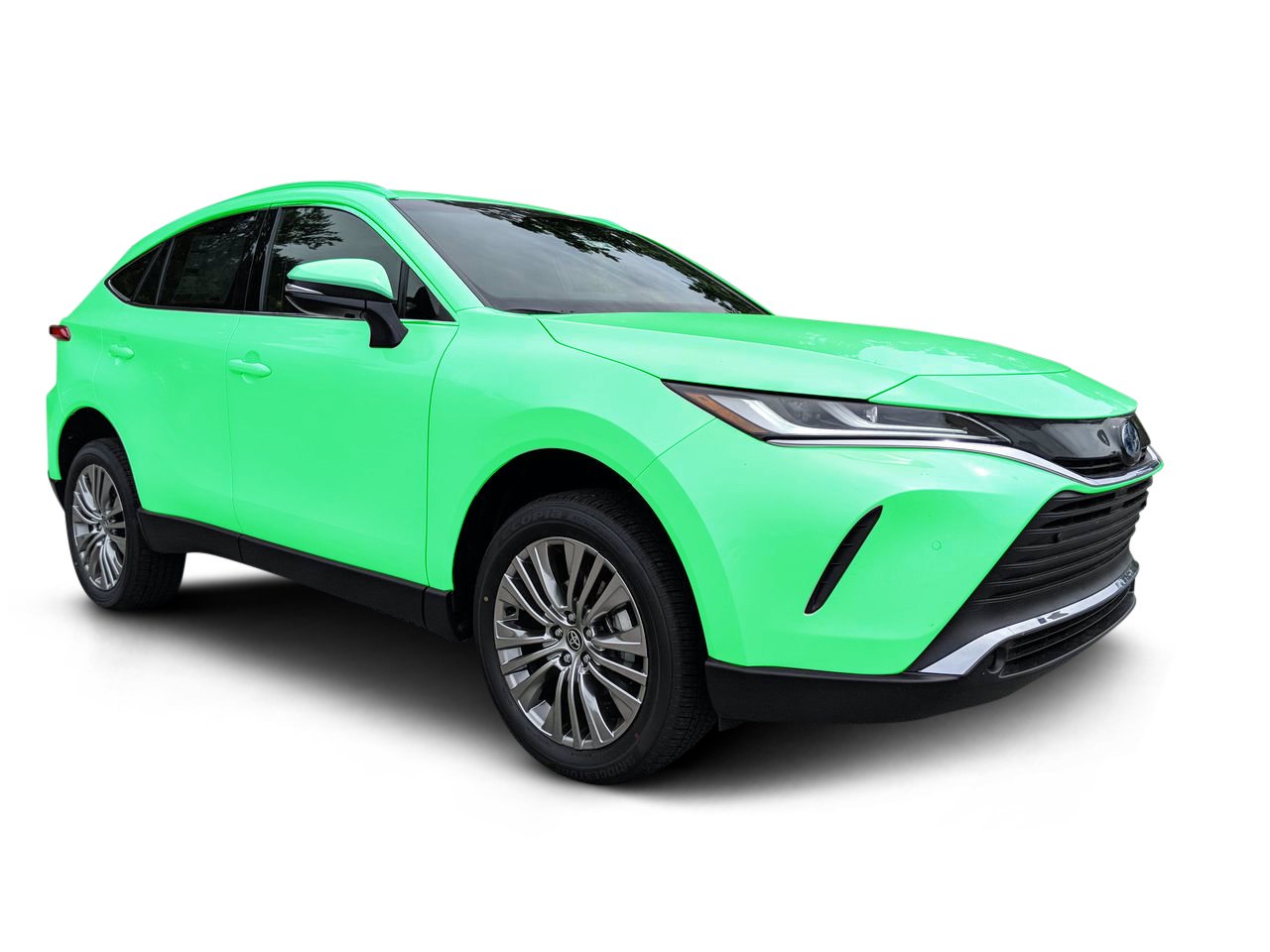
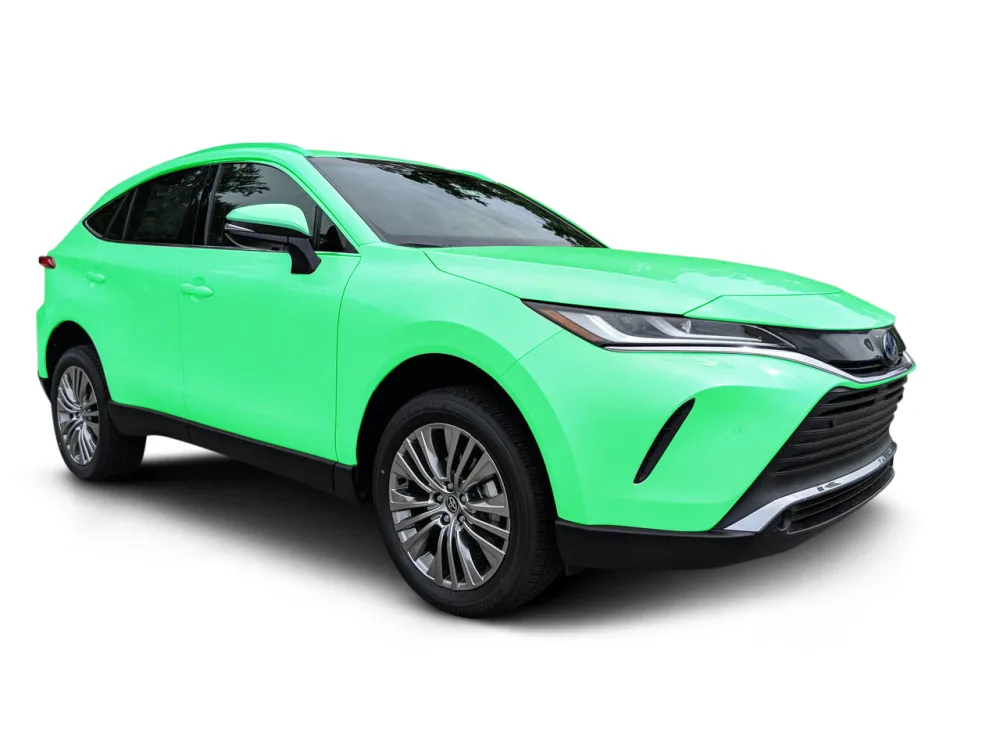
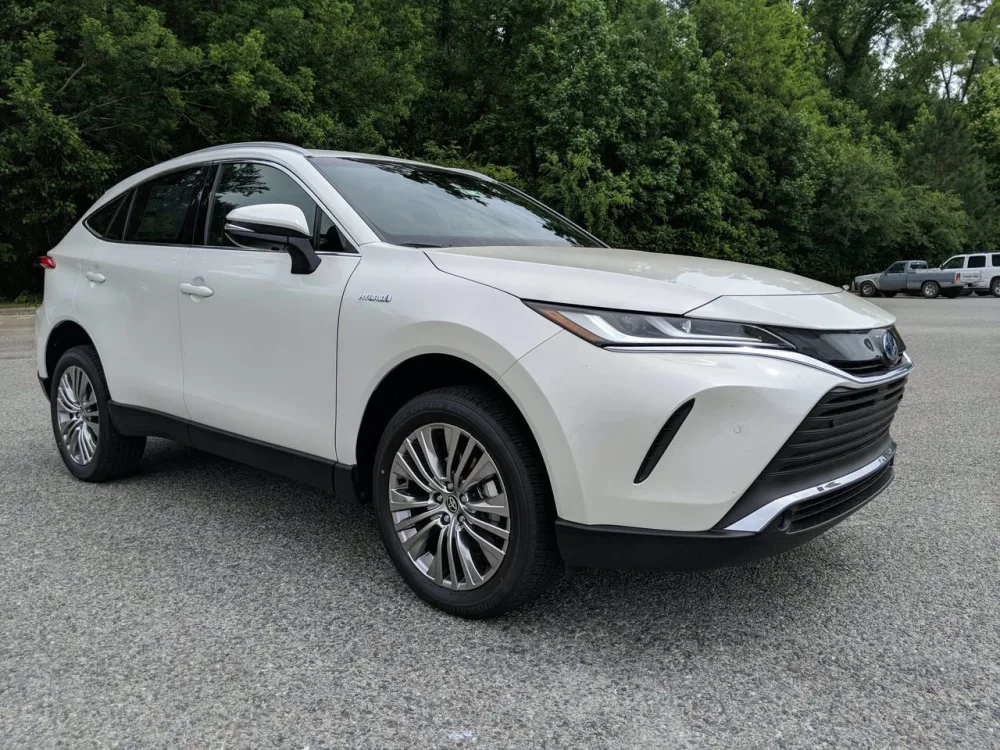
True paint colour across the set: hover or drag to compare
 BEFORE
AFTER
Drag the slider or move your mouse over the image to compare.
The exterior circuit: the walk-around
The exterior set opens with the hero: a front three-quarter view, taken from just below standing height, showing the front and one full side of the car, wheels straight or turned slightly toward the camera. Then the walk-around proceeds in one direction so the buyer always knows where they are standing. Front straight on. The opposite front three-quarter. Full side profile, which is the shot that shows stance, panel alignment, and the true length of the car. Rear three-quarter. Rear straight on. Then the second side in reverse: rear three-quarter, side profile, front three-quarter from the other flank. A roof shot for cars where it matters, and a lights-on shot if the car has signature daytime running lights worth showing.
Ten to twelve exterior frames is the complete circuit. Each one should agree with the others in light, color, and background, because the buyer's eye compares them as one continuous walk. When a set is shot on a real lot, that agreement is exactly what editing is for: professional car dealer photo editing normalizes the whole circuit so a car photographed across twenty minutes of changing light still reads as one car in one place at one moment.
The interior circuit: front to back
Buyers spend longer on interior photos than on exterior ones, because the interior is where they will live with the car. The circuit starts from the open driver's door: a wide shot that takes in the dashboard, wheel, and front seats in one frame. Then the dashboard straight on from the rear seat or through the windscreen, showing the full width of the fascia. The steering wheel and instrument cluster next, with the odometer readable, because that photograph is evidence, not decoration. The infotainment screen powered on. The front seats from the passenger side, so both front seats have been documented. The rear seats, shot from each rear door if the car is a family purchase. The headlining and sunroof if fitted. The boot, empty and clean, then the boot floor lifted if there is a spare wheel or storage worth showing.
Eight to ten interior frames covers it. Two disciplines matter here. Everything must be clean and empty: no paperwork on seats, no cables, no personal items, because buyers screenshot these frames and clutter travels with the screenshot. And the screens must be on and legible, which in practice means shooting them shaded from glare and letting a car photo retouching service recover the display rather than leaving a black mirror where the dashboard should be.
The detail circuit: the shots that answer objections
Details are where listings are won against identical competing cars. The detail circuit covers one full wheel and tyre close enough to read the tyre brand and tread, then the remaining wheels more briefly. Headlights and tail lights, because clouded lenses are the first age signal a buyer looks for. Door shuts and sill edges on a used car, where honest presentation of good condition builds real confidence. Switchgear and the driver's seat bolster, the two highest-wear surfaces in any cabin. Badges and trim that establish the exact specification, because a photograph of the badge ends arguments about which model this is. Any feature the advert text claims, photographed: heated seats controls, reversing camera in operation, towbar, roof rails, panoramic roof from inside.
The detail circuit also includes the honesty shots. A kerbed wheel, a stone chip, a scuffed bumper corner, photographed clearly and placed late in the details, does not kill a listing. It does the opposite. The buyer who discovers a flaw in your photos trusts everything else you showed them. The buyer who discovers it on your forecourt trusts nothing, and negotiates or walks. Six to ten detail frames is typical, and they should be the sharpest, best-lit photos in the set, because they will be pinched and zoomed more than any others.
Documents and history: the trust shots at the end
The final movement of the gallery is paper. The service history, photographed open at the stamped pages. The handbook pack and both keys laid out together, which quietly tells the buyer this car was kept by someone organized. The most recent inspection or MOT certificate where your market uses one, and the odometer shot can live here too if it was not used in the interior circuit. For electric cars, the battery health report or a dashboard state-of-health screen serves the same purpose and matters even more.
Three to five frames is enough. Keep personal data out of frame: previous keeper names and addresses should never be photographed, and registration documents should be shown in a way that proves existence without publishing details. Placed last, these shots close the sale's logic. Placed first, they waste the buyer's attention. Order is the whole game.
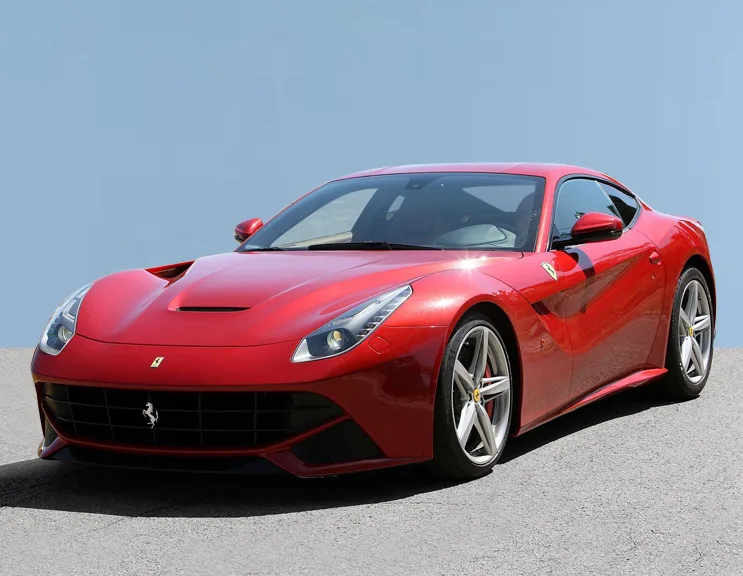
Full gallery edited as one shoot: hover or drag to compare
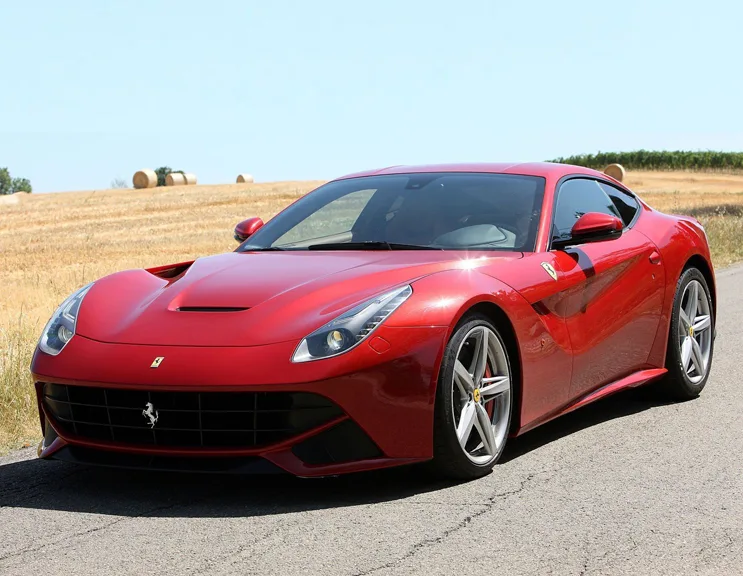 BEFORE
AFTER
Drag the slider or move your mouse over the image to compare.
Which photos buyers screenshot and share
Almost every used car purchase involves a second decision-maker who never sees the listing page: a partner, a parent, a friend who knows cars, a mechanic. They see screenshots. Knowing which frames get screenshotted tells you where quality is non-negotiable. The hero shot is shared first, and it carries your dealership's name into a conversation you will never hear, which is why some groups standardize it with car dealer branding templates so the shared image is unmistakably theirs. The dashboard and odometer shot is shared as proof. One interior wide shot is shared as the lifestyle test: could we live in this. And the honesty shots get shared as the trust test, usually with a message asking whether the wear looks fair for the price.
A screenshot cannot be clicked, zoomed, or corrected. It is your photo, at messaging-app compression, on someone else's phone, making your case without you. Frames that are dark, crooked, or inconsistent lose that argument silently. This is the least discussed and most practical reason the full set has to be edited as one piece of work rather than a handful of good frames surrounded by filler.
What too few photos signals to a buyer
When buyers explain why they skipped a listing, the language is rarely about photography. They say the car felt wrong, the seller seemed dodgy, or it looked like a part-timer. In practice, how many photos a car listing carries is a question about what the missing ones imply, because underneath those judgments, thin galleries do specific damage. A missing side of the car suggests the side that is damaged. A missing interior suggests the interior that is worn. No odometer shot suggests the mileage is a story. No boot shot on a family car suggests the boot is small or shabby. Buyers are not being cynical; they are applying the only rule available to them, which is that sellers photograph what helps them.
There is also a competitive signal. On any results page, your nine-photo listing sits between two listings carrying thirty-five photos each. Effort is visible, and effort is contagious as a judgment: the dealer who documented the car completely is assumed to have prepared it completely. Too few photos does not just undersell the car. It repositions your whole business one rung below the dealers around you.
What too many badly ordered photos does instead
The opposite failure is real, and it is why this guide insists the rule is 15-plus in order, not simply more. A gallery of fifty photos uploaded in camera order, with duplicates, near-duplicates, and the sequence scrambled, exhausts the buyer before the evidence lands. Marketplace galleries are consumed mostly on phones, in short sessions, and a buyer who has swiped twenty times without reaching the interior concludes the listing is disorganized, which is the same word they will later apply to the dealership.
Bad order also breaks the walk-around illusion this guide built earlier. When the sequence jumps randomly around the car, the buyer's mental model of the vehicle never assembles, and an unassembled car cannot be imagined in a driveway. Duplicates do particular harm: three nearly identical front three-quarter shots tell an experienced buyer that the set was uploaded without review, and they start wondering what else was not reviewed, including the car. Count is a budget. Spend it on coverage, not repetition.
How the marketplaces change the behavior
The platforms differ in mechanics, and a few of those differences should shape how the set is built. None of them changes how many photos a car listing needs; they change how deliberately the set must be assembled. Search thumbnails everywhere are cropped from the first photo, sometimes tightly, so the hero needs margin around the car and must survive being cut to a different shape; preparing the hero and the search crop deliberately is part of what car image resizing is for, sizing each frame to the platform's real dimensions instead of letting the marketplace crop it at random. Mobile apps present galleries as swipe decks, which rewards a strong first five frames, because a large share of viewers never pass them. Some marketplaces quietly demote listings whose images fail their quality checks, and all of them reward complete listings in their own ranking language. European platforms such as mobile.de and AutoScout24 carry buyers who expect documentation depth, particularly for cross-border purchases where the gallery is the only inspection available. American platforms carry the same expectation at dealer level even when private sellers list thin sets beside you. The safe conclusion is uniform: build the 30 to 40 set once, in the order this guide describes, and every platform's version of the gallery works, because each is drawing from a complete, correctly ordered master set.
Keeping 30 to 40 photos looking like one shoot
Here is the practical problem nobody warns dealers about: a 35-photo set taken on a real lot, across a valeting session, in real weather, does not naturally agree with itself. The sun moves. One side of the car is lit and the other is in shade. The camera's white balance wanders between the exterior circuit and the interior circuit, so the same paint appears as two slightly different colors, and buyers notice color disagreement between frames more readily than any other flaw, because color is how they identify the car. A big gallery multiplies this risk: every additional photo is another chance for the set to contradict itself.
This is the point where editing stops being presentation and becomes quality control. Car color correction locks the paint to one true color across all 35 frames, checked against the car, not against the editor's taste. Car lighting correction balances the shaded side against the lit side and recovers the interiors that were shot against bright glass, so the walk-around does not alternate between glare and gloom. Backgrounds are cleaned or replaced to one standard, number plates are treated one consistent way, and the whole set is cropped to one aspect so the gallery advances like a film rather than a pile of photographs. The larger the set, the more this normalization matters, which is why the dealers who publish big galleries successfully are almost never publishing raw camera output. They are publishing edited sets, produced in-house or by a car photo editing company, and the buyer's impression of one careful business is manufactured, honestly, at the editing desk.
The complete shot list: hand this to your photographer
This is the working checklist, in gallery order. Fifteen is the floor; the full set is everything on the list.
Exterior, the walk-around: - Hero: front three-quarter, complete car in frame, strongest angle, wheels turned slightly toward camera - Front straight on, centered, lights visible - Opposite front three-quarter - Full side profile, driver's side, car parallel to frame - Rear three-quarter, driver's side - Rear straight on - Rear three-quarter, passenger side - Full side profile, passenger side - Front three-quarter, passenger side, completing the circle - Roof and glasshouse from a raised angle, where the car justifies it - Lights-on shot showing daytime running lights or headlight design - Badge and model designation close-up
Interior, front to back: - Open driver's door wide shot: dashboard, wheel, and front seats in one frame - Dashboard straight on, full width of the fascia - Steering wheel and instrument cluster with odometer readable - Infotainment screen powered on, shot shaded from glare - Front seats from the passenger side - Driver's seat bolster and adjustment controls - Rear seats from the open rear door - Rear seats from the opposite side, or the folded configuration if the car offers one - Headlining, sunroof or panoramic roof from inside - Boot empty and clean, shot square from behind - Boot floor raised: spare wheel or underfloor storage
Details and honesty: - One wheel and tyre in close-up, brand and tread readable - The remaining wheels, one frame each - Headlight and tail light close-ups - Door shut and sill on the driver's side - Every feature the advert text claims, photographed working - Wear and damage honesty shots: worst wheel, worst panel mark, placed here, never hidden
Documents and history, always last: - Service history open at the stamped pages - Handbook pack and both keys together - Latest inspection or test certificate, personal details kept out of frame - Battery health evidence for electric cars
That is 35 frames as written, and it flexes honestly: a two-seat sports car trades the rear-seat frames for a roof-down set, a van trades them for the load bay. The structure never changes. Exterior, interior, details, documents, in that order, every car, every time.
What a full set costs to prepare
Dealers sometimes resist the full set on cost grounds, so the arithmetic deserves to be plain. At Cars Photo Editor, a full car dealer photo editing treatment is $0.59 per image, and the lighter normalization most frames in a big set need is less: color correction and lighting correction are $0.39 per image, and resizing is $0.19. Volume discounts of 5 percent at 100 images and 10 percent at 500 apply across an inventory, which is how a group publishing 35 photos per car actually buys bulk car photo editing. Set against the price movement on one car that sat for sixty extra days because its nine photos never built confidence, the editing cost of doing every car properly is not a close decision. And as with all our work, the first set is the test: the car photo editing free trial covers 5 to 10 of your own photos, edited by hand and returned for approval before you pay anything.
How Cars Photo Editor handles a full listing set
Send us the complete take from one car, in camera order, as files or as a Drive or Dropbox link with the image count declared. Our editors work through the set in gallery order, applying one color and light standard across every frame, cleaning or replacing backgrounds to your house style, treating plates consistently, and sizing the finished set for your marketplaces. Standard turnaround is within 24 hours for typical dealer batches, and the set comes back in the order this guide describes, ready to upload as shot. We have done this by hand since 2016, for dealers and automotive photographers across the USA, the UK, and Europe, and no AI tool touches your photos at any stage. If your listings are currently running on eight or nine photos, send us one car's full take and compare the two galleries side by side. The difference in how complete a car can feel is the entire argument.
Get your full photo set edited, free to test
Send us 5 to 10 of your own listing photos (files or a Drive or Dropbox link) and we will edit them free, by hand, so you can judge the quality on your own inventory before you spend anything.
Start Your Free TrialListing photo counts: common questions
How many photos should a used car listing have?
At least 15, which is the smallest set that covers the exterior from every side, the full interior, the details, and the documents. Front-line retail cars deserve the full set of 30 to 40 photos, in gallery order: exterior walk-around, interior front to back, detail shots, and history documents last.
Is 10 photos enough for a car listing?
No. Ten photos always leaves a whole area of the car undocumented, usually the rear seats, the boot, or the documents, and buyers read a missing area as something being hidden. Ten good photos in the right order will outperform thirty random ones, but the listing will still lose to a competitor's complete set. Fifteen is the floor.
What should the first photo of a car listing be?
A front three-quarter exterior shot with the complete car in frame, honest color, and enough margin around the car to survive the marketplace cropping it into a search thumbnail. The first photo is the search result, the saved listing, and the screenshot buyers share, so it must be the strongest and most accurate frame in the set.
Do more photos actually help sell a car faster?
More photos help when they add coverage in the right order, because a complete gallery answers the questions a buyer would ask on the forecourt and builds the confidence that produces an enquiry. More photos do not help when they are duplicates in a scrambled order. The rule is coverage and sequence: 15 minimum, 30 to 40 for retail stock, always exterior, interior, details, documents.