
Car Listing Photo Checklist: The 25-Point Listing Photo Audit
October 28, 2026 · Dealer Guides
Score any listing in about five minutes with this twenty-five point audit covering capture, the car, editing, gallery presentation and trust. Learn what each score band demands, fix the fails, then re-audit before publishing.
Key takeaways
- One point per check, scored in five minutes
- Twenty-three points or better means publish-ready
- Re-score failed points plus their neighbours
- Run the audit on every new listing
A car listing photo checklist turns "the photos look fine to me" into a score you can defend: work through the 25 points below in about five minutes per car, give one point for every check the listing passes, and the total tells you exactly what to do next. A listing scoring 23 to 25 is ready to publish and promote. A listing in the teens does not need opinions or a meeting; it needs the specific failed points fixed, in the order this audit finds them.
This article is the audit itself, written for the people who will actually run it: used car managers checking stock before it goes live, dealership photographers reviewing their own work before handover, and dealer principals who want one standard applied to every listing on every site. It is also the standard we suggest you hold any car photo editing service for dealers to, including us. If a provider's finished work cannot pass these 25 points, the problem is not your checklist. Print it, save it, and run it on your ten oldest listings first. That is where it will earn its keep fastest.
How to run this car listing photo checklist
You need the live listing open on the largest screen you have, the original unedited photos beside it if you can get them, and a pen. Work through the points in order and score honestly: a point is earned only when the check passes completely, not when it nearly passes. Nearly is how weak listings survive. Do not stop to fix anything while you score; a fix list written during the audit is worth ten fixes remembered afterwards. Note the point number beside every failure, because the fix list you build at the end is simply those numbers grouped by who owns them: the photographer, the editor, or the person who publishes.
Five minutes is realistic once you have run the audit twice. The first run on an unfamiliar listing takes closer to ten, because you will zoom into photos you normally glance at. That zoom is the point. Buyers zoom. Marketplaces crop. The audit fails listings at the level of scrutiny a serious buyer applies with money in their hand, not the level a busy stock manager applies at the end of a Friday.
For a large inventory, do not try to audit everything at once. Audit every new listing before it publishes, then audit a rotating sample of live stock each week: the oldest ten percent, the slowest movers, and anything that was photographed by someone new. Within two months the whole forecourt has passed through the checklist without a single lost weekend.
What the score bands mean
A score of 23 to 25 means publish-ready. Promote the listing, syndicate it everywhere, and spend advertising money behind it without hesitation. Re-audit it only on the normal monthly sample.
A score of 19 to 22 means fix first, then publish. The failures in this band are almost always editing failures: background inconsistency, color drift, a missing shadow, a gallery in the wrong order. They are cheap to fix and expensive to leave, because the car itself was captured well and the listing is being let down at the desk, not on the lot.
A score of 13 to 18 means rebuild the set. Some capture failures are present alongside the editing ones, and patching individual photos will not produce a coherent gallery. Plan a partial reshoot of the failed angles and a full re-edit of everything else.
A score of 12 or below means reshoot. Editing cannot rescue a set that was never captured: missing angles, soft focus, a car photographed mid-preparation. Do not spend editing money here. Photograph the car properly and run the audit again from point one.
Capture: points 1 to 5
1. The complete standard set exists. Good looks like every angle on your house shot list being present: front three-quarter, front, side profile, rear three-quarter, rear, the interior circuit, the detail shots, and the documents or service history photo where your market expects it. The common failure is a listing built from whatever happened to get shot that day, with a missing rear view or no interior at all. Buyers notice gaps they cannot name and read them as something being hidden.
2. The hero shot is complete, straight, and level. Good looks like the whole car inside the frame with breathing room around it, the horizon level, and the car sitting square in the shot rather than drifting toward one edge. The common failure is a cropped bumper or a tilted background that makes the car look like it is sliding downhill. The hero is the thumbnail that earns the click; it carries more weight than any other single point in this audit.
3. Exposure is consistent across the whole set. Good looks like frame after frame at the same brightness, so the gallery feels like one shoot on one day. The common failure is auto settings drifting between shots: two bright frames, one dark one, a dashboard shot that glows. Inconsistent exposure is the fastest way to make a professionally edited listing look amateur, because the eye reads brightness changes as quality changes.
4. Focus is sharp at full size. Good looks like badges, number plate text, and stitching that stay crisp when you zoom to 100 percent. The common failure is a hero shot that looks fine as a thumbnail and dissolves into softness at full size, usually from a rushed shot, a dirty lens, or a phone that focused on the car behind. Softness cannot be edited back in. This is a reshoot point, and the audit should say so without mercy.
5. The car was photographed prepared. Good looks like a washed, vacuumed car with the correct plates fitted, photographed before it went back into circulation. The common failure is a car shot mid-preparation: trade plates in one frame and retail plates in another, a valet ticket on the dash, compound dust on the panels. Every one of those tells the buyer the car was rushed to market, and rushed cars invite low offers.
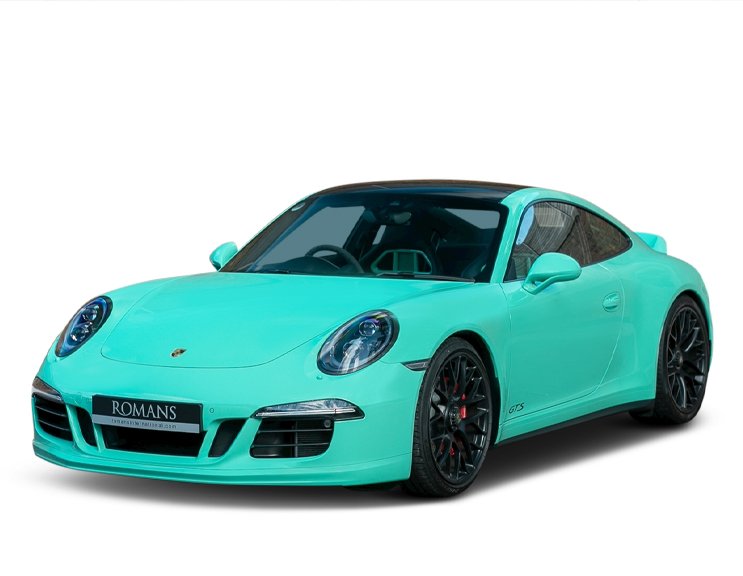
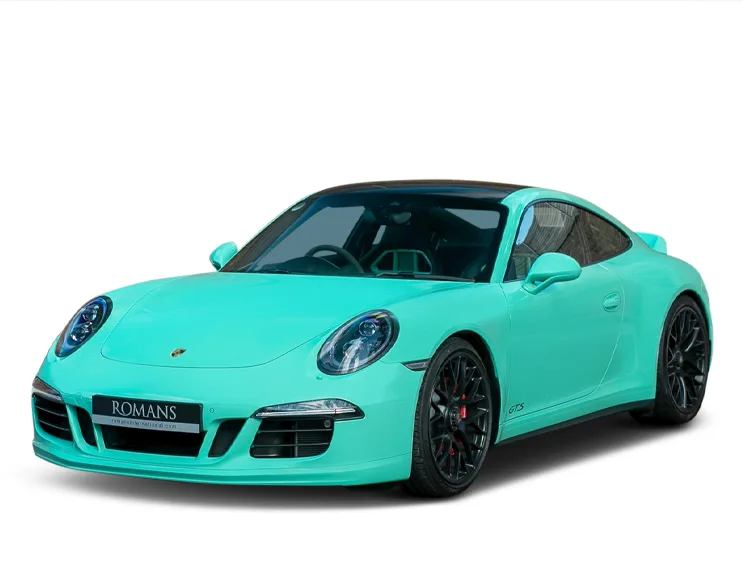
Editing points fixed, then re-audited: hover or drag to compare
 BEFORE
AFTER
Drag the slider or move your mouse over the image to compare.
The car itself: points 6 to 10
6. Wheels are positioned deliberately. Good looks like front wheels turned at a consistent angle in the three-quarter shots and straight in the side profile, with the same treatment across every listing on the site. The common failure is random wheel positions from shot to shot, which breaks the rhythm of the gallery and makes even a good set feel unplanned.
7. The car is closed and complete in every frame. Good looks like doors, tailgate, and bonnet shut unless the shot exists to show them open, mirrors unfolded, and nothing dangling, trailing, or half-fitted. The common failure is one frame with a door ajar or a charging cable, fuel flap, or boot liner out of place, quietly suggesting a car that does not quite work properly.
8. The interior is presented tidily and truthfully. Good looks like an empty cabin: no personal items, no rubbish, no air fresheners hanging as an apology, mats in place, seats at sensible angles. The common failure is a cabin that tells the previous owner's story — receipts in the door pocket, a child's seat base still fitted, crumbs in the rails. Buyers are imagining their own life in that seat; anything left behind competes with the imagining.
9. The specification in the photos matches the description. Good looks like the wheels, trim, badges, and fitted options in the pictures being exactly the ones the text describes and the price assumes. The common failure is a car photographed on upgraded wheels that were later swapped, or wearing a trim badge the listing text grades differently. This is where an editing audit becomes a legal one: a photo of a specification the car does not have is misrepresentation, whatever anyone intended.
10. Number plate treatment is consistent and within local rules. Good looks like one plate policy applied to every frame — shown, blurred, or replaced — executed the same way across the set and across the inventory. The common failure is a mixture: plates visible in the exterior shots, scribbled over in one interior-adjacent frame, different again on the next listing. Inconsistent plate handling looks careless and, in some markets, creates real privacy and cloning problems.
Editing: points 11 to 16
This is the group where the car listing photo checklist separates dealers who edit from dealers who merely process. Every point below is checked against the original photo, which is why the audit asks you to keep originals open beside the listing. When these six points fail across your whole inventory rather than on one car, that pattern is the business case to outsource car photo editing to a desk that does nothing else, rather than loading it onto whoever has a spare half hour.
11. The background is clean and consistent. Good looks like one calm scene family behind every car: no other vehicles competing, no bins, no signage from the business next door, and the same treatment on this listing as on the fifty around it. The common failure is a background that changes with the weather of the day the car arrived, so the inventory page reads as a patchwork of different businesses. Background discipline is the single largest visual difference between a franchise-grade site and an independent one.
12. The color is true. Good looks like paint that matches the car standing in front of you, whites that are white, and a black car that still shows its panel lines. The common failure is drift: the warm cast of a late-afternoon shoot left in the file, or a saturation push that turns a sober grey car into something the manufacturer never painted. A buyer who travels to see a car that is a different color in person starts the negotiation angry, and they are right to.
13. The shadow grounds the car. Good looks like a soft contact shadow under the tires and a body shadow that agrees with the light in the scene, so the car sits in its environment. The common failure is the floating car: background replaced, shadow forgotten, vehicle hovering half an inch above the ground in a way buyers feel before they can explain. This is the most technical point in the audit and the one automated tools fail most often, because a believable shadow is drawn, not filtered.
14. The cutout edges are clean at full zoom. Good looks like mirrors, roof rails, antennas, wheel spokes, and glass that survive a 100 percent zoom with no halo, no fringe, and no bites taken out of the car. This quality starts with a proper path: a car clipping path service draws the outline by hand precisely so that glass stays honest and thin details survive. The common failure is the pale outline around a dark car on a light scene, visible from across the room once you have seen it once.
15. Light and exposure are corrected evenly. Good looks like blown highlights recovered where the detail exists, shadows lifted without going grey and milky, and interior shots where the cabin and the view through the windows are both readable. The common failure is correction applied to the hero shot only, leaving the rest of the set at the mercy of the day the car was photographed — one polished frame followed by nine dull ones.
16. The whole set matches, and matches your other listings. Good looks like one crop ratio, one color treatment, one background family, and one level of finish from the first frame to the last, and from this car to every other car you sell. This is the point where professional car dealer photo editing proves its value over per-photo fixes: consistency is a property of the system, not of any single image. The common failure is three listings that look like they came from three different dealerships, because three different people edited them on three different days.
Gallery and VDP presentation: points 17 to 21
17. The strongest frame leads. Good looks like the best three-quarter shot in position one, because position one is the search results page, the thumbnail, and most of the decision. The common failure is a gallery that opens with whatever the camera produced first — often a straight front shot or worse, a detail — while the money shot sits at position nine where half of buyers never arrive.
18. The gallery order follows the buyer's walk. Good looks like a deliberate route: exterior circuit first, then the interior circuit, then details, then documents and history. The common failure is a shuffled deck, where a wheel close-up sits between the dashboard and the rear seats and the buyer has to assemble the car mentally. Buyers who have to work to understand a listing leave and buy the one that explained itself.
19. The photo count is complete for the platform. Good looks like the full set the marketplace rewards, with no duplicates and no near-duplicates padding the count. The common failure runs both ways: nine photos where the platform's serious sellers publish thirty, or forty photos in which twelve are the same angle with the door in different positions. Count is a quality signal only when every frame adds information.
20. Images are sized, cropped, and compressed correctly. Good looks like files that are sharp on zoom, quick to load on a phone connection, and cropped to the ratio each marketplace displays without amputating the car. The common failure is the heavy original uploaded untouched — slow, soft after the platform's own compression, and cropped by an algorithm that has never seen a car. On mobile, a slow gallery is a closed gallery.
21. The VDP media is complete and working. Good looks like everything the page promises actually functioning: the gallery, the video or spin if the listing claims one, captions or alt text present for accessibility and search, and no broken embeds or placeholder frames. The common failure is a video player that errors, a spin that never loads, or stock-style placeholder media left in a live listing. Test the page as a buyer, on a phone, before you call it finished.
Trust and compliance: points 22 to 25
22. Nothing about the car itself was altered. Good looks like editing confined to the scene, the light, and the presentation: the car's color, specification, and condition are exactly what the original photo showed. The common failure is the quiet touch-up — a kerbed wheel smoothed, a scratch softened, a warning light that somehow stopped glowing. Every platform you sell on prohibits this, consumer law in the USA, the UK, and Europe backs the buyer when it happens, and one discovered alteration poisons every other listing you run.
23. Known flaws are shown and matched in the text. Good looks like the scuff, the worn bolster, and the stone chips photographed fairly — lit so they can be seen, neither hidden in shadow nor dramatized — and described in the listing with the same words a buyer would use standing in front of the car. The common failure is the surprise at viewing, which converts directly into renegotiation, a lost sale, or a return. Honest wear, well photographed, builds the trust that sells the next car.
24. The photos trace to this exact vehicle. Good looks like originals on file, matched to the stock number or VIN, taken of the car being sold and no other. The common failure is the library mix-up: a photograph of a similar car, same model and color, used because it was already edited. It happens innocently in busy groups and it is indefensible when discovered, so the audit checks it like a compliance point, because it is one.
25. Branding and overlays follow platform rules. Good looks like your logo treatment, borders, and price or finance banners applied where the marketplace allows them, in the form it allows, and absent where it does not. The common failure is the one-size overlay pushed to every destination, quietly breaching the terms of the strictest platform in the feed. Branding builds recognition; a delisted car builds nothing.
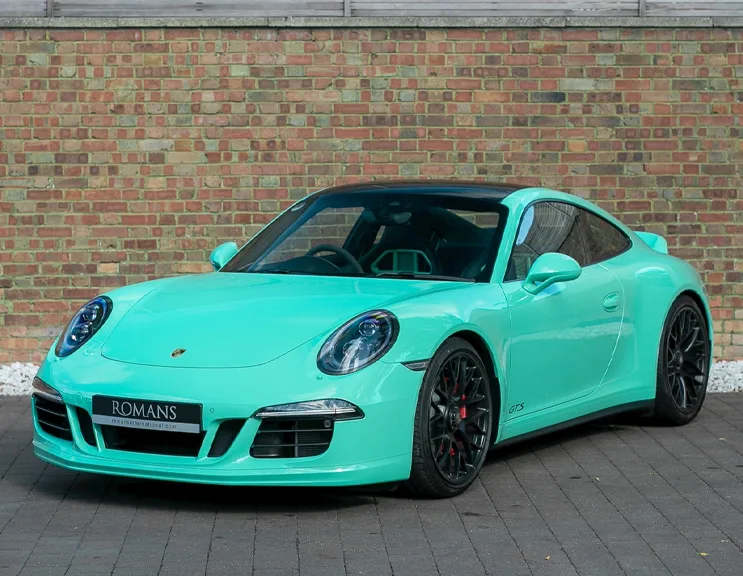
Colour truth restored to audit standard: hover or drag to compare

 BEFORE
AFTER
Drag the slider or move your mouse over the image to compare.
The same audit for spare-parts listings
Parts sellers can run this car listing photo checklist with the same discipline and a shorter translation, because a parts buyer judges photographs even more harshly than a car buyer: the photo is the inspection. Background comes first. A part photographed on a workbench competes with everything around it, so clean spare parts background removal onto pure white is the parts equivalent of points 11 and 14 combined — the outline of a gasket, a wiring loom, or a chrome trim piece has to survive exactly like a car's mirrors and spokes. Scale honesty is the parts version of point 22: show the part at true proportion, include a size reference where dimensions matter, and never stretch an image to fill a template, because a stretched part is a wrong part. Flaw visibility is point 23 applied to metal and plastic: corrosion, cracks, worn threads, and faded labels must be visible and described, and honest spare parts photo retouching restores true color and removes dirt and glare without removing a single defect the buyer is paying to know about. Add the angles a car never needs: every connector face, every label and part number legible, and the mounting points. Sellers who treat auto parts photo editing with the same audit discipline as whole cars see the same payoff: fewer returns, fewer "not as described" disputes, and listings a buyer can trust at full zoom.
Re-auditing after fixes, and how often to run the full audit
When the fix list comes back done, re-audit only the failed points plus the points beside them, because fixes have neighbors: a replaced background can change the shadow, a re-crop can break the gallery order, a corrected color can expose the next frame's drift. A listing leaves the process when it scores 23 or better on a fresh pass, not when someone says the fixes are probably fine. Keep the score with the car's file. A dealership that records audit scores builds, within a quarter, a map of exactly where its photography process leaks — which photographer, which site, which stage — and that map is worth more than the checklist itself.
Cadence is what turns a one-off cleanup into a standard. Run the full audit on every new listing before publication, without exception. Run a sample audit monthly on live stock, weighted toward the oldest cars and the slowest movers, because those are the listings where a weak gallery is doing real financial damage every day it sits. Run a full-inventory sweep quarterly if you are a group, and immediately after any change that touches the process: a new photographer, a new editing provider, a new marketplace feed. Standards do not decay all at once; they decay one unreviewed listing at a time, and the audit is how you notice.
How Cars Photo Editor fits into your audit routine
We are a hand-editing service, and it is worth being plain about it: no AI tool edits your photos here. Since 2016 our editors have done this work by hand for dealers, dealer groups, and automotive photographers across the USA, the UK, and Europe — drawing the clipping path, building the shadow, matching color to the real car, and checking the finished set against the original before delivery, which is simply points 11 to 16 and point 22 of this audit performed as a production routine. For groups sending volume, bulk car photo editing runs at the same standard with volume discounts of 5 percent at 100 images and 10 percent at 500, and typical batches come back within 24 hours.
Do not take any of that on trust, including ours. Take your worst-scoring recent listing, run this audit on it, and send us the same 5 to 10 photos through the free trial. Score our returned set against the same 25 points, next to the originals, at full zoom. That is what free trial car photo editing is for: not a sample of our best work chosen by us, but your hardest listing, judged by your own checklist.
Score your listings, then fix the gaps free
Send us 5 to 10 of your own listing photos (files or a Drive or Dropbox link) and we will edit them free, by hand, so you can judge the quality on your own inventory before you spend anything.
Start Your Free TrialThe listing photo audit: common questions
What should a car listing photo checklist include?
It should cover the whole life of a listing photo: how the set was captured, how the car itself is presented, how the editing was done, how the gallery is ordered and published, and whether the finished listing is honest and traceable to the exact vehicle. The 25 points in this article are grouped in exactly that order so a failure points straight at the stage and the person who can fix it.
How often should dealers audit their listing photos?
Every new listing before it publishes, a rotating sample of live stock every month weighted toward the oldest and slowest-moving cars, and a full sweep after any change to the process — a new photographer, a new editing provider, or a new marketplace feed. Most listings take about five minutes once the auditor has run the checklist a few times.
What is a good score on a listing photo audit?
Score one point per passed check out of 25. A score of 23 to 25 is publish-ready. From 19 to 22, fix the failed points first — they are usually editing issues and cheap to correct. From 13 to 18 the set needs rebuilding with a partial reshoot and full re-edit, and at 12 or below the honest answer is to photograph the car again.
My listings failed the audit. Can I get car photo editing with 24 hour turnaround to fix them?
Yes. Editing failures — background, color, shadow, edges, and set consistency — are the fastest points to recover, and our standard turnaround for typical dealer batches is within 24 hours. Send 5 to 10 photos from a failed listing as a free trial first, re-audit the returned set against the same checklist, and only then decide about the rest of your inventory.