
360° Car Photography: How to Shoot a Spin-Ready Photo Set
October 28, 2026 · Dealer Guides
A spin set fails or succeeds on consistency, not camera price. This guide covers frame counts, locked settings, marked positions and the editing that makes thirty-six separate frames rotate like one continuous turntable view.
Key takeaways
- Consistency between frames matters more than camera
- Lock exposure, white balance, focus and zoom
- Thirty-six frames is the working dealer standard
- Edit the set as one family, never individually
A spin-ready set for 360 car photography is a run of still photos taken from fixed positions all the way around the car, usually 24 to 48 frames, with the camera height, distance, exposure and white balance locked from the first frame to the last. Shoot the whole set in one disciplined pass with the car dead centre in every frame, then edit every frame — in-house or through a photo editing service for automotive photographers — to one background, one colour balance and one continuous shadow, and the viewer software can stitch the set into a rotation that feels like the car is turning on a turntable. Skip the discipline, and the same software produces a spin that wobbles, flickers and jumps, which is worse than no spin at all.
This guide is the complete working method, written for dealer principals, used car managers, inventory photographers and the marketing staff who have to decide whether spins belong in their listings at all. It explains how spin viewers actually work, why the shooting discipline matters more than the camera, how many frames a set really needs, how interior panoramas and hotspots fit in, what editing makes a rotation feel seamless, the publishing specifications that keep file sizes sane, and the mistakes that break the illusion in the first two seconds. It ends with an honest section on when a spin earns its cost and when a strong set of stills is the better spend.
How a spin viewer actually works
A spin viewer is simpler than most dealers expect. It does not build a three-dimensional model of your car, and it does not understand the vehicle at all. It is a slideshow with good manners: it loads your sequence of frames in order, displays one at a time, and swaps to the next frame as the buyer drags, swipes or presses an arrow. Drag faster and the frames change faster, which is what creates the feeling of rotation. That is the whole trick, and everything in this guide follows from it.
Because the viewer is only sequencing stills, the illusion lives or dies on how similar neighbouring frames are. The car must sit in exactly the same place in every frame, at the same size, under the same light, against the same background. Any difference the camera introduces between frames, a small step closer, a slight height change, an exposure shift, becomes a visible jump when the frames play in sequence. A single still can hide a multitude of small sins. A spin exposes all of them, thirty-six times in a row.
Interior 360 works on a different mechanism. A true interior panorama is a stitched, wrap-around image that the buyer looks around from a fixed point, usually the centre of the cabin. The stitching software blends overlapping shots into one continuous sphere or cylinder of view. The discipline is different but the principle is the same: the software is forgiving of almost nothing, and consistency at capture is what it feeds on.
Why consistency between frames matters more than the camera
Dealers shopping for 360 car photography usually ask about cameras first, and it is the least important question on the list. A spin shot on a mid-range camera with locked settings and fixed positions will look professional. A spin shot on an expensive camera in automatic mode, hand-held at slightly different distances, will look amateur. The viewer magnifies inconsistency, not resolution.
Think about what the buyer's eye tracks during a rotation. It follows the car's outline against the background, the reflections travelling along the paint, the shadow under the body, and the bright and dark areas of the scene. If the outline stays put while the angle changes, the brain reads rotation. If the outline breathes in and out because the camera distance wandered, the brain reads a mistake. If the paint changes colour temperature halfway around because the white balance was hunting, the brain reads a different car. None of these failures is a camera problem. All of them are process problems, and process is free.
This is also why spin work rewards a written standard more than almost any other kind of dealer photography. One photographer, on one day, can hold a routine in his head. A group with four rooftops and whoever is free on a Tuesday cannot. The dealers whose spins look good month after month are the ones who wrote the routine down: the marked positions, the tripod height, the locked settings, the frame count, the file naming. The standard is the product. The camera is just what happens to be in the photographer's hand.
The shooting setup: positions, height and distance
Good 360 car photography starts on the ground, before the camera comes out. You need a space where the car can sit with a clear ring around it, wide enough that the photographer or the turntable can cover the full circle without obstructions entering the frame. Many dealers paint or tape the working marks once and use them for every car: a centre mark for the car, and position marks around the ring.
There are two ways to cover the circle. The photographer can walk around a stationary car, or the car can rotate on a turntable while the camera stays fixed. Turntables give the most consistent results because the camera never moves, but plenty of excellent spins are walked. What matters is that the distance from the car's centre stays constant and the camera height never changes. A tripod with the height marked, or a monopod used with real discipline, beats hand-holding for the simple reason that human beings cannot hold their hands at exactly the same height thirty-six times.
Set the height once and think about what it does to the car. A camera around waist to chest height gives a natural, buyer-like view of most cars and keeps the roofline honest. Very low angles make cars look dramatic in a single hero still, but across a full rotation they distort proportions and make the spin feel like a special effect. Very high angles flatten the car and expose every roof imperfection. Pick the height that flatters an ordinary car, because most of your inventory is ordinary cars, and lock it for the whole set.
Distance works the same way. Frame the car so it fills a consistent portion of the frame with a safe margin on every side, because the longest view of the car, the pure side profile, must fit without cropping, and the three-quarter views will then sit comfortably inside the same framing. If the car touches the frame edge in any position, the rotation will look broken in that position. Check the side profile first, then the front and rear, before shooting the set.
Finally, prepare the car as you would for stills, only more so. A spin shows every panel, so a half-washed car, one dirty wheel, or a number plate left on one end will be seen. Windows up, wheels straightened at the start position, mirrors set normally, aerials and roof boxes as they will be sold, and nothing hanging inside the glass that you would not want a buyer studying. The spin is the closest thing to walking around the car that an online buyer gets, and they will use it exactly that way.
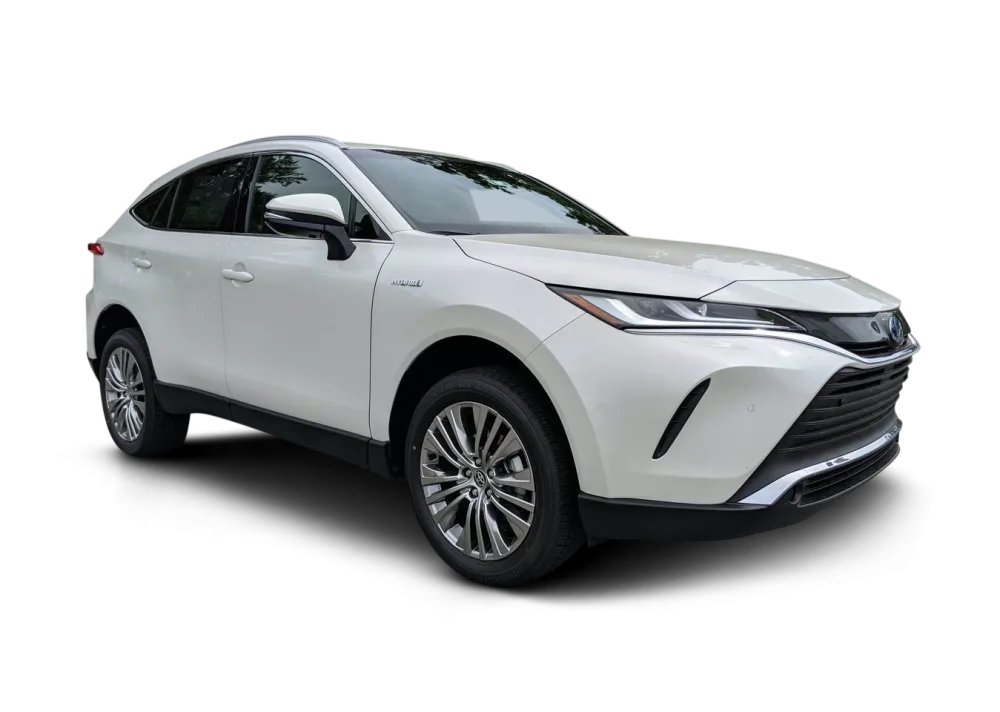
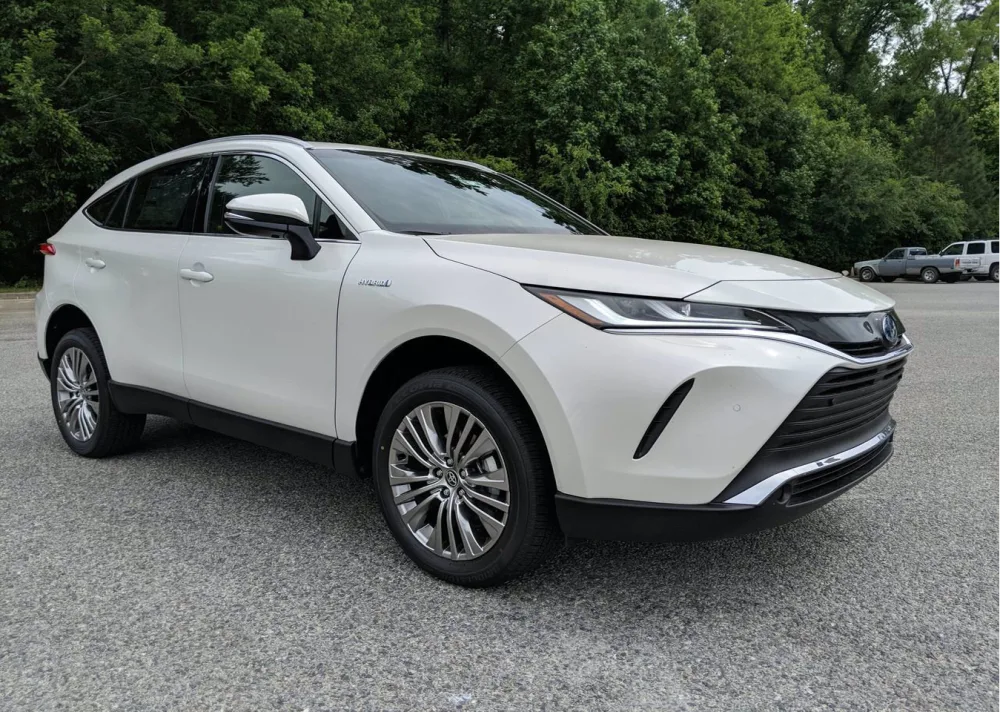
One background around the full circle: hover or drag to compare
 BEFORE
AFTER
Drag the slider or move your mouse over the image to compare.
Lock everything: exposure, white balance, focus and zoom
If the setup is the skeleton of good 360 car photography, locked settings are its heartbeat. Automatic settings are designed to make each individual photo look good on its own. A spin needs the opposite: every photo must look identical in treatment, even when the car presents a dark rear to the camera in one frame and a bright bonnet in the next. Automatic exposure will brighten the dark frames and darken the bright ones, and the rotation will pulse like a faulty light. Automatic white balance will drift as the proportions of sky, ground and paint change around the circle, and the car will change colour as it turns.
So the routine is manual, and it is short. Set exposure manually, metered for the most demanding angle, usually the side that combines bright sky with dark paint, and leave it there for the entire set. Set white balance manually to a fixed value that matches the light you are working in, daylight, shade or your indoor rig, and leave it. Set focus once, on the car at the start position, and switch to manual focus so the lens does not hunt and shift framing between frames. Fix the zoom and do not touch the ring again. Shoot RAW if your workflow allows it, because RAW files give the editor far more room to equalise frames later, and equalising frames is much of what spin editing is.
Indoors under a lighting rig, the same rules apply with one addition: watch for flicker. Some lighting cycles in a way the eye ignores but a fast shutter catches, producing frames that alternate subtly in brightness. If your test set shows frame-to-frame pulsing under artificial light, adjust the shutter speed to a value that divides evenly into your local mains frequency cycle, and test again before shooting stock. Outdoors, the enemy is time: a set shot slowly under moving cloud will contain two different days of weather, so work briskly, and if the light changes completely mid-set, reshoot the set rather than asking editing to perform a rescue it can only half achieve.
How many frames a spin set needs
For most dealer listings, 36 frames is the working standard for 360 car photography, one frame every ten degrees of rotation. It is the point where the rotation feels smooth to a dragging buyer without the set becoming a burden to shoot, edit and load. Twenty-four frames, one every fifteen degrees, is the honest minimum: rotations look slightly stepped, but on smaller screens and slower connections the lighter set can be the right trade. Forty-eight frames and above smooth the motion further, and some premium and specialist platforms encourage larger sets, but the gains shrink while the costs in shooting time, editing time and page weight keep climbing in a straight line.
The right way to choose is to think about where the spin will live. Your own website can carry a heavier set than a marketplace gallery that recompresses everything you upload. A buyer on a phone on a train needs the set to load before their attention expires. As a working rule, shoot at the higher count when you can, because frames can be dropped from a set far more easily than missing angles can be invented later, and keep the archived full set even if you publish a lighter version.
Frame order and starting position matter more than dealers expect. Start the set at the front three-quarter view, the angle that sells cars, so the spin opens on the strongest frame and the thumbnail the marketplace generates is the right one. Keep the rotation direction consistent across your whole inventory, always clockwise or always counter-clockwise, because buyers who browse several of your cars build a habit, and a group whose cars rotate in random directions feels subtly disorganised. And keep the sequence strictly in order with clean file naming from the camera, because a single pair of swapped frames produces a jolt in the rotation that buyers feel even when they cannot name it.
The shooting routine, step by step
A written routine turns 360 car photography from a craft into a process any trained staff member can repeat, so here is the routine our most organised dealer clients use, in the order it happens. Position the prepared car on the centre mark with its front three-quarter angle facing the start position. Set the tripod at the marked height and the marked distance, level it, and confirm the side profile fits the frame with margin. Lock exposure, white balance, focus and zoom, shoot a test frame, and check it at full zoom for sharpness and for anything in the background you do not want repeated thirty-six times.
Then work the circle. Shoot, move to the next mark, settle, shoot again, without reviewing every frame; review breaks rhythm and rhythm is what keeps spacing even. At the halfway point, glance at two or three frames to confirm nothing has drifted: tripod legs get kicked, clouds arrive, staff park things. Finish the circle, then shoot the detail stills and interior set while the car is in place, so one preparation serves the whole listing. Back at the desk, check the set as a contact sheet before anything is edited. The contact sheet is where spin problems announce themselves: a wandering frame size, one frame with a door not fully closed, a brightness step where the sun went in. It is far cheaper to reshoot one car in the bay than to discover the fault after editing.
One more discipline that separates reliable spins from occasional ones: shoot every car in the same session the same way, even when a car seems too cheap or too rough to deserve it. Buyers compare within your inventory, and the listings with the full treatment quietly set the standard the others are judged against. A consistent standard applied to everything is exactly what a good car dealer photo editing workflow is built to support, whether the editing happens in your office or is sent out.
Interior 360: panoramas, hotspots and the second sale
The exterior spin answers the buyer's first question, which is what the car looks like. The interior panorama answers the second, which is what the car feels like to sit in, and for many used buyers the interior is where the decision is actually made. A proper interior 360 is captured from the centre of the cabin, usually with a dedicated 360 camera or a stitched set from a camera on a small tripod between the front seats. Height matters here too: place the camera at the eye height of a seated driver, because a panorama shot from the roof lining or the gear lever makes the cabin feel like a doll's house.
Stitching punishes the same sins as spinning, plus one of its own. Anything close to the camera that moves between the overlapping shots, a seat belt hanging differently, a screen that changes, the photographer's own hand, will tear or ghost in the stitch. So the cabin is prepared like a film set: seats set evenly, belts parked, screens on a fixed display, personal items gone, and the photographer out of the car operating the camera remotely wherever possible. Light is the other battle. Cabins mix bright windows with dark footwells in a range no single exposure loves, so bracketed or high-dynamic-range capture is standard practice for interiors, and editing later balances the view so a buyer can inspect both the headlining and the pedals.
Hotspots are what turn an interior panorama from a novelty into a sales tool. A hotspot is a tappable point inside the view that opens a close-up photo or a short note: the dashboard and its warning-light-free start-up screen, the infotainment display, the condition of the driver's seat bolster, the rear legroom, the boot. Used well, hotspots guide the buyer to the evidence they were going to hunt for anyway, and they give your close-up stills a second life inside the panorama. Used badly, sprinkled everywhere with sales slogans, they clutter the view and slow the load. Restraint wins: hotspot the features and the honest wear, the things a buyer would ask a salesperson to show them on the forecourt.
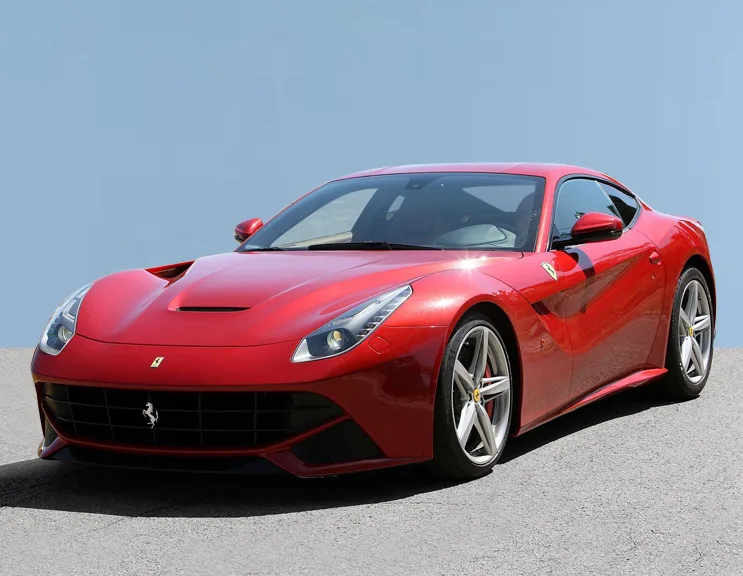
Frames equalised for a seamless spin: hover or drag to compare
 BEFORE
AFTER
Drag the slider or move your mouse over the image to compare.
The editing that makes a spin feel seamless
Shooting discipline gets a spin set most of the way, but editing is where separate frames become one rotation, and it is the stage dealers most often underestimate when they outsource car photo editing and price the job per frame. The editor's first task is equalisation: bringing every frame to the same brightness, contrast and colour so the car holds still in treatment while it turns. Even a well-locked set drifts a little, because the light genuinely differs when the car faces the sun and when it turns away, and the editor balances the frames against each other as a family rather than polishing each one as an individual. This is the opposite of stills editing, where every photo is its own picture. In a spin, a frame that looks perfect alone and different from its neighbours is a defect.
Backgrounds are the second task, and the least forgiving. If the set was shot on the lot, the background changes around the circle in reality, and in the spin that means the world jumps as the car turns. The professional answer is to give the whole set one consistent scene. Applying the same car background replacement to every frame, with the scene's perspective, horizon and floor matched across all angles, is painstaking work, because the replacement has to agree with itself thirty-six times, not just once. It is also where a spin gains its showroom feel: the car rotates inside one calm, branded space while nothing behind it moves at all.
Shadows carry the third task. A real car's shadow changes as it turns relative to the light, growing, shrinking and swinging around the body, and the viewer's eye watches it constantly without knowing it does. If the shadow was removed along with the original background and not rebuilt, the car floats for the whole rotation, and no amount of other polish rescues it. This is why dealers who spin regularly end up talking to a car shadow service about building a shadow set that evolves frame by frame, anchored under the tyres in every position and consistent with the single light direction of the chosen scene. It is invisible when done right, which is the point.
The fourth task is the car itself. Dust, water spots, a bird's contribution to the bonnet, harsh reflections that sit on one panel for six frames and then vanish: across a rotation these small things draw the eye precisely because everything else is controlled. A car retouching service working on a spin set treats the vehicle as one object seen from many angles, cleaning consistently so that a mark does not appear and disappear as the car turns, which looks like a trick of the light and reads, to a suspicious buyer, like something being hidden. Honesty is the boundary, as it is in all dealer editing: the set may be cleaned and balanced, but the car's colour, specification and condition must stay true in every frame.
The last task is output, and it belongs to editing as much as to publishing. Frames are cropped to a single identical canvas, aligned so the car sits on the same pixel position in every frame, and exported at the sizes the destination needs. Precise car image resizing at this stage is what protects the spin on marketplaces that reprocess uploads: deliver exactly the dimensions and file sizes asked for, and the platform has nothing to change. Deliver a mixed bag of sizes, and its machinery will crop and compress unevenly, undoing your alignment work one frame at a time.
What a spin set costs, in money and in time
Honest budgeting for 360 car photography has three lines, and dealers who only count the first one get surprised. The first is capture time: a practised routine puts a full exterior set at a matter of minutes per car once the bay is set up, but the bay, the marks, the lighting and the training are real investments, and the routine collapses the week a key person leaves unless it is written down. The second is editing. Thirty-six frames edited as a family is bulk car photo editing of a particular kind, a different job from thirty-six unrelated stills, and it should be priced and judged as a set. At Cars Photo Editor, the component services are published per image: background replacement is $0.69 per image, retouching $0.50, and resizing $0.19, with volume discounts of 5 percent at 100 images and 10 percent at 500, which is why spin work is usually quoted per set once we know your frame count and how much of the treatment your sets need. The third line is the one nobody budgets: the cost of a bad spin. A jumpy, flickering rotation makes a good car look badly presented and a careful dealer look careless, and it does so interactively, at the exact moment the buyer is most engaged. If a listing is not ready for a good spin, strong stills remain the respectable choice, which is why the next section exists.
Mistakes that break the illusion
Most broken spins are broken in a handful of predictable ways, and a dealer reviewing a supplier's work, or their own, can learn to spot them in one viewing. The wandering car: the vehicle changes size or position between frames because the distance or framing drifted, so the rotation breathes. The flicker: brightness or colour pulses around the circle because automatic settings were left on or frames were edited individually. The jump cut: one frame is missing, duplicated or out of order, and the car teleports for a split second. The floating car: contact shadow missing or identical in every frame while the body turns over it, so the car hovers like a toy.
The honest car in a false world: the background scene is beautiful, but its light comes from the left while the car's reflections say the light was on the right, and the two disagree for the whole rotation. The dirty secret: one panel, one wheel or the roof carries grime that the preparation missed, and the spin gives the buyer unlimited time to find it. The endless load: the set is published at full camera resolution, the viewer stalls on mobile connections, and the buyer leaves before the first drag. Every one of these is a process failure, not a talent failure, and each maps to a section of this guide. That is the good news hidden in the list: spins are a solved problem, solved by routine.
Spin or stills: an honest way to decide
A spin is not automatically better than stills, and dealers deserve the comparison stated plainly. A spin wins when the buyer's main uncertainty is the car's overall shape, stance and condition from all sides, when the vehicle is a shape buyers research heavily, and when the listing will live on your own site or a platform that presents spins prominently. It also wins as a consistency device: a group that spins everything presents a recognisable, modern inventory, and the discipline the routine imposes improves the stills shot in the same session.
Stills win when speed matters more than immersion, on fresh stock that should be advertised today and can be upgraded later, when the platform a car is destined for buries or butchers spin content, and whenever the honest choice for a rough car is a clear, well-lit set of photographs that shows its condition without theatre. Many of the best-performing dealers run a ladder: every car gets the full stills standard immediately, front-line and slower-moving stock gets the spin at preparation, and anything still in stock after a set period gets upgraded media rather than a price cut as the first response. The spin is a tool for earning attention and trust. Used where attention and trust are the bottleneck, it pays. Used as a ritual on everything regardless, it is a cost looking for a reason.
The pre-publish checklist for a spin set
Before a spin goes live, run the set the way a buyer will, and check the following, in this order. Play the full rotation slowly and watch the car's outline: it should turn, not breathe. Watch the paint for colour drift and the whole frame for brightness pulsing. Watch the ground under the car: the shadow should stay anchored and evolve naturally. Check the first frame is your strongest front three-quarter, and that the rotation direction matches your other listings. Confirm the set loads acceptably on a phone over a mobile connection, not just on the office network. Confirm the interior panorama opens at driver eye height, its hotspots land on the features they name, and none of them promises anything the close-up does not show. Finally, stand in front of the real car with the spin open on a phone and ask the only question that protects you: is this the same car, honestly shown. If the answer is yes at every angle, publish it.
How Cars Photo Editor handles spin sets
We are a hand-editing service, and spin sets are hand work multiplied: no AI tool edits your frames here. An editor takes your set as a family, equalises colour and light across the frames, applies one background consistently around the full circle, rebuilds the shadow so it stays under the car as it turns, retouches the vehicle consistently from every angle, and aligns and exports every frame to the exact canvas and sizes your destinations require. We have worked this way since 2016 for dealers and automotive photographers across the USA, the UK and Europe, with standard turnaround within 24 hours for typical batches, and for photographers working to a shoot schedule that runs as overnight car photo editing: sets sent after a shoot come back ready to publish.
If you are weighing up spins for your inventory, test the work the way you would test anything: with your own cars. Our car photo editing free trial covers 5 to 10 images, edited and returned for your approval before you pay anything, and for a spin decision the most useful test is to send one complete set from a real car, shot with the routine in this guide. Judge the rotation the way your buyers will: outline steady, colour steady, shadow anchored. Then decide what your front-line stock deserves.
Send one spin set and judge the rotation, free
Send us 5 to 10 of your own listing photos (files or a Drive or Dropbox link) and we will edit them free, by hand, so you can judge the quality on your own inventory before you spend anything.
Start Your Free Trial360 car photography: common questions
How many photos do you need for a 360 car spin?
Most dealer spins use 36 frames, one every ten degrees, which feels smooth without overloading the page. Twenty-four frames is the workable minimum, and 48 or more suits premium listings and platforms that present spins prominently.
Can you shoot a 360 car spin with a phone?
Yes, if the phone is on a tripod or fixed mount and every automatic setting you can lock is locked: exposure, white balance and focus. A phone allowed to auto-adjust between frames produces the flicker that ruins spins, whatever the camera quality.
What camera height is best for 360 car photos?
Around waist to chest height, fixed for the whole set. It gives the natural view a buyer has standing by the car, keeps proportions honest around the full rotation, and avoids the distortion of very low or very high angles.
Do car marketplaces accept 360 spin photos?
Many marketplaces and dealer website platforms support spin viewers or accept the frame sets they run on, but support and specifications vary, so check your own platform's current media guidance and upload exactly the frame count, dimensions and file sizes it asks for.