
Winter Photo Editing: Dark Days, Rain and Snow Fixes
October 27, 2026 · Dealer Guides
Short days, grey skies, rain-slick lots and salt on every panel: winter is when dealer photos go to die. This guide gives the shooting and editing fixes for all six winter problems, the honest limits editing must never cross, and a winter workflow your team can actually run.
Key takeaways
- Winter light is a different problem, not just less light: exposure, white balance and background all fail in their own ways.
- Every winter problem has a shooting fix and an editing fix, from snow glare and blue casts to puddle chaos and road grime.
- Weather and dirt come off in editing. Real damage, corrosion and wear never do: that line protects your buyers and your business.
- One consistent edited look across summer-shot and winter-shot stock keeps the whole inventory reading as one dealership.
Every dealer in Europe and the northern United States knows the pattern. The cars keep arriving all winter, but the light stops cooperating somewhere in November and does not come back until March. The photographer goes out at two in the afternoon and it already feels like evening. The sky is a flat grey lid. The lot is wet, the cars are wearing a film of road salt, and the photos that come back look tired even when the cars are not. Meanwhile the buyers have not gone anywhere. They are at home, on the sofa, shopping on a phone or a laptop with the heating on, comparing your winter-grey listing against a competitor's car that somehow looks bright, clean and ready.
Winter car photos are not a minor seasonal inconvenience. For four or five months of the year they are the only photos you have, and they carry the whole weight of your online showroom through the season when used car buyers do much of their serious research indoors. This guide covers the specific problems winter creates, the fixes that belong on the shooting side, the fixes that belong on the editing side, the honest limits that protect you, and a practical workflow a dealership can run from November to March without lowering its standards.
Why winter light is a different problem, not just less light
It helps to understand what actually changes, because each change has its own fix. In mid-winter, northern Europe and the northern US states get as little as seven or eight hours of usable daylight, and the sun never climbs high. Low sun means long shadows, harsh contrast when the sun does appear, and a working photography window that can shrink to late morning and early afternoon. When the sun is absent, which is most of the time, the sky becomes one enormous soft grey diffuser. That light is not ugly in itself, but it is flat: it wraps around the car evenly, removes the reflections that give bodywork its shape, and drains color out of paint. Red cars photograph brown. Blue cars photograph grey. White cars photograph as the same tone as the sky behind them.
Add to that a wet environment. Tarmac that is dark and patchy with standing water. Cars that pick up salt and grit on every journey from the transporter to the lot. Breath and warm hands fogging cold lenses. Rain arriving sideways in the middle of a photo set. Winter is not one problem, it is six problems arriving together, which is why a single filter or a single preset never fixes a winter photo set.
Problem one: short days, dark photos, and lost detail
The most common winter failure is simple underexposure. The camera or phone sees a bright grey sky, meters for it, and renders the car below it too dark. Shadow areas under the bumpers, inside the wheel arches and across the interior go completely black, and a buyer zooming in to check wheel condition or seat wear finds a murky rectangle instead of information. Dark photos also depress click-through before any of that detail matters: in a grid of search results, the eye goes to the brighter listing first, almost without the buyer deciding anything.
Shooting-side, the fixes are exposure discipline and timing. Shoot in the middle of the day when you can, not at the edges of it. Expose for the car, not the sky, which on a phone means tapping the car on screen and sliding exposure up slightly, and on a camera means using exposure compensation or spot metering on the bodywork. Take one frame more than you think you need at each angle, because winter light changes minute to minute as cloud moves. Editing-side, a proper exposure and shadow recovery pass can rescue a great deal: lifting the mid-tones, opening the shadows without turning them grey and noisy, and restoring the contrast that flat light removed. What editing cannot do is invent detail that was never recorded. A photo that is three stops too dark is a re-shoot, not an edit, and any honest editing service will tell you so rather than sell you a fix that cannot exist.
Problem two: grey skies and dead backgrounds
The second failure is the backdrop. A winter sky behind a car is usually a featureless pale grey or dirty white, and a winter forecourt behind it is dark wet tarmac, bare hedges, puddles and other cars in the same state. The composition has no depth and no color, so the listing looks like it was photographed in a car park in November, which it was. Buyers read that instantly as a low-effort listing, and low-effort presentation invites low offers and low trust.
This is the problem background replacement solves most directly, and winter is the season where it earns its keep. The important detail is seasonality. A car placed into a bright summer scene with green trees and hard sunshine looks wrong in a January listing, and experienced buyers feel the wrongness even if they cannot name it. Winter-appropriate scenes exist on a spectrum: a clean, bright neutral studio look that carries no season at all, a dry forecourt scene under soft light, or a properly prepared winter scene with muted tones that matches the car's own light. The neutral studio route is the safest for most dealers because it reads as professional rather than seasonal, and it keeps a winter listing visually equal to a summer one. Whichever scene is used, the light on the car has to be matched to it: shadows rebuilt under the tires, reflections balanced, color temperature reconciled. A winter photo dropped unchanged into a bright scene keeps its grey, cold cast and looks pasted, because it was.
Color and light correction: hover or drag to compare
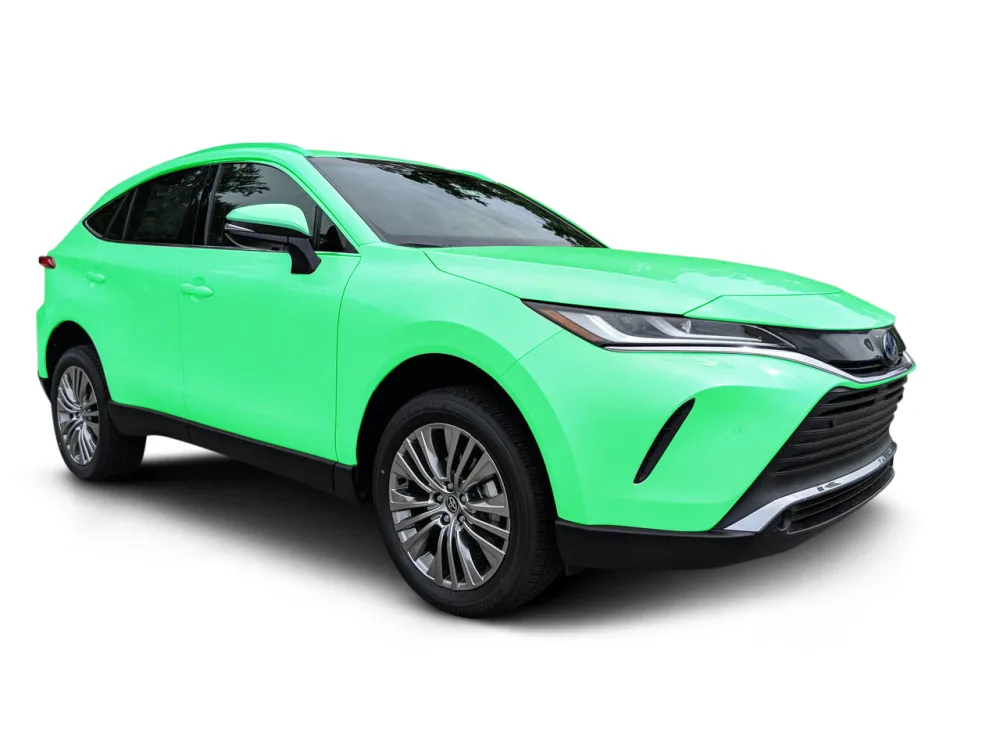
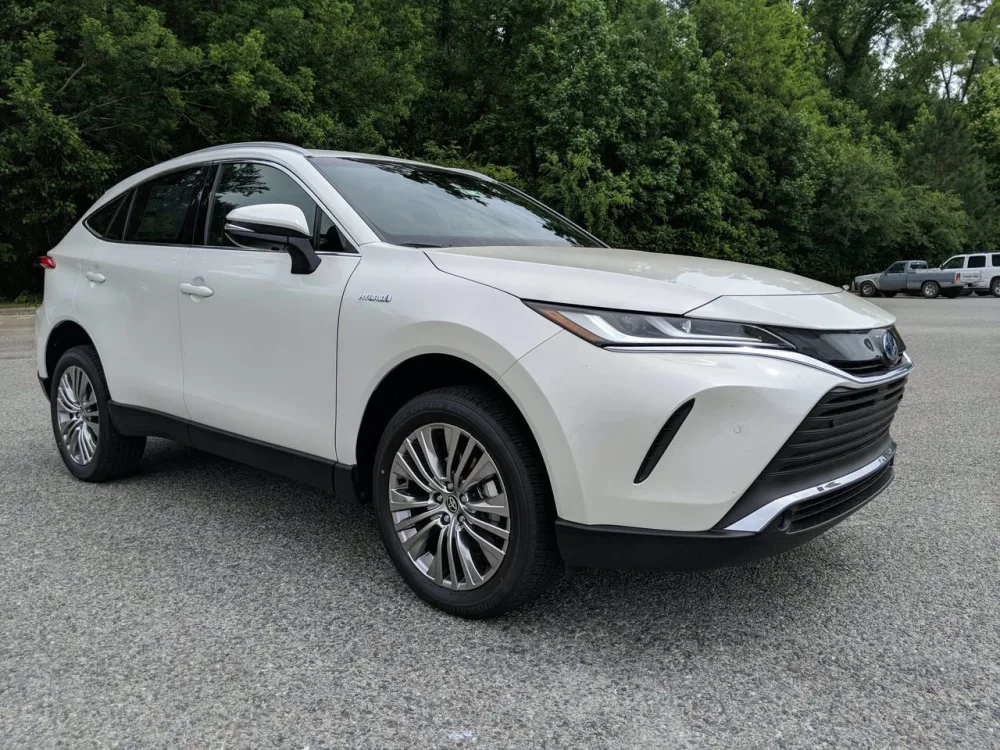 BEFORE
AFTER
Drag the slider or move your mouse over the image to compare.
Problem three: rain, wet lots, and puddle chaos
Rain changes the ground more than the car. A wet lot mirrors the sky, doubles every distraction, and fills the frame with reflections of signage, other vehicles and strip lighting. Puddles in the foreground pull the eye away from the car. Rain spots on the lens leave soft blobs across random frames of a set, and a car photographed mid-shower wears a speckle of droplets across the roof and bonnet that reads as dirt at thumbnail size.
Shooting-side, the best winter decision is often scheduling: photograph between showers, not during them, and give the car a quick dry pass with a water blade and microfibre on the horizontal panels before the set starts. Wipe the lens between every few frames, because a single droplet ruins angles you will not recheck until the car is sold or moved. Position the car so the largest puddles sit behind the camera rather than in front of the car. Editing-side, puddle reflections and foreground clutter can be cleaned or the whole background replaced, rain speckle on bodywork can be removed, and lens spots can be repaired where they fall on simple areas like sky or tarmac. Lens spots that fall across badges, lights or shut lines are much harder and sometimes impossible to repair convincingly, which is another honest limit worth knowing: prevention with a cloth beats repair every time.
Problem four: snow glare and the white car problem
Snow creates the opposite exposure trap to dark days. A snow-covered scene is so bright that cameras underexpose the car to protect it, turning the vehicle grey and dull against dazzling ground, while direct sun on snow blows highlights out entirely and erases the panel definition on light-colored cars. A white or silver car against snow is the hardest combination in dealer photography: three tones of near-white stacked together, with the car disappearing into its own background.
Shooting-side, overcast snow days are actually easier than sunny ones, because the light is bright but soft. Expose up deliberately, keep the car out of patchy half-melted areas where the ground is a dirty mix of white and brown, and choose an angle where a darker element, a building, a hedge, a fence line, sits behind the car to give it an outline. Editing-side, the fix is controlled contrast: separating the car's tones from the background's tones, restoring edge definition along the roofline and bonnet, deepening the shadow areas just enough to give the body shape, and correcting the blue cast that snow reflects into shaded paintwork. Snow itself should stay looking like snow. Editing that warms a whole winter scene into summer is falsifying the season, and buyers who arrive to view the car in February will notice the mismatch.
Problem five: salt, slush and road grime
Cars in winter carry the road on them. Salt film dulls every panel and turns black paint grey-white along the sills and behind the wheels. Slush sprays up the sides. Dried salt streaks run from mirrors and handles. Even a freshly valeted car picks up a visible film on a short drive across a treated lot in January, and in a listing photo that film reads to a buyer as a car that has not been prepared, fairly or not.
The shooting-side fix is unglamorous and effective: wash and dry the car as close to the photo set as possible, and keep a spray bottle and cloth in the photographer's kit for the sills and lower doors specifically, because that is where the camera sees the worst of it. The editing-side fix is a careful clean-up pass: salt film lightened and neutralized, dried streaks removed, slush spray taken off the lower panels, and the paint's true color and gloss restored underneath. This is legitimate preparation work, the digital equivalent of the wash the car should have had. It becomes illegitimate at exactly one point, covered in the honest limits section below: when the marks are not dirt but damage. Salt film comes off a real car with a wash, so removing it in a photo shows the buyer the car as it will genuinely be presented. A dent, a rust blister or a corroded wheel does not come off with a wash, and it must not come off in the photo either.
Problem six: fogged lenses, cold batteries and shaking hands
The small mechanical problems of winter cause a surprising share of ruined sets. A lens brought from a warm office into cold air fogs, and the first ten frames come back hazed before anyone notices. Phone and camera batteries lose capacity in the cold, dying mid-set. Low light pushes shutter speeds down, and cold hands shake, so a percentage of frames are quietly soft in a way that only shows at full size on a vehicle detail page, exactly where a serious buyer zooms in.
The fixes are habits, not purchases. Let the camera or phone acclimatize in a bag or pocket before the set. Keep a spare battery warm in an inside pocket. Check the first three frames at full zoom before shooting the rest of the set, every single time, because fog and softness announce themselves early if you look. Brace against the car or a post in low light, and prefer a slightly higher ISO over a shutter speed slow enough to blur, since mild noise is editable and blur mostly is not. Editing can sharpen a marginally soft frame a little; it cannot restore a genuinely blurred one, and a checklist later in this guide includes rejecting soft hero shots outright rather than trying to save them.
What the winter buyer actually sees
It is worth stepping back to the buyer's side of the screen, because winter changes them too. In the cold months, a far larger share of the buying journey happens indoors and online, often in the evening under warm artificial light, on a screen the buyer controls. Your listing is not competing with the dealer's lot down the road. It is competing with every listing in the search results grid, in the same grey grid layout, judged at thumbnail size in about two seconds per car. Under those conditions the winter failures compound: the dark photo loses to the bright one, the grey-sky photo loses to the clean one, the salt-filmed car loses to the gleaming one, and the buyer never learns that your car was the better vehicle with the lower mileage, because they never clicked.
This is why winter photo standards are a sales issue and not a photography hobby. The cars are the same quality in January as in June. The presentation is not, unless someone deliberately holds the line.
Keeping one look when half your stock was shot in summer
By December, most inventories are a mixture: cars photographed in September sunshine still in stock, sitting in the same search results as cars photographed last week in the rain. The mixture itself looks unprofessional, because the buyer scrolling your listings sees the standards change from car to car. The goal for winter is not to make every photo look like summer. The goal is one consistent standard that any photo, from any month, can be brought up to.
The practical way to do that is a fixed finishing standard applied to every listing regardless of when it was shot: the same background treatment, the same brightness and color targets, the same crop and angle conventions, the same plate treatment. A September car and a January car finished to the same standard read as one inventory from one business. Dealers who use a studio-style background get this consistency almost automatically, because the scene never changes with the season. Dealers who keep natural backgrounds have to work harder at matching, and should at minimum standardize brightness, white balance and cropping across the whole stock list each month, which an editing pass can do in batches. The worst option is the common one: leaving each car exactly as the weather made it, and letting the inventory look like five different dealerships.
The honest limits: what winter editing must never do
Everything above is preparation. This section is protection, and it matters more. Winter gives editors extra temptation, because winter cars genuinely look worse than they are, and the line between cleaning and falsifying has to be drawn in advance and held.
Never edit out real damage. Stone chips are a grey area at thumbnail size, but cracked windscreens, dents, kerb-rashed wheels, rust, torn seats and warning lights are the buyer's business, and removing them from a photo is misrepresentation with legal consequences under consumer protection law in the UK, the EU and US state advertising rules alike. Never remove winter wear that tells the truth: heavy corrosion on an older car, salt damage already done, a battery or tyre condition visible in the shot. Never change the car's color, trim or specification to a more flattering version. Never replace a background in a way that relocates the car dishonestly in a sales claim, for example implying a main-dealer showroom setting in the listing text to go with a showroom scene. And never publish an interior shot with the mileage or a warning light airbrushed away, a real practice in the worst corners of the trade and a fast route to a platform ban.
The rule that keeps all of this simple: if a buyer standing in front of the real car, in your lot, in February, would feel the photo lied to them, the edit went too far. Clean the weather off the photo. Never clean the truth off the car. At Cars Photo Editor this is a working instruction to our editors, not a slogan, and dealers sending us winter sets can ask for grime and weather removal with confidence that damage will be left exactly where it belongs.
Plates, glass and reflections in low light
Three details deserve their own winter note. Number plates: in low light and rain, plates pick up glare and reflection that can defeat a quick blur applied carelessly, so plate treatment needs a proper check at full size, and in markets where plates stay with the car or the owner, your usual policy applies with extra care on wet, reflective surfaces. Glass: winter interiors fog and frost, and a steamed-up interior shot tells the buyer nothing; shoot interiors with the doors open briefly and the blower run first, and let editing handle residual glare on the windscreen rather than deep mist, which is a re-shoot. Reflections: wet ground and low sun put bright streaks across bodywork that can hide or imitate panel damage, so reflections should be evened out enough that the panel underneath can be honestly judged, without flattening the gloss that makes the paint look alive.
A winter workflow a dealership can actually run
Here is the whole guide compressed into a working routine. First, schedule photo sets in the late morning where the rota allows, and keep a hard rule that hero shots are never taken in rain or near-darkness. Second, prepare the car winter-style: wash, dry, sills and lower panels checked, glass cleared inside and out, interior demisted. Third, shoot to a fixed angle list, the same one used all year, checking the first frames at full zoom for fog and softness, wiping the lens as you go, exposing for the car. Fourth, send the set for editing the same day, with winter instructions agreed in advance: exposure and white balance recovery, salt and weather clean-up, background standardization, plate treatment, and the honest-limits rule in writing. Fifth, apply the pre-publish check below to a sample of every batch before the listing goes live. Sixth, once a month, review the whole stock list on screen side by side and send the listings that have drifted from the standard back for re-finishing, including the older summer cars that now look out of place. None of this requires new equipment. It requires the decision that winter is not an excuse the market accepts.
Full dealer edit: hover or drag to compare
 BEFORE
AFTER
Drag the slider or move your mouse over the image to compare.
The winter pre-publish checklist
Before a winter listing goes live, check these points on the finished photos. Is the car bright enough to judge against the brightest competitor in the same search, not just acceptable on its own. Does the paint color match the real car under your own lights. Are the shadows open enough to see wheel and arch condition. Is the background clean, season-appropriate, and the same as the rest of your stock. Is salt film gone but every real mark, chip and scuff still present. Are plates treated correctly at full zoom. Do the interior shots show a clear, demisted cabin. And does the set, taken together, look like it came from the same business as the set on the car listed next to it. Eight questions, a few minutes per car, and they catch nearly every winter failure this guide has described.
How Cars Photo Editor handles winter work
We are a hand-editing service, founded in 2016, working for dealers and automotive photographers across the USA, the UK and Europe, and no AI tool edits your photos here. Winter sets are a large part of our year. An editor recovers exposure and white balance by eye, cleans salt and weather from the panels by hand, standardizes backgrounds across a batch so a whole stock list matches, treats plates carefully on wet and reflective shots, and checks every finished photo against the original with the honest-limits rule applied: weather comes off, damage stays. Our services start from $0.19 per image, with volume discounts of 5 percent at 100 images and 10 percent at 500, and there is no subscription and no contract. The sensible way to judge winter work is on your own worst photos. Our free trial covers 5 to 10 images, so send the set you are least proud of: the dark one, the snowy one, the salt-filmed one. We will return them edited for your approval before you pay anything, and you can compare them against the real cars on your lot. That comparison, not this article, is the argument.
Winter-proof your listings with a free trial edit
Send us 5 to 10 of your own listing photos (files or a Drive or Dropbox link) and we will edit them free, by hand, so you can judge the quality on your own inventory before you spend anything.
Start Your Free TrialWinter car photo editing: common questions
Can dark winter car photos really be fixed, or do we need to re-shoot?
Most moderately dark photos can be recovered well: exposure, shadow detail and white balance respond strongly to a proper editing pass. Photos that are severely underexposed, blurred, or shot through a fogged lens cannot be fully rescued, and an honest service will flag those for re-shooting rather than charge you for an impossible fix.
Should winter listings use winter backgrounds, or a neutral studio look?
For most dealers, a clean neutral or studio-style background works best in winter, because it carries no season, matches summer-shot stock, and keeps every listing at the same standard. If you prefer a natural scene, choose a season-appropriate one and match the car's light and color to it, so the result does not look pasted.
Is removing salt and road grime from photos misleading to buyers?
No, provided the rule is followed: remove what a wash would remove, never what it would not. Salt film, slush spray and dried streaks are dirt, and the car will be presented washed. Damage, corrosion and wear are the car's true condition and must stay visible in the photo.
How much does winter photo editing cost, and can we test it first?
Services start from $0.19 per image, with 5 percent off at 100 images and 10 percent off at 500. The free trial covers 5 to 10 of your own photos, edited by hand and returned for approval before any payment, so you can test us on your worst winter set at no cost.