
Selling Used EVs with Photos: Battery, Charging and Range Shots
October 27, 2026 · Dealer Guides
Used EV buyers fear the battery more than the price. This complete guide covers the photo set that answers them: dashboard and range displays, battery health screens, charge ports and cables, home charging context, documents, and the honesty rules that protect your sale.

Key takeaways
- The dashboard photo is the most important shot in a used EV listing: range, battery level and warnings, readable at a glance.
- Photograph the battery health evidence, the charge port, both cables and the car actually charging, not just the car.
- Screens need shooting technique: no glare, no moire, and numbers exactly as the car reports them.
- Numbers on a dashboard are never edited. Honest range presentation is what turns EV caution into confidence.
Every used car buyer has questions, but the used electric car buyer has one question that sits above all the others, and it is not about the paint, the wheels, or the service stamps. It is this: what state is the battery in. Battery health decides how far the car will travel, how long it will remain useful, and what it will be worth in three years, and it is the one thing a buyer cannot judge by walking around the car with a torch. A petrol car with a tired engine still sounds like a petrol car. An EV with a tired battery looks exactly like an EV with a healthy one. That single fact changes what your listing photos have to do.
With a conventional car, photos mainly prove condition and specification. With a used EV, photos also have to prove the invisible. The dashboard, the battery screens, the charge port, the cables, the software menus, and the paperwork together form the evidence pack that answers the buyer's real fears before they ever pick up the phone. Dealers who photograph EVs the same way they photograph petrol cars, eight exterior angles and a couple of cabin shots, leave the most important questions unanswered, and unanswered questions on an EV listing do not produce phone calls. They produce silence, or worse, they produce the enquiry that dies the moment the buyer asks about battery health and gets a vague reply.
This guide sets out the complete photo set for a used EV listing, how to shoot the screens without glare and interference patterns, what editing is and is not acceptable on EV photos, and how to handle range honestly across the seasons. It ends with a shot list you can hand directly to whoever photographs your stock.
Why EV listings fail in a way petrol listings do not
Start with the three fears, because every photo in this guide exists to answer one of them.
The first fear is degradation. Buyers know that batteries lose capacity over time, and they know a replacement pack costs more than most engines. They do not know how to measure what remains, so they look for evidence, and if the listing offers none, they assume the worst and move to a listing that does.
The second fear is charging. A buyer who has never owned an EV does not know whether the car charges quickly or slowly, at home or only at public points, with a connector their local infrastructure supports, or with cables included or missing. A missing charging cable is a several-hundred-dollar surprise. A slow onboard charger is a daily inconvenience they will blame you for not mentioning.
The third fear is range honesty. The number on the brochure was measured when the car was new, in a laboratory, in mild weather. The buyer wants to know what the car actually does now, in their climate, with their mileage on it. Listings that repeat the brochure figure and show nothing else trigger the suspicion that the dealer is hiding the real number.
Every section that follows maps to one of these fears. The exterior shots still matter, and EVs have their own exterior details worth showing, but the screen shots and evidence shots are where used EV listings are won and lost.
The complete used EV photo set, in order
Buyers work through a listing in a rough sequence, and a good EV set respects it. Lead with the hero exterior shots as you would for any car: front three-quarter, rear three-quarter, side profile, and a straight front and rear. Then, instead of drifting into generic interior shots, go straight to the evidence. Cabin wide shots, seats, and load space follow, then the EV-specific set: dashboard at start-up, range and battery displays, battery health information, charge port open and closed, cables and charging equipment, software screens, tyres and wheels, and documents. Finish with detail shots and any honest defect photos, exactly as you would for any used car.
The order matters because EV buyers often filter mentally within the first ten photos. If the battery and range evidence sits at position thirty-five in a forty-photo set, many buyers will never reach it, and the listing has failed at the job that mattered most.
Retouching for a listing-ready finish: hover or drag to compare

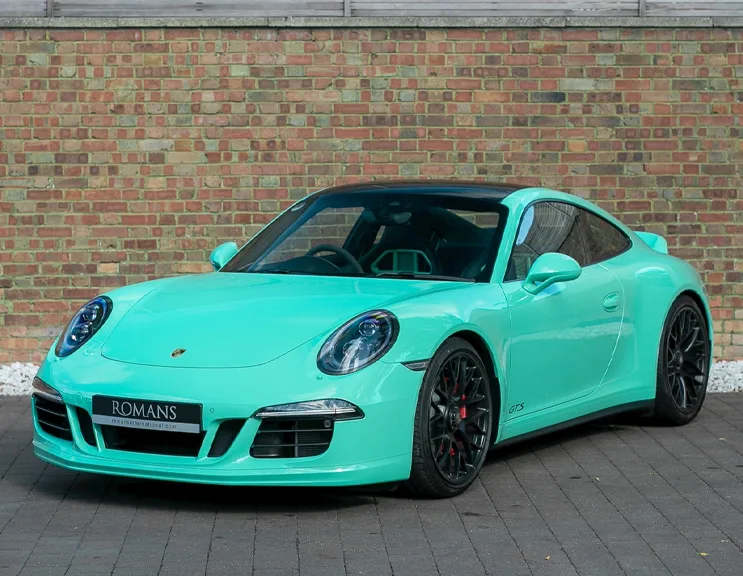 BEFORE
AFTER
Drag the slider or move your mouse over the image to compare.
The dashboard: the most important photo in the set
The dashboard shot is the closest thing a used EV listing has to an engine photo, and it deserves the same care you would give a start-up video on a performance car. Photograph the instrument display fully lit, with the car awake and ready, showing four things clearly: the battery state of charge as a percentage, the predicted range at that charge level, the total odometer reading, and the absence of warning lights. Those four items in one legible frame answer half the buyer's questions instantly.
A few working rules make this shot succeed. Charge the car to a sensible level before the shoot, ideally around 80 percent, which is both a realistic daily state and the level most manufacturers recommend for battery care. A range figure photographed at 100 percent invites the accusation that you charged it specially for the photos, and a figure at 22 percent looks like neglect. Turn off or cover nothing. If a tyre pressure warning or a service reminder is lit, fix the cause before the shoot rather than hiding the light, because the buyer will see it on the test drive and every other claim in your listing loses credibility in that moment.
Take the shot square-on, camera parallel to the display, at a distance that fills the frame without cutting the edges of the cluster. Slight angles introduce reflections and make digits lean. Shoot two or three frames at different exposures, because displays are brighter than the cabin around them and a single automatic exposure will usually blow the screen out to white or crush the surroundings to black. The digits must be readable at the size a phone shows them, not just on your office monitor.
Battery health and state of health screens
Many EVs can display or support a battery health figure, often called state of health, either in the car itself, in the manufacturer's app, or through a diagnostic report from a dealer or independent specialist. Where your car has one, photograph it. A screen showing a state of health percentage, or a printed battery health report laid on the passenger seat and photographed square-on, is the single most persuasive image in a used EV listing, because it converts the buyer's biggest fear into a number you were willing to publish.
Be precise about what the number is. A state of charge reading is not a state of health reading, and labelling the daily charge percentage as battery health is the kind of mistake that reads as either incompetence or dishonesty. If the car cannot produce a health figure itself and you have not commissioned a diagnostic, say so plainly in the listing text and show the range evidence instead. Some dealers now obtain a third-party battery certificate for every EV they retail. If you do, photograph the summary page of the certificate, showing the result, the date, and the mileage at test, and keep the full document ready to send to enquiries.
The charge port, the cables, and the act of charging
Photograph the charge port twice: closed, to show the flap and bodywork sit correctly, and open, to show the socket itself clean, undamaged, and with its cap or tether intact. Buyers who know EVs look at the socket the way experienced buyers look at an engine bay. Corrosion, bent pins, or a broken flap hinge are small faults with large implications in their minds.
Then photograph everything that comes with the car, laid out neatly: the portable charging cable, the home charging lead if supplied, the public charging cable where the car uses a separate one, any adapters, and the tyre repair kit that usually replaces a spare wheel. Lay them out in the boot or on a clean surface, one frame for the full set and close frames for anything with visible wear. If a cable is missing, the photo set will show it, so replace it before the shoot or state it in the text. What you must not do is photograph cables borrowed from another car.
The most underused shot in EV retail is the car actually charging. A photo of the vehicle plugged in, charge light showing, with the charging status screen visible, proves in one image that the whole chain works: port, cable, onboard charger, and battery accepting a charge. If you have a wallbox on site, that shot also quietly demonstrates the home charging life the buyer is hoping for. Take it during the shoot while the car tops up to your chosen level and it costs you nothing.
Home charging context
Most used EV buyers will charge at home most of the time, and many have never done it. A small amount of context in the photo set helps them picture ownership. If the car is supplied with a portable charger that runs from a domestic socket, a photo of it connected and charging does this job. If you sell or can recommend a home wallbox, a simple note in the listing text is enough; the photos do not need to stage a lifestyle scene, and staged domestic scenes shot at the dealership tend to look like what they are. Keep the context honest and functional: the equipment, connected, working, with its screen or indicator lit.
Software and infotainment screens
Modern EVs are sold partly on their software, and used buyers know that software age affects everything from navigation to charging speed on some models. Photograph the main infotainment home screen, the energy or consumption screen if the car has one, and the screen that shows the software version. A consumption history screen is quietly powerful evidence: a car showing sensible long-term energy consumption has usually been driven and charged sensibly.
The version screen dates the car honestly and lets knowledgeable buyers confirm the car has received updates. If the car supports smartphone integration, a shot of that menu is worth including for younger buyers. Keep each screen shot to one clear frame, square-on and legible, rather than a scatter of angled cabin photos in which screens appear by accident, tilted and half-reflected.
Tyres, wheels, and the aero details buyers check
EV buyers have learned to look at tyres, because electric cars are heavy and deliver their torque instantly, and tyre wear tells a story about how the car has been driven and maintained. Photograph each wheel squarely, showing the tyre brand, size markings, and visible tread, and take one tread-depth style close shot per axle at least. Matching premium tyres across the car reassure. Mismatched budget tyres on a powerful EV raise exactly the questions you do not want.
Also photograph the EV-specific details that affect range and that buyers increasingly know about: the aerodynamic wheel trims or covers in place and undamaged, the flush door handles working and sitting correctly, the underbody panels visible in a low shot if you can take one safely, and the heat pump or charging specification badges where fitted. None of these is glamorous. All of them are the visual equivalent of a full service history for this kind of car.
Documents: the paper half of the battery story
End the evidence set with the documents, photographed as carefully as the car: the service history page or digital record summary, the battery warranty information where the manufacturer states it, the health certificate if you obtained one, and the manual or charging guide covers if they are present. A buyer comparing two similar EVs will choose the one whose history they have seen over the one whose history is promised. Photograph documents square-on, in even light, with personal details of previous keepers covered, which is both good practice and, in the UK and Europe, a data protection obligation.
Shooting screens without glare and moire
Screens are where most dealer photography of EVs falls down, because a display is not a surface, it is a light source with a grid of pixels, and cameras argue with it in predictable ways. The problems are reflections, flicker banding, and moire, the wavy interference pattern that appears when the camera sensor grid and the screen pixel grid collide. All three are manageable with technique.
Kill reflections first. Shoot screens in shade or indoors, never in direct sun. Darken the cabin by closing doors and, if you shoot outdoors, park so the displays face away from bright sky. A photographer in a light-colored top will appear in every glossy screen, so wear dark clothing and position the camera so its reflection falls outside the display area. Turn the screen brightness to a mid level rather than maximum, which reduces both glare and the exposure fight with the cabin.
Deal with flicker next. Many displays refresh in a way that produces dark bands across frames at fast shutter speeds. If your frames show banding, slow the shutter speed down in steps until the bands disappear, and steady the camera against the seat or a small tripod to handle the slower speed. On a phone, tapping to expose for the screen and then slightly reducing exposure usually gives a cleaner result than full automatic.
Defeat moire by changing geometry, not by hoping. A small change in distance or a slight change in angle makes the pattern vanish, because the interference depends on the exact relationship between the two grids. Shoot square-on for legibility, review the frame at full size on the spot, and if moire is present, step a few centimetres closer or further away and shoot again. Never solve a moire problem later by blurring the screen in editing: a blurred dashboard looks like a hidden dashboard, and on an EV the dashboard is the evidence.
Finally, clean the screens before the shoot. Touchscreens show every fingerprint under photographic light, and a smeared display in a listing photo suggests a careless previous owner whether that is fair or not. A microfibre cloth takes twenty seconds and changes the entire cabin set.
Editing notes specific to EVs
Most of what applies to good car photo editing applies here, with four EV-specific rules that matter more than everything else combined.
First, screen readability is a legitimate editing goal and screen content is not. Brightening a display so digits can be read, correcting the color cast the cabin light put on the screen, and removing a photographer's reflection from the glass are normal, honest corrections, exactly like removing a reflection from a windscreen. Changing what the screen says is something else entirely, and it is covered by the honesty rules below.
Second, protect the digits in every edit you make. Cropping, color correction, and background work must all be checked at full size on the dashboard and health shots specifically, because an edit that is harmless on an exterior photo can soften a range figure into illegibility on a screen photo. If your editing workflow includes sharpening or noise reduction, review the screen shots after it runs, not before.
Third, keep the car's color and the screen's color truthful independently. Cabins mix light sources, daylight through glass and the display's own light, and a single global correction can leave the paint right and the screen wrong, or the reverse. Screen shots often need their own careful correction rather than being swept along with the exterior set.
Fourth, backgrounds and consistency work exactly as for any car, and EV buyers respond to the same clean, consistent presentation. A replaced background behind an EV is as acceptable as behind any vehicle, provided the car itself is untouched and the evidence shots, the screens, ports, and documents, are presented straight, as shot, with only legibility corrections.
Color correction for true paint and screen colors: hover or drag to compare

 BEFORE
AFTER
Drag the slider or move your mouse over the image to compare.
The honesty rules: numbers are never edited
This section is short because the rule is absolute. The range figure on the dashboard, the state of charge, the state of health percentage, the odometer, the software version, and the figures on a battery report are data, and data in a listing photo is never altered. Not rounded up, not swapped for a figure from a better day, not replaced with the brochure number, not cleaned up. If a number in a photo is wrong, the remedy is to fix the car or re-shoot the photo, never to fix the number.
This is not only an ethics point, though it is one. In the United States, listing photos form part of the representation of the vehicle, and a doctored dashboard figure is exactly the kind of evidence consumer protection and state dealer advertising rules are built around. In the UK and Europe, distance-selling and consumer protection law gives buyers strong remedies when a vehicle is not as described, and a screenshot of your own listing is the first thing a disappointed buyer will produce. Beyond the law, there is the practical point: the buyer will stand in front of the real dashboard within days. Any gap between the photograph and the car converts every other true thing in your listing into a suspected lie.
The same rule extends to what you leave out. Photographing the dashboard only at a flattering moment, for example immediately after a long downhill drive has inflated the predicted range, is a softer version of the same offence. Charge the car normally, drive it normally beforehand, and photograph the figure the car honestly reports in normal use.
Seasonal range honesty
Range is the one specification that changes with the weather, and both your photos and your words should respect that. An EV photographed in summer will show a predicted range that the same car will not match in January, because cold batteries hold less usable energy and cabin heating draws real power. Buyers in northern US states and northern Europe know this from experience or from the forums they have been reading, and a listing that presents a summer figure as a year-round promise will be discounted accordingly.
Handle it in the text as well as the photos. Show the dashboard as it honestly reads on the day of the shoot, and in the listing description give a realistic range band rather than a single heroic number, noting plainly that winter range is lower. Dealers who do this report a pattern you can verify in your own enquiries: the buyers who come are better informed, the test drives convert more cleanly, and the after-sale arguments about range simply do not happen. Honesty about the weak point is the strongest sales tool a used EV has, because every competitor who hides it makes your candor look like confidence.
If you retail the same model repeatedly, consider keeping your own seasonal evidence: the same car type photographed in summer and winter, figures shown as they were. Few dealer groups do this, which is precisely why it distinguishes the ones that do.
The shot list to hand to your photographer
Print this list and give it to whoever shoots your EVs. It assumes the standard exterior and interior set is already covered and adds the EV layer in shooting order.
One, hero exteriors as normal, with wheel trims and badges clean. Two, dashboard fully lit, square-on, showing state of charge percentage, predicted range, odometer, and no warning lights, shot at about 80 percent charge, two or three exposures. Three, battery health or state of health screen, or the printed health report summary on the seat, square-on. Four, energy consumption history screen. Five, software version screen and infotainment home screen. Six, charge port closed. Seven, charge port open showing the socket. Eight, the car plugged in and charging, charge indicator lit, charging screen photographed if accessible. Nine, all charging cables and adapters supplied with the car, laid out as a set, then any item with wear in close-up. Ten, each wheel square-on showing tyre brand and size, plus one tread close shot per axle. Eleven, aero trims, flush handles, and any range-relevant specification badges. Twelve, documents: service record summary, battery warranty page, health certificate if present, previous keeper details covered. Thirteen, the usual honest defect photos, unchanged from your petrol process. Fourteen, a final pass reviewing every screen shot at full size on the camera before the car leaves the shoot, because screen faults are only cheap to fix while the car is still in front of you.
That is roughly fourteen EV-specific frames on top of your normal set, and with a practiced photographer they add minutes, not hours, to a shoot.
Pre-publish checklist for EV listings
Before the listing goes live, check the set once with EV eyes. Are the dashboard figures legible at phone size. Is every number in every photo exactly as the car reported it. Does the set include the health evidence or an honest statement that none is available. Are the port, the cables, and a charging shot present, and do the cables photographed belong to this car. Do the tyre photos support what the text claims. Does the description give a realistic range band with the seasonal note, rather than the brochure figure. Would anything in this set surprise the buyer standing in front of the car. If the answer to that last question is yes, fix the set or fix the text before publication, whichever makes the listing true.
How Cars Photo Editor handles EV listings
We edit EV listings the same way we edit everything else: by hand, with no AI tools involved at any stage. Editors working on an EV set are briefed on the rules in this guide. Screen shots get legibility correction only: brightness, color, and reflection work that helps the buyer read what the car reported, with the content of every display left exactly as photographed. Editors check the screen frames at full size after processing, because that is where soft digits hide. Exterior and cabin work, background replacement, color correction, and consistency across a dealer group, is priced from $0.19 per image, with volume discounts of 5 percent at 100 images and 10 percent at 500, and the free trial covers 5 to 10 of your own photos so you can test the EV workflow on a real car before paying anything. We have prepared listing photos for dealers and automotive photographers across the USA, the UK, and Europe since 2016, and the EV share of that work grows every quarter, for the reason this article began with: the photos have to prove the invisible, and that takes care rather than automation.
If you are building an EV section in your inventory, send us one complete set, including the dashboard and health shots, as your trial. Judge the screen legibility and the honesty of the finished set against the car on your lot. That is the test we would apply, and it is the test your buyers will apply too.
Send us your hardest EV listing photos, free
Send us 5 to 10 of your own listing photos (files or a Drive or Dropbox link) and we will edit them free, by hand, so you can judge the quality on your own inventory before you spend anything.
Start Your Free TrialUsed EV listing photos: common questions
What is the single most important photo in a used EV listing?
The dashboard shot showing state of charge, predicted range, odometer, and no warning lights in one legible frame. It answers the buyer's biggest questions instantly. A battery health or state of health screen comes a close second where the car can provide one.
Is it acceptable to edit the range figure shown on the dashboard?
Never. Range, charge level, battery health, odometer, and software figures are data, and altering them in a listing photo is misrepresentation, with legal consequences in the USA, UK, and Europe. Legibility corrections such as brightness and reflection removal are fine; changing the content of a display is not.
How do we photograph dashboard screens without glare and wavy patterns?
Shoot in shade or indoors, darken the cabin, wear dark clothing to control reflections, set screen brightness to mid level, and slow the shutter speed if you see banding. If a moire pattern appears, change your distance from the screen slightly and shoot again. Always review screen shots at full size during the shoot.
Can Cars Photo Editor handle our EV photo sets?
Yes. EV sets are edited by hand like all our work, from $0.19 per image, with screen shots corrected for legibility only and checked at full size. The free trial covers 5 to 10 images, so you can send one complete EV set, dashboard and battery shots included, and judge the result before paying.