
mobile.de vs AutoScout24 vs AutoTrader: Photo Standards Compared
October 27, 2026 · Dealer Guides
mobile.de, AutoScout24 and AutoTrader each reward a different kind of photo discipline. This side-by-side guide gives dealers one workflow that satisfies all three: the master photo set, the hero rules, background and consistency expectations, and the mistakes that get listings buried.
Key takeaways
- One master set of 30 to 40 photos, shot once and edited once, can serve mobile.de, AutoScout24 and AutoTrader together.
- The hero photo carries the listing on every platform: complete car, clean background, honest color, no clutter.
- Each platform buries listings for different reasons, but inconsistency and missing detail shots hurt on all three.
- A single hand-edited photo standard travels across borders better than three separate platform habits.
A dealer group selling into Germany lists on mobile.de. The same group, or its export partner, lists the same cars on AutoScout24 for buyers in France, Italy, Spain, the Netherlands and beyond. If any of that stock is right-hand drive or priced for the British market, it appears on AutoTrader in the UK as well. Three platforms, three countries or regions, three sets of buyer expectations, and usually one photographer with one camera standing on one forecourt.
The good news is that these platforms agree on far more than they disagree on. The differences are real, but they sit at the level of emphasis and habit rather than hard technical conflict. A dealer who understands what each platform rewards can build one master photo set per car, shoot it once, edit it once, and publish it everywhere with only small adjustments. This guide compares the three standards side by side, explains what actually gets listings flagged or quietly buried, and finishes with the single workflow and the per-platform checklists we recommend to dealers who sell across borders.
One caution before the detail. Platform specifications change. Image limits, upload sizes and display crops are adjusted from time to time, and each platform publishes its current seller guidance in its own help centre. Treat the numbers in this guide as stable working guidance drawn from long-standing platform practice, and verify the exact current limits inside your own seller account before a major relaunch. The principles, which are what really decide whether a listing performs, change far more slowly than the settings.
The three platforms at a glance
mobile.de is Germany's largest vehicle marketplace and the default starting point for German used car buyers. Its audience expects order, completeness and precision. German buyers are famously detail-oriented: they read the full specification, they study every photo, and they notice inconsistency. A mobile.de listing with six photos and a mixed set of angles reads as careless in a way that costs enquiries even when the car itself is excellent.
AutoScout24 is the pan-European platform, operating marketplaces across much of the continent. Its defining feature is the cross-border buyer. A large share of AutoScout24 traffic involves a buyer in one country seriously considering a car in another, which changes what photos have to do. They are not just advertising the car; they are substituting for an inspection the buyer may never make before committing to travel, transport, or a deposit. Trust is the currency, and photos are where trust is built or lost.
AutoTrader is the UK's dominant marketplace, and its buyers behave much like German ones in their appetite for complete sets, with one addition: the platform itself puts heavy commercial weight on advert quality. AutoTrader has long encouraged fuller adverts with more photos and more detail, and dealers widely understand that richer listings are surfaced and converted better. British buyers also shop heavily on mobile, which makes the first photo and the first screen of the gallery do an outsized share of the work.
The practical summary: mobile.de rewards discipline, AutoScout24 rewards reassurance, and AutoTrader rewards completeness. All three punish the same things: too few photos, a weak first image, inconsistent backgrounds, and anything that looks like it might be hiding the car's true condition.
Photo count and gallery order: what performs on all three
Every one of these platforms allows far more photos than the average dealer uploads, typically several dozen images per listing, and every one of them shows the same pattern in buyer behaviour: listings with fuller galleries hold attention longer and generate more serious enquiries. Our working recommendation, and the set structure later in this guide, is built around a gallery in the range of thirty to forty photos for a retail car. That is not a platform rule. It is the point where, in practice, a buyer can answer their own questions from the photos alone, and listings stop losing enquiries to simple uncertainty.
Order matters as much as count, because buyers rarely reach the end of a gallery. The sequence that performs across all three platforms is consistent. The first photo is the hero, a front three-quarter exterior shot. The next four to six complete the exterior circuit: front, side profile, rear three-quarter, rear, and the other side where the layout allows. Wheels, lights and badges follow, because they confirm trim and condition. Then the interior circuit, then the detail and honesty shots: boot space, engine bay, tyre tread, service documents, and any defect photographed plainly rather than hidden. A buyer who reaches photo twenty should already have seen everything that decides whether the car is worth a call.
Dealers sometimes ask whether uploading the maximum number of photos is always better. It is not. Forty sharp, well-ordered photos beat sixty photos with duplicates, near-identical angles and three versions of the same wheel. All three platforms display galleries in the order you set, and none of them will rescue a badly ordered set. Edit the sequence like a salesperson would walk a customer around the car, because that is exactly what it is.
The hero photo: the one image that carries the listing
On search results pages, which is where every enquiry begins, your listing is one photograph. That photograph is the hero, and all three platforms apply the same practical rules to it even where they do not publish them as formal requirements.
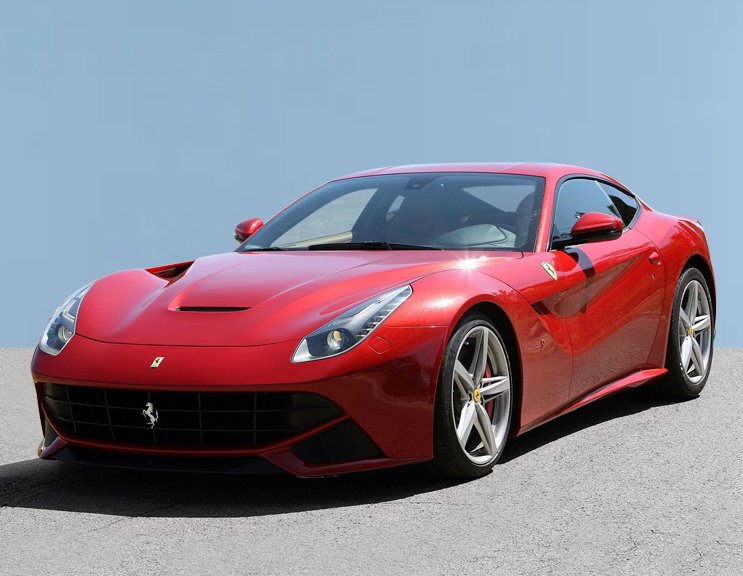
The car should fill most of the frame, shot from the front three-quarter angle at roughly bumper height, with the front wheels turned a few degrees to show the wheel design. The whole car must be inside the frame with a small, even margin; a cropped bumper or a mirror cut by the frame edge reads as sloppy on mobile.de, risky on AutoScout24, and amateur on AutoTrader. Light should be bright and even. Harsh midday sun blows out white and silver paint, and deep shadow hides dark cars, so overcast conditions or open shade produce the most usable hero shots. The background behind the hero matters more than behind any other photo, because the hero is the image buyers see at thumbnail size in a grid of competitors. A clean, consistent background makes the car legible at small size. A cluttered one makes the listing disappear into the grid.
One rule crosses all borders: never use a stock photo, a manufacturer press image, or a photo of a different car as the hero for a specific used vehicle. Apart from the platform risk, the buyer's first act on arrival is to compare the car against the photo, and a mismatch found in the first minute ends the conversation.
Full dealer edit: hover or drag to compare
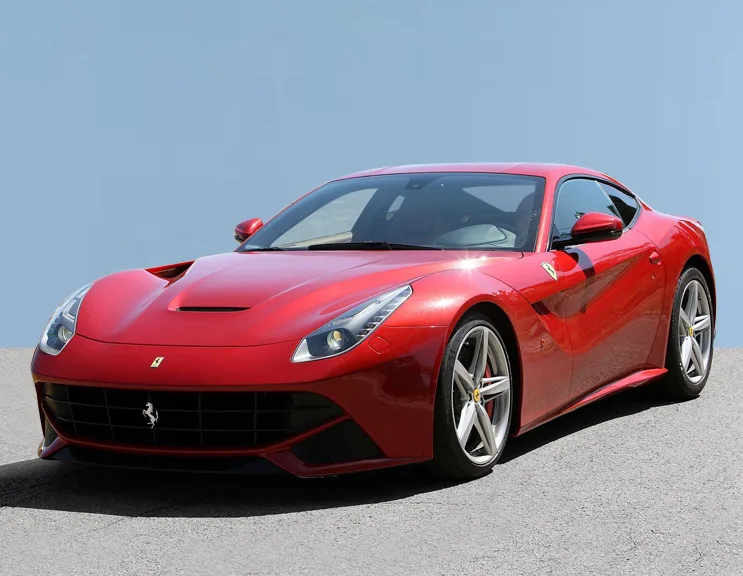
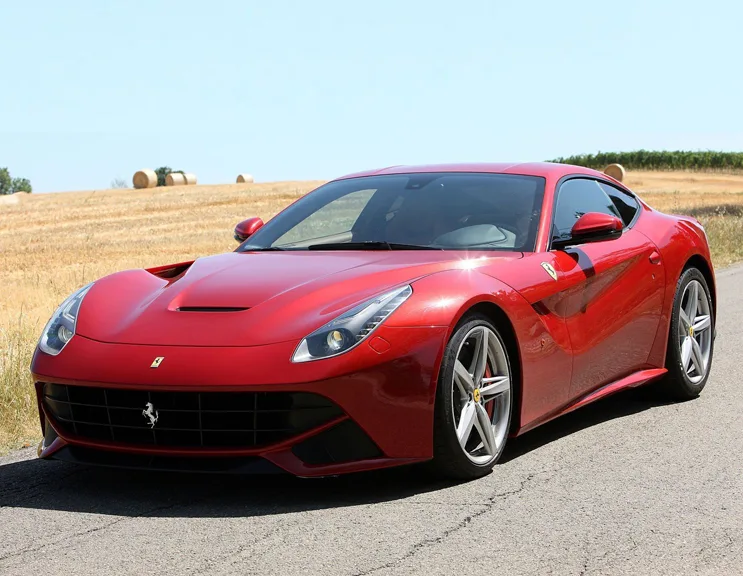 BEFORE
AFTER
Drag the slider or move your mouse over the image to compare.
mobile.de in depth: discipline is the house style
Search for mobile.de photo requirements and you will find that the formal rules are mostly about honesty and basic technical quality: photos must show the actual vehicle, be clear and well lit, and not mislead. The unwritten standard is stricter. German dealer groups standardised their photography earlier than most markets, and buyers have been trained by years of consistent, complete listings. A set that would pass comfortably in a less disciplined market looks unfinished on mobile.de.
Three habits matter most. First, completeness of angles: the full exterior circuit, both sides, is expected, because German buyers compare panel alignment and condition across the set. Second, documentation: service history, inspection reports and the like photographed or included where the listing format supports it carries unusual weight with this audience. Third, uniformity: one background treatment, one framing style, one order, across the whole inventory. A mobile.de buyer browsing a dealer's stock judges the dealer by the set, not the single car.
Pricing presentation also interacts with photos here. German buyers are sensitive to the difference between a car photographed carefully and the same car photographed carelessly at a price that suggests the opposite. The photo set is part of the price justification.
AutoScout24 in depth: photos as a substitute for inspection
AutoScout24's cross-border character produces the most demanding photo standard of the three in one specific area: condition evidence. A buyer in Lyon considering a car in Dortmund cannot walk around it this afternoon. Everything they need to commit must be in the gallery. That means the honesty shots are not optional extras on this platform. Clear photos of each wheel and tyre, the driver's seat bolster, the steering wheel, the load bay or boot floor, and any chip, scuff or mark, photographed plainly and included without drama, are what convert distant interest into a deposit.
Language also plays a part. Photos carry no language barrier, which is precisely why they do so much work in cross-border listings. A dealer exporting regularly should think of the gallery as the one part of the advert every buyer reads fluently. Where the platform allows descriptions in more than one language, the photos still lead, because they are seen first and believed most.
AutoScout24 buyers also compare the same car across countries, which makes consistency between your listings on different national sites worth checking. A car presented one way on the German site and another way on the French-facing listing invites suspicion it has done nothing to earn.
AutoTrader in depth: completeness and the mobile gallery
AutoTrader's environment rewards the fullest advert. The platform's own guidance to dealers has consistently favoured more photos, more specification and more transparency, and its search and ranking environment treats thin adverts accordingly. For a dealer used to listing the same stock in Britain and Germany, the AutoTrader set should be the most complete version of the gallery, not a shortened one.
Two UK specifics deserve attention. The first is mobile behaviour: a very large share of AutoTrader browsing happens on phones, often in short sessions. The gallery must work in the first three swipes. Front three-quarter, front, and a strong interior shot early in the order is a defensible pattern for UK stock, because British buyers move to the cabin quickly. The second is number plates. UK practice varies by dealer policy between showing plates and obscuring them, but whatever the policy, it must be applied identically across the set and across the inventory. A mixture looks like carelessness, and plate treatment done badly, with smeared or half-covered plates, undermines an otherwise professional set. Decide the policy once, document it, and hold it.
Backgrounds and consistency: the expectation nobody publishes and everybody applies
None of the three platforms requires a specific background, and all three audiences reward the same thing: a background that is clean, calm and the same across your inventory. On mobile.de it reads as German orderliness. On AutoScout24 it reads as a serious export business with a process. On AutoTrader it reads as a professional retailer rather than a casual seller. The background is the fastest visual signal of whether a listing set belongs to a business with standards.
There are three workable approaches. Photographing against a genuinely clean, consistent location on your own site is the cheapest where the site allows it, and the hardest to hold through winter, building work and a full forecourt. A turntable or studio room gives total control at real capital cost, sensible for large groups. Background replacement in editing takes the lot photo and places the car into one prepared scene for every listing, which is the route most mid-sized and cross-border dealers now use, because it survives weather, season and location changes and gives several rooftops one identity. The approaches differ in cost and effort. They do not differ in the requirement: whatever appears behind the car must be identical in character across the whole inventory, including across national listings of the same stock.
Background replacement for a consistent gallery: hover or drag to compare

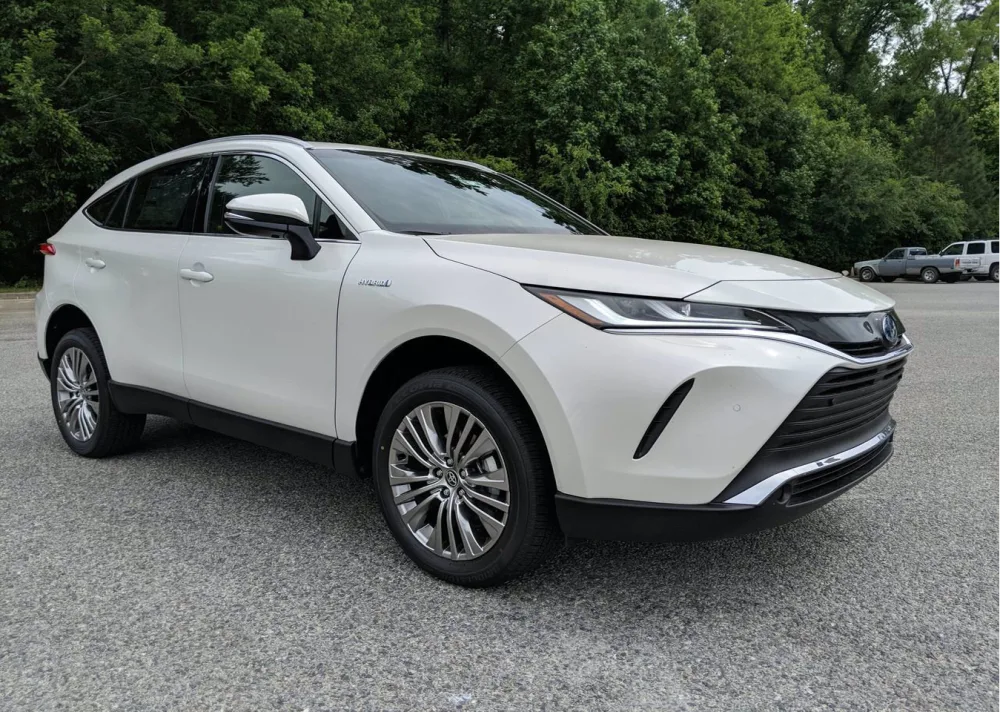 BEFORE
AFTER
Drag the slider or move your mouse over the image to compare.
Interior and detail shots: where listings are actually decided
Exterior photos win the click. Interior and detail photos win the enquiry, on all three platforms, because they answer the questions a serious buyer is really asking. The interior circuit that performs is stable across markets: dashboard and cockpit from the open driver's door, front seats, rear seats, the instrument cluster showing mileage, the infotainment screen switched on, and the boot or load space empty and lit. An odometer photo matters more than dealers expect, because it anchors the stated mileage in evidence, and cross-border buyers in particular treat its absence as a question.
Detail shots confirm specification and condition together: each wheel, close enough to read tyre condition, the headlights, the roof and rails where fitted, charging port and cables for an electric car, tow bar where fitted, and the paperwork. For premium stock, badging and trim details justify the specification claims in the text. The editing standard for interiors is restraint. Interiors must be brightened honestly, never altered. A worn bolster retouched away is not editing for presentation; it is a misdescription waiting for the buyer's arrival, and on AutoScout24's cross-border model that arrival may involve a flight.
What gets listings flagged, buried, or distrusted
The platforms differ in enforcement mechanics, but the triggers are the same list, and dealers should treat it as one list. Photos of a different vehicle, or stock images presented as the actual car, are the most serious breach everywhere and can put the whole dealer account at risk. Altering the car itself, removing damage, changing colour, deleting a dent, sits in the same category and, in the UK and EU, can create consumer law exposure on top of platform sanctions, because the buyer relied on the image. Watermarks and overlay text are restricted or discouraged in various forms across the platforms, and contact details embedded in images are a classic violation, since they attempt to move the transaction off-platform. Heavy promotional graphics, price banners burned into the hero photo, and collage images that combine several shots into one also breach guidance on some platforms and cheapen the listing on all of them.
Burial is quieter than flagging and more common. Thin galleries, a dark or cluttered hero, inconsistent sets and slow-loading heavy images do not usually trigger a notice. They simply lose the click war against better-presented competitors, which on a results page is the same outcome as not listing at all. Dealers diagnosing a weak listing should audit the photos before they touch the price. In our experience of preparing sets for these platforms, presentation is the variable most often at fault and the cheapest to fix.
Cross-border selling: the implications dealers underestimate
When the same car appears on mobile.de, AutoScout24 and AutoTrader, the photo set travels into legal and cultural territory the dealer may not know. UK and EU consumer rules both give buyers strong remedies when a vehicle is not as described, and the gallery is part of the description whether the dealer treats it that way or not. The defence is simple and absolute: keep the original, unedited photos of every car on file, and ensure no published edit changes anything about the vehicle itself. Edit the scene, the light balance and the crop. Never edit the car.
Cultural expectations travel too. The disciplined, complete German set reassures British and French buyers as well; the reverse is not always true. A casual set that performs acceptably in a relaxed local market can underperform badly when the same car is exposed to German comparison shoppers. The practical conclusion is to build the master set to the strictest of the three standards, which is the combined standard in this guide, and let the other platforms benefit from the surplus. No platform punishes a dealer for photos that are too complete or too honest.
Pricing and specification presentation also interact with photos across borders. A car photographed to export standard, with documentation and condition evidence in the gallery, supports firmer pricing in foreign markets, because the photos absorb the risk the distant buyer would otherwise price in. Export dealers understand this instinctively: the gallery is their showroom, their inspection ramp and their reputation, in a country they may never visit.
One workflow: shoot once, edit once, publish everywhere
Here is the single workflow our dealer clients use to satisfy all three platforms from one shoot. It assumes one photographer, one location, and an editing step, whether in-house or with a service like ours.
Step one, prepare the car and the set list. The car is cleaned, the interior is emptied, and the photographer works from a printed set list, not from memory, so every car gets the same circuit. Step two, shoot the master circuit in a fixed order: hero front three-quarter, front, side, rear three-quarter, rear, opposite side, wheels and details, the full interior circuit, boot and engine, documents and honesty shots. Forty frames is a good target, and shooting in the platform order means the exported gallery is ordered correctly with no sorting work later. Step three, shoot at a resolution comfortably above every platform's current display requirement, in the common landscape format all three platforms display natively, so no platform crop ever cuts the car. Verify the current upload specifications in each seller centre once, write them into the set list, and stop thinking about them. Step four, edit once, to one standard: exposure and colour corrected, background replaced or cleaned to the house scene, plates treated to the house policy, straightening and cropping applied, nothing about the vehicle altered. The edited master set is the only version that leaves the building. Step five, publish from the master set with three small platform adjustments: on mobile.de, confirm the full angle circuit and documentation shots are present and the order is exact; on AutoScout24, confirm the condition and honesty shots are included and the set matches any duplicate listing of the same car in another country; on AutoTrader, confirm the hero and the first three photos are the strongest of the set and the gallery leads with the interior early enough for mobile browsers. Step six, file the originals, the edited masters, and the publication date together per vehicle. That archive is your evidence, your re-use library if the car returns to stock, and your answer to any platform or buyer question.
The editing middle of that workflow is where consistency is won or lost, and it is why dealers standardise it. Whether the editor sits in your group or in a service, the standard must be written down: the scene, the colour targets, the plate policy, the crop margins, the order. A written standard survives staff changes. A standard that lives in one photographer's habits does not.
How Cars Photo Editor fits into a three-platform workflow
We are a hand-editing service. No AI tool edits your photos here, and we have worked this way since 2016 for dealers and automotive photographers across the USA, the UK and Europe. For cross-platform dealers, what we supply is the fixed editing standard: your cars shot on your lot, by your people, returned as one consistent master set, background, colour, plates and order all handled to your written specification, ready to publish to mobile.de, AutoScout24 and AutoTrader without further work. Services start from $0.19 per image, with volume discounts of 5 percent at 100 images and 10 percent at 500, and there is no subscription. The sensible way to judge it is the free trial: send 5 to 10 photos of one car, a full circuit if you can, and compare the returned master set against your current listings on all three platforms. If the set does not visibly lift every one of them, you have spent nothing and learned exactly what your photos need.
One photo standard for all three platforms, free to try
Send us 5 to 10 of your own listing photos (files or a Drive or Dropbox link) and we will edit them free, by hand, so you can judge the quality on your own inventory before you spend anything.
Start Your Free TrialMarketplace photo standards: common questions
How many photos should one car have on mobile.de, AutoScout24 and AutoTrader?
All three platforms allow several dozen images, and fuller galleries hold buyer attention better on each of them. Our working standard is a master set of thirty to forty photos in a fixed order, which satisfies all three platforms from a single shoot. Check the exact current image limits in your own seller account, as platforms adjust them from time to time.
Can I use the same photo set on all three platforms?
Yes, and that is the approach we recommend. Shoot and edit one master set to the strictest combined standard, then make three small checks before publishing: full angle circuit and documents for mobile.de, condition and honesty shots for AutoScout24, and the strongest first three photos for AutoTrader mobile buyers.
Are edited backgrounds acceptable on these platforms?
Yes. Cleaning or replacing the background is accepted practice on mobile.de, AutoScout24 and AutoTrader, provided the vehicle itself is not altered. Removing damage, changing colour or presenting a different car breaches policy on all three and can create consumer law problems in the UK and EU.
What does hand-edited preparation of a full car set cost?
Cars Photo Editor services start from $0.19 per image, with volume discounts of 5 percent at 100 images and 10 percent at 500 images. A full circuit for one car can be tried free: the trial covers 5 to 10 images, edited by hand and returned for approval before any payment.