AI Search Is Recommending Dealers Now: Photos That Get You Cited
October 27, 2026 · Dealer Guides
Buyers now ask AI tools which dealer to trust before they ever visit a website. This guide explains how AI search chooses what to cite, why consistent and honestly edited photos matter, and the 30-day playbook that puts your dealership in the answer.
Key takeaways
- AI search tools recommend dealers by name now, and they cite sources they can verify across several places at once.
- Consistent, honestly edited photos support citation: they make your inventory, profiles and reviews agree with each other.
- File names and alt text are the labels AI actually reads, so every image should say what it shows and where.
- Fake content and misleading images are the fastest way to be dropped: accuracy is the whole strategy.
A buyer who would once have typed "used SUV dealer near me" into Google and clicked through ten blue links now often does something different. They open ChatGPT, or the AI Overview at the top of Google, or Perplexity, and they ask a question in plain language: which dealer in this area is good for a used family SUV, who has fair prices, what should I check before I buy. The tool answers in a paragraph, names a small number of businesses, and cites a handful of sources. If your dealership is one of the names in that paragraph, you have won the modern version of the first click. If you are not named, you may never know the conversation happened.
This guide is written for dealer principals, marketing managers, inventory staff, and the photographers who supply them. It explains how AI search appears to choose what to cite, why your photos and listing media play a larger role in that choice than most dealers expect, and what to do, step by step, to become the dealership these systems describe and recommend. It also covers what not to do, because the shortcuts in this area are exactly the things that get a business quietly dropped.
The first showroom visit now happens inside an answer
The change is one of behavior, not just technology. A growing share of car buyers start their research by asking an AI assistant a question rather than opening a search results page. They ask which dealers are reputable, which models suit their budget, what a fair price looks like, and what to inspect on a test drive. The assistant gathers information from across the web, weighs which sources agree with each other, and produces one synthesized answer with a short list of recommendations and citations.
Two consequences follow for dealers. First, the contest is no longer only about ranking a page. It is about being understood correctly by systems that read your website, your marketplace listings, your profiles, and your reviews, and then decide whether you are a safe business to name. Second, the answer usually names very few businesses. In a traditional results page, position eight still gets some traffic. In an AI answer that names three dealers, position four gets nothing. The gap between being cited and being invisible is wider than the gap between ranking fifth and ranking first used to be.
None of this replaces the vehicle detail page or the marketplace listing. Buyers still end up looking at your actual cars and your actual photos before they enquire. It changes what happens before that: which dealers the buyer has already decided are credible by the time they see a listing at all.
What "being cited" actually means
When an AI assistant answers a question about dealers, it typically does three things. It states conclusions, such as which businesses are well regarded for a certain kind of stock. It attaches citations, links to the pages it drew those conclusions from. And it often shows media, pulling listing photos and images from dealer websites, marketplace pages, and business profiles into the answer or into the image results beside it.
Being cited therefore has layers. Your name appears in the answer. Your pages are linked as the evidence. And your photos are shown as the visual proof. A dealership that achieves only the first layer, mentioned but with weak evidence behind the mention, is fragile: the next answer may drop it. A dealership whose website, listings, profiles, and images all tell the same accurate story is far more likely to be named repeatedly, because every source the system checks confirms the others.
That word, confirms, is the key to this entire guide. AI search systems are built to reduce the risk of giving a wrong answer. They lean toward businesses whose information is consistent, specific, current, and corroborated in several independent places. Almost every practical recommendation in this article is a way of making your dealership easier to confirm.
How AI search decides what to trust
These systems do not publish a rulebook, and anyone who claims to know the exact formula is selling something. But their observable behavior is consistent enough to act on, and it follows the same logic a careful human researcher would use.
They read widely. Your own website matters, but so do your marketplace listings, your Google Business Profile, directory entries, review platforms, social profiles, and any articles that mention you. Information that appears in only one place carries less weight than information repeated accurately in many places.
They reward specificity. A page that says "we sell quality used cars at great prices" gives an AI system nothing it can use. A page that says which brands you stock, which price bands you serve, what your preparation process includes, and how long you have traded gives it statements it can repeat and cite. Vague marketing language is largely invisible to these systems, because there is nothing in it to quote.
They check agreement. If your website says you open on Sundays, your profile says you do not, and a directory still shows your old address from two moves ago, the system has a problem: it cannot tell which claim is true, so it trusts you less overall. Inconsistency is not a small blemish in this environment. It is the main reason otherwise good businesses get passed over.
They prefer sources that answer questions directly. Pages structured around real buyer questions, with clear headings and plain answers, are easier for a system to extract and cite than pages of flowing promotional copy. This is one reason well-built FAQ sections and properly structured vehicle detail pages perform so well in AI answers.
And they lean on reputation signals. Reviews, ratings, review volume, and how recently reviews were written all feed the picture of whether a business is active and trusted. Photos attached to reviews, and photos on your profiles that match the business described in the text, reinforce that picture in ways we will come to shortly.
Why photos carry weight in an AI answer
Dealers are used to thinking of photos as a conversion tool: they earn the click and sell the car. In AI search they do a second job, and it is worth understanding, because it changes how you should produce them.
Modern AI systems are multimodal. They do not only read text; they process images, match images to the pages and businesses they belong to, and surface them in answers and image results. When a buyer asks an assistant about a dealer or a model, the photos attached to that dealer's listings and profiles are part of the evidence the system can present. A complete, clean set of listing photos says, visually, the same thing a good review says in words: this business is real, active, and careful.
Consistency matters for a subtler reason. When every listing from your dealership shares one recognizable photographic standard, same backdrop treatment, same framing, same honest color, the images themselves corroborate your brand. They look like one business with one standard, which is exactly the impression your text claims. When your listings look like forty unrelated snapshots taken in different places by different people with different phones, the visual evidence undercuts the written evidence. Humans feel that mismatch as unease. AI systems register it as weak, fragmented sourcing.
Completeness matters too. A listing with a full set of exterior, interior, dashboard, seat, wheel, boot, and detail photos gives systems far more to work with than a listing with four rushed shots. Image search, which AI assistants draw on, favors complete and well-described media. And when the assistant cannot find good photos of your stock, it will happily show a competitor's instead, attached to a paragraph about them.
Finally, honesty matters in a way it did not before. These systems compare images against claims. A photo set that flatters a car beyond its real condition, hides damage, or dresses one trim level as another creates a conflict between your media and the buyer's eventual report, the review they leave, and the platform's own checks. Edited photos should make a car clear, not different. That principle runs through every recommendation below.
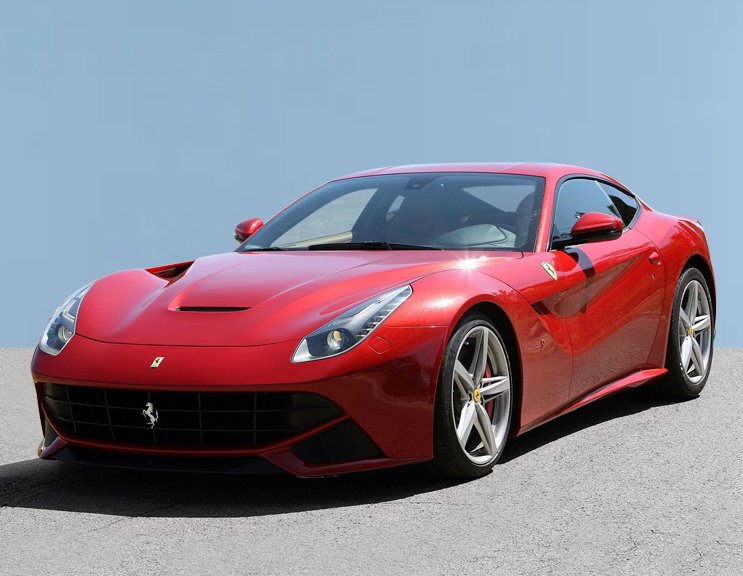
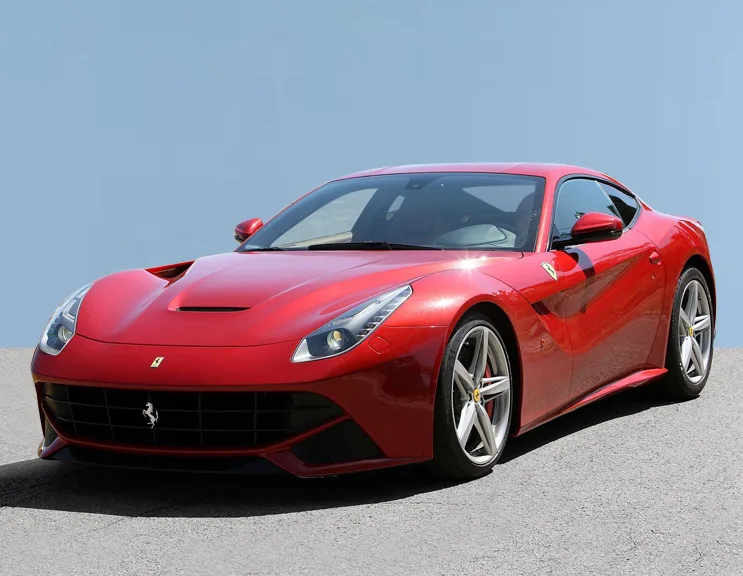
Full dealer edit: hover or drag to compare
 BEFORE
AFTER
Drag the slider or move your mouse over the image to compare.
The photo standard that supports citation
Before any optimization, the foundation is a listing photo standard that is consistent enough to function as evidence. Dealers who do this well treat it as a written specification, not a preference.
The set itself should be complete and predictable: front three-quarter, rear three-quarter, both sides, front and rear straight on, then interior front and rear, dashboard and infotainment, seats and trim details, wheels and tires, engine bay where your market expects it, and any feature or flaw a buyer would want to see. The exact count matters less than the discipline that every car gets every shot, so no listing looks half-finished next to a complete one.
The look should be one look. One background treatment across the inventory, whether that is your cleaned forecourt, a neutral studio treatment, or a custom scene built for your brand. One approach to light and color, so a white car is white and a red car is the red it actually is. One framing habit, car filling the frame the same way, at the same height, in the same order. Buyers learn your look within a few listings, and AI systems grouping images by source see the same coherence.
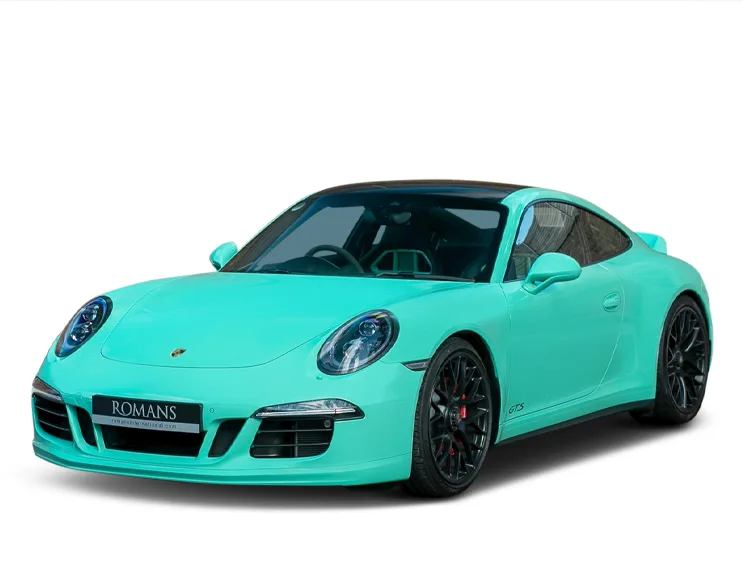
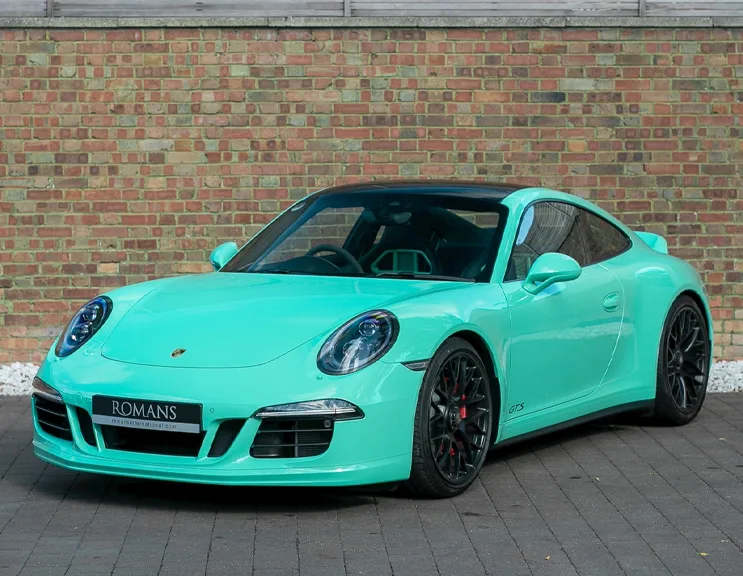
The editing should be honest editing. Backgrounds cleaned or replaced, exposure and color corrected, number plates treated the way your market requires, distractions removed. The car itself untouched: no smoothed dents, no hidden scratches, no borrowed wheels. This is not only ethics. It is strategy. The businesses AI systems cite for years are the ones whose evidence never contradicts itself, and nothing contradicts a listing like a buyer arriving to find a different car than the photos promised.
Turnaround discipline is part of the standard as well. Listings that go live with complete media on day one accumulate views, saves, reviews, and citations. Listings that sit for a week with a few phone photos while the proper set is prepared start behind and often never catch up. Whatever pipeline you choose, in-house or outsourced, judge it on whether the full set is live when the car is.
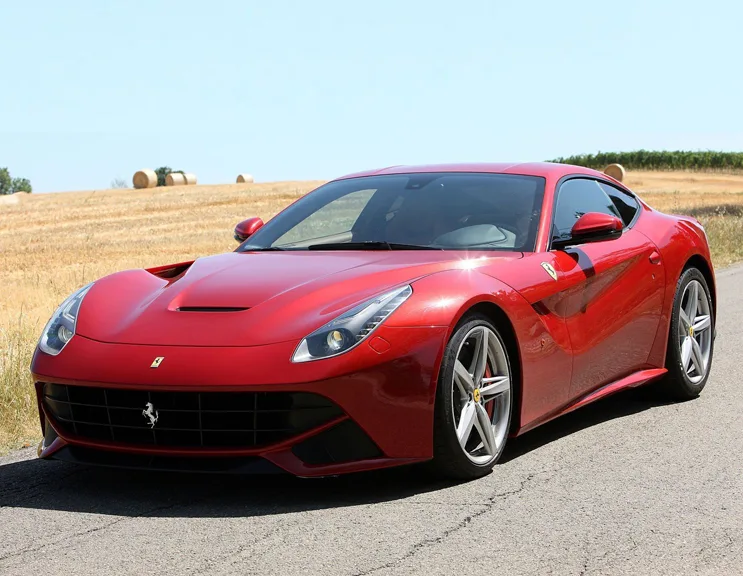
Retouching to a consistent standard: hover or drag to compare
 BEFORE
AFTER
Drag the slider or move your mouse over the image to compare.
File names and alt text: the labels AI actually reads
Here is the least glamorous and most neglected part of dealership ai search optimization. An AI system cannot cite what it cannot understand, and for images, understanding comes largely from text you control: the file name, the alt text, the caption, and the page around the image. Most dealer websites and inventory feeds get all four wrong by default, naming files with camera codes and stock numbers alone, and leaving alt text empty or stuffed with a repeated phrase.
File names should describe the image in plain words before upload. A name built from the year, make, model, trim, and the view, such as 2022-volkswagen-golf-gti-front-three-quarter.jpg, tells every system that touches the file exactly what it shows. A name like IMG_4831.jpg tells them nothing. This applies to the photos on your own website, your blog, and your profiles, anywhere you upload directly. Marketplace feeds limit what you control, which is one more reason your own site should be exemplary.
Alt text should be written for its original purpose: describing the image to someone who cannot see it. Done properly, it doubles as the clearest description an AI system will ever read of that photo. One or two plain sentences per image: the vehicle, the view, the setting. Write it like you are describing the photo over the phone to a buyer, because in effect you are. Rotate descriptions naturally across a set instead of pasting one sentence everywhere; duplicate alt text across forty images reads as carelessness, and carelessness is the opposite of the signal this whole exercise is trying to send.
Captions and surrounding text matter because systems read context. A photo of a serviced engine bay placed inside a section about your preparation process becomes evidence about your preparation process. The same photo dropped into a page with no related text is just a picture. When you publish articles, guides, and preparation pages, place your real listing and workshop photos inside them with descriptive captions. You are, quite literally, teaching the systems what your images prove.
A word of restraint: do not stuff file names or alt text with keywords, locations, and superlatives. A file name is a label, not an advert. Systems are trained to discount text that reads as manipulation, and a dealer caught stuffing looks worse than a dealer who wrote nothing at all.
Your vehicle detail pages: where citations are earned
If AI systems cite evidence, your vehicle detail pages and the standing pages behind them are where most of your evidence lives. The goal is to make each page answer, completely and specifically, the questions a buyer would ask an assistant about that car and about you.
Completeness first. A strong VDP carries the full photo set described above, the full specification, the service history position, the preparation and warranty terms that apply, and clear pricing. Pages that hide the basics force buyers, and systems, to look elsewhere, and elsewhere is usually a competitor or an aggregator whose version of your car may be wrong.
Then add the layer most dealers skip: question-and-answer content on the page itself. Not a generic FAQ copied onto every listing, but short, honest answers to the questions that specific car raises. What does this trim include over the one below it. What should a buyer check on a five-year-old example of this model. What does your warranty cover on this car, and what is excluded. Is the background in these photos your showroom. Systems extract this kind of content readily because it is already shaped like an answer, and buyers trust pages that volunteer the awkward details instead of hiding them.
Your standing pages deserve the same treatment. An About page that says who you are, where you are, what you stock, and since when. A preparation page describing exactly what happens to a car between arrival and listing, illustrated with your real photos. A reviews page. A contact page whose details match every other version of them on the internet, which brings us to the next section.
Profiles and the consistency web: NAP and beyond
Ask an AI assistant about your dealership and it will assemble its answer from more places than your website. Your Google Business Profile, your marketplace dealer pages, the big directories, your social profiles, and review platforms all feed the same picture. The work here is unglamorous and decisive: make them all agree.
The basics are name, address, and phone number, identical everywhere, character for character. The name you trade under, the address in one standard format, one phone number, your current opening hours, your current website address. Then the layer beyond the basics, which dealers neglect: the same business description, the same categories, the same founding year, the same stock profile, and the same logo and cover photos, on every profile that allows them.
Photos are part of this consistency web, not separate from it. Your profile photos should show the real business and real stock in the same photographic standard as your listings. An AI system, or a buyer, comparing your profile images with your listings should conclude instantly that they belong to the same operation. Old photos of a previous site, a previous logo, or a previous owner's stock actively contradict your current claims, and removing them is optimization too.
Set a rhythm for checking this. Businesses drift: hours change, a member of staff updates one profile and not the others, a directory keeps an entry you forgot existed. A quarterly audit of your top profiles and listings, comparing the facts side by side, will catch nearly all of it. When sources disagree about you, the systems that read them do the safest thing available: they recommend the dealer whose story adds up.
Reviews and the photos inside them
Reviews are among the strongest evidence AI systems use when deciding which dealer to recommend, because they are the closest thing to independent testimony the web offers. Volume matters, recency matters, and the content matters more than the stars alone: reviews that mention specifics, the car bought, the preparation quality, the handover, the photos matching the real car, give systems concrete claims to repeat.
Encourage reviews honestly and consistently, from every happy buyer, at the natural moment after handover, and respond to them like a business that reads them. What dealers often miss is the visual side. Buyers can attach photos to reviews on major platforms, and those customer photos carry unusual weight: they are independent evidence of what your cars actually look like on delivery day. When your listings are honestly edited and your preparation is genuinely good, customer photos confirm your listing photos instead of exposing them. When listings have been flattered beyond reality, the same customer photos become the contradiction. This is one more reason the honest editing standard matters: it aligns every source of evidence about you, including the sources you do not control.
Profile and listing photos also appear in review contexts and local results, where a complete, current gallery quietly supports the rating beside it. Keep those galleries fresh with real stock, prepared the same way as your listings. A profile whose newest photo is three years old tells every reader, human or machine, that the business may not be active.
Technical basics that quietly decide eligibility
None of the following is difficult, and all of it decides whether your content can be cited at all.
Your pages must be crawlable: not blocked by your robots settings, not hidden behind scripts that render nothing readable, and not trapped in image-only formats where the information a system needs exists only inside a picture. Publish an image sitemap or make sure your images are included in your standard sitemap, so your photo sets are discovered as part of your pages, not as an afterthought.
Use structured data where it genuinely applies: vehicle and offer markup on listings, local business markup on your main pages, FAQ markup on pages that truly contain questions and answers. Structured data does not persuade a system that you are good. It removes ambiguity about what things are: which number is the price, which photo belongs to which car, which address is the dealership. Ambiguity is the enemy of citation, and this is how you remove it mechanically.
Keep your media fast and intact. Pages whose photos load slowly or break on mobile lose human visitors and machine attention alike. And when you change website platforms or inventory systems, redirect old listing and image URLs properly. Dealers regularly lose years of accumulated citations in a platform migration because nobody owned the redirects. Treat your URLs and image paths as assets, because to these systems, they are.
What not to do
The fastest way to lose this game is to try to cheat it, and the tempting cheats are predictable.
Do not publish fake content. Invented testimonials, reviews you wrote yourself, awards you did not win, and articles generated to say your name in fifty places all share a property: they conflict, eventually, with the independent evidence. Systems built to cross-check sources are unusually good at noticing that one voice keeps praising a business in identical language while no one else mentions it.
Do not stuff keywords. Pages, file names, and alt text written for machines instead of people read as manipulation, get discounted, and corrode the specific, quotable quality that gets real pages cited. Write the clearest true sentence, not the densest one.
Do not use misleading images. Stock photos presented as your actual inventory, photos of a higher trim sold as the car on offer, and editing that removes damage are the photo equivalents of a fake review, with legal exposure added. The short-term click is not worth the contradiction that follows you.
Do not generate a synthetic dealership. AI-written location pages for towns you do not serve, fake staff profiles, and generated imagery of a showroom you do not have all create a business that exists only in text. The first buyer, reviewer, or system that compares it with reality starts the collapse. Build the record of the business you actually run, and build it densely.
And do not chase every new tactic. The dealers being cited consistently are doing boring things completely: accurate profiles, complete listings, honest photos, real answers, fresh reviews. The fundamentals compound. The tricks expire.
The 30-day checklist
For dealers who want a starting order, this sequence covers the ground in a month without new software or a new website.
Week one, fix the record. Audit your name, address, phone, hours, website, description, and categories across your Google profile, marketplaces, directories, and social profiles. Correct every disagreement. Remove outdated photos everywhere. Confirm your website contact page matches.
Week two, fix the media. Write down your photo standard: the shot list, the background treatment, the order, the honest editing rules. Bring your current front-line listings up to it, starting with the cars that have been in stock longest. Rename image files descriptively on your own website and write real alt text for the sets you publish there.
Week three, fix the pages. Add genuine question-and-answer content to your listing template and your main standing pages. Write or rewrite your About and preparation pages with specifics and your own photos. Add the structured data your platform supports, and check your sitemaps include your images.
Week four, fix the flow. Put review requests into your handover process. Set your quarterly profile audit in the calendar. And make sure every new car from now on goes live on day one with the full photo set, so the standard never slips back.
Where hand-edited photography fits
Everything in this guide rests on evidence that agrees with itself, and photography is the evidence buyers and systems can check fastest. That is the work we do. Cars Photo Editor is a hand-editing service for dealers and automotive photographers across the USA, the UK, and Europe. No AI tool edits your photos here. Editors cut, clean, and correct each image by hand: backgrounds replaced or tidied, color and lighting balanced to stay true, shadows built properly, plates handled to your market's rules, and the car itself never altered. We have worked this way since 2016, and the point of the method is exactly what this article has argued: a consistent, honest, recognizable photo standard across every listing, the kind of standard that holds up when a buyer, a reviewer, or an AI system compares your photos against your cars and your claims.
The economics are straightforward. Services start from $0.19 per image, background replacement is $0.69 per image, volume discounts of 5 percent apply at 100 images and 10 percent at 500, and there is no subscription. The free trial covers 5 to 10 of your own photos, edited and returned for approval before you pay anything. Send the listings that have sat longest, or the colors your phone camera gets wrong. Judge whether the finished set looks like one business, and whether every photo still tells the truth about the car. In the AI search era, that combination, consistent and true, is what gets a dealership cited.
Get the photo standard AI search can trust, free
Send us 5 to 10 of your own listing photos (files or a Drive or Dropbox link) and we will edit them free, by hand, so you can judge the quality on your own inventory before you spend anything.
Start Your Free TrialAI search and dealer photos: common questions
How do AI assistants like ChatGPT and Google AI Overviews choose which dealers to recommend?
They draw on many sources at once: your website, marketplace listings, business profiles, directories, and reviews. Businesses whose information is specific, current, and consistent across all of those sources are easier to verify, and systems lean toward recommending dealers they can verify.
Do listing photos really influence AI search, or is it all text?
Photos matter. Modern AI systems process images, surface them in answers and image results, and treat a complete, consistent photo set as evidence that a business is real and careful. File names, alt text, and captions are the text layer that tells those systems what each photo shows.
What is the single most common mistake dealers make?
Inconsistency. Different addresses, hours, descriptions, and photo standards across their website, profiles, and listings. When sources disagree about a business, AI systems play safe and recommend a competitor whose story adds up.
Can Cars Photo Editor help with the photo side of this?
Yes. We hand-edit dealer photos to one consistent standard, backgrounds, color, lighting, shadows, and plates, with the car itself never altered. The free trial covers 5 to 10 images, with services from $0.19 per image and background replacement at $0.69 per image.