Local SEO for Car Dealers: How Your Photos Help You Own "Used Cars Near Me"
November 15, 2026 · Dealer Marketing
When a buyer searches "used cars near me", Google shows a map, three dealerships and a wall of photos. This guide covers the photo side of local SEO: what to publish on your Google Business Profile, how consistent listing photos build local trust, and the weekly routine that keeps your dealership visible — without a single trick.
Key takeaways
- "Near me" searches are decided twice: once by Google's local ranking, and again by the buyer comparing photos. Dealers control the second decision completely — and influence the first more than they think.
- A Google Business Profile with fresh, consistent, recognisably-yours photos earns more calls, direction requests and listing clicks than one left with a handful of old snapshots.
- Consistency is the local trust signal: the same background, light and framing on your profile, your website and your marketplace listings makes one dealership easy to recognise everywhere a buyer meets it.
- All editing at Cars Photo Editor is done by hand, with no AI tools — and honest photos matter doubly in local search, where the buyer will stand in front of the real car within the hour.
The search is local, and the decision is visual
Local SEO for car dealers usually gets explained as a technical subject: profiles, citations, categories, reviews. All of that matters. But stand in the buyer's shoes for one search. They type "used cars near me" and Google answers with a map pack — three dealerships, star ratings, and photos. Before a single word of anyone's website is read, the buyer is comparing pictures: which lot looks cared for, which cars look honestly presented, which dealership looks like a real place they would drive to.
That is why photos belong in a local SEO guide. Your Google Business Profile photos, your website's vehicle pages and your marketplace listings are the visual half of your local presence, and they are the half most dealerships leave to chance — a few phone snapshots on the profile, a different look on every marketplace, and stock that changes appearance from one listing to the next. This guide sets out the photo routine that fixes it: what to publish, how to keep it consistent, and how little time it needs to take each week.
This article is the photo half of local SEO for car dealers, written for the people who actually run the lot: what to publish on your Google Business Profile, how your listing photos build (or spend) local trust, the mistakes that quietly cost clicks, and the short weekly routine that keeps a dealership visible in "used cars near me" searches all year.
Your Google Business Profile is a photo gallery first
For a "near me" search, the Business Profile is often the only page a buyer studies before calling or asking for directions. Google lets a dealership publish photos by category — exterior, interior, the team, cars on the lot — and profiles with a healthy, current set of photos consistently earn more engagement: more calls, more direction requests, more clicks through to inventory. A profile carrying eight photos from two years ago quietly tells the buyer the business may not be active at all.
Treat the profile like a gallery you curate, not a folder you filled once. Publish the dealership itself first: the forecourt in daylight, the signage, the showroom, the service reception — the pictures that let a buyer recognise the building when they arrive. Then keep a steady flow of stock photos going up: the same edited standard as your listings, so the car a buyer saw on your profile is visibly the same car on your website and on the marketplace.
Use the categories Google gives you. Exterior shots establish the place; interior shots — the showroom, the handover bay, a car's cabin prepared properly — establish the standard; team photos put faces to the name a buyer will ask for. Customer photos and reviews will add their own layer over time, but the dealer's own set is the foundation: it is the only part of the gallery entirely within your control, and it sets the expectation every customer photo is judged against.
Freshness is the habit that compounds. A small batch every week beats a large batch once a year, because the profile always looks current — which it is. When a profile's newest photo is this month's stock shot in this month's weather, the listing reads as a living business, and that is exactly what a local buyer is deciding.
Local SEO for car dealers starts with the map pack
When a buyer searches "used cars near me" — or "car dealers near me", or a model name plus a town — Google builds the answer around location. At the top sits the map pack: a map and three business listings, each with a name, a star rating, a review count, a category, opening hours and photos. Below it come the ordinary website results. For a dealership, the map pack is the front door: it is what a local buyer sees first, and it is where the call or the direction request usually happens.
Three things decide which dealerships appear there: how relevant the business is to the search, how close it is to the buyer, and how prominent and well-kept its presence looks. A dealer cannot move the lot closer to the buyer, and relevance is mostly a matter of honest categories and complete information. Prominence and presentation are where the daily work lives — reviews answered, information current, and photos that make the business look active and worth the drive.
Notice what the map pack does not show: paragraphs. It shows pictures. The three chosen dealerships are compared visually before any of their websites are opened, which is why this guide treats photos as a ranking asset in their own right. Your Business Profile photos are not decoration on your local SEO — for the buyer, they are most of it.
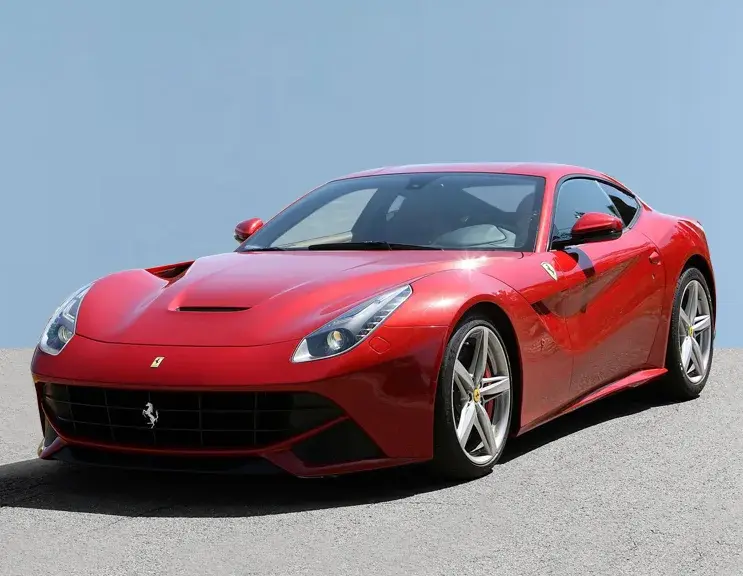
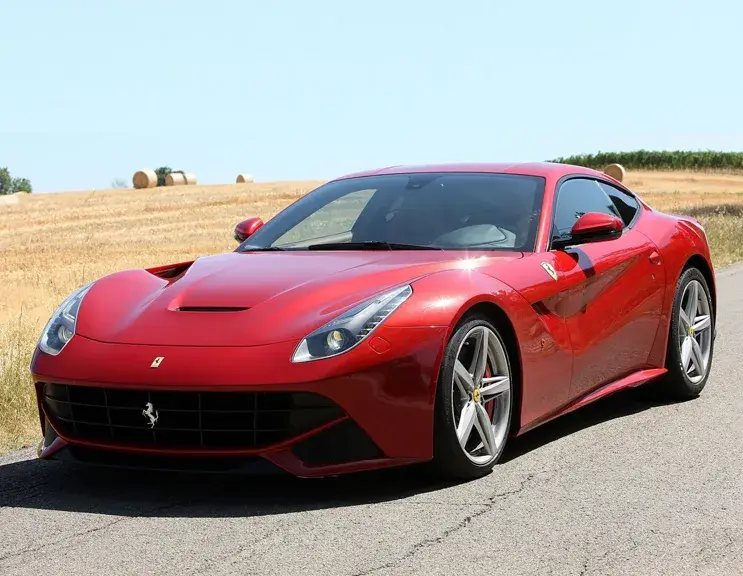
The same car, finished to one standard — on every platform
 BEFOREAFTER
Drag the slider or move your mouse over the image to compare.
Consistency is the trust signal buyers can see
A local buyer usually meets your dealership three or four times before visiting: the map pack, a marketplace listing, your website, perhaps a social post. If the cars look different every time — one background here, harsh shadows there, a different colour balance somewhere else — the meetings do not add up to an impression. If every photo shares the same clean background, the same light and the same framing, they do: one dealership, one standard, recognised at a glance.
That recognition is worth real money in local search, because the click and the call are where ranking turns into revenue. Consistent photos also protect you at the kerb. Local buyers are the ones who will stand in front of the actual car, often the same day. Editing that flatters honestly — clean background, true colour, real condition visible — builds the trust that brings them in; editing that hides wear spends it, in reviews that sit on the same profile you are trying to rank.
Two practical disciplines hold the standard together. First, one master photo set per car: shoot to a fixed shot list, edit the set once to your standard, and publish that same set to your profile, your website and every marketplace, rather than re-processing per platform. Second, honest file hygiene: name photos plainly for the car they show and write alt text that describes the vehicle for a screen reader — "2022 Ford Focus, front three-quarter, silver" — because descriptive text helps search engines understand the image, and keyword-stuffed text helps no one.
Local SEO for car dealers: the photo mistakes that cost clicks
Most dealership profiles do not fail through one big error. They fade through small ones, repeated across every platform.
The empty gallery. A profile with a logo, one forecourt shot and nothing else tells Google and the buyer the same story: this business is not really trading online. Stock photos fill the gallery with the business's real, current offer — that is the whole point of the profile.
The two-year-old batch. A single upload from the day the profile was claimed, then silence. Seasonal light gives it away — summer photos in December — and buyers read stale photos as a stale business. Freshness is a signal precisely because it cannot be faked for long.
A different look on every platform. One background on the website, another on the marketplace, raw phone shots on the profile. Each version alone is acceptable; together they never add up to one recognisable dealership, and recognition is what turns a searcher into a visitor.
Over-editing that hides the car. Darkened interiors, smoothed-over kerb damage, colours pushed warmer than the real paint. Local buyers see the car in person, often within hours, and the gap between photo and reality is paid for in trust, in reviews, and in the next buyer's decision.
No system at all. Whoever is free photographs the car wherever it sits, and the set goes up as it comes. The fix is not talent; it is a shot list, one editing standard, and a weekly rhythm — the routine this article ends with.
Reviews, questions and the photo habit
Reviews are the other half of the map pack, and photos feed them too. Buyers deciding between two four-star dealerships look at what the businesses themselves publish; a dealer who answers reviews and keeps posting fresh, well-presented stock looks attended-to, because they are. When a happy buyer mentions a car by name, that is a natural moment to have the car's edited set already live everywhere — the next reader of that review will go and look at it.
The same habit covers the questions local buyers ask out loud to search engines and AI assistants: "which dealer near me has this model in stock, and what does it actually look like?" Pages and profiles whose photos are current, consistent and clearly tied to real stock are simply easier for any search system — traditional or AI — to present with confidence. There is no trick in that, and no shortcut worth taking: no fake locations, no stock photos of cars you do not have, no burying a car's real condition. Local visibility built on honest presentation survives every algorithm update, because it was never gaming one.
Local SEO for car dealers: one photo set for every platform
The same buyer who found you in the map pack will check the car on a marketplace and on your website before visiting. Each platform displays photos its own way — its own sizes, crops and rules — and a set prepared carelessly for one can look cropped, soft or inconsistent on another. The answer is not three photo shoots or three edits. It is one master set, edited once to your standard, then prepared to each platform's dimensions when it is published.
That preparation is part of the editing job: correct sizes for the marketplace feed, a main image that survives a tight crop, and the same order of shots — front three-quarter first, then the angles buyers look for — everywhere the car appears. When the profile photo, the marketplace photo and the website photo are visibly the same photograph of the same car, every meeting reinforces the last. That is how a single rooftop starts to look like the obvious local choice: not louder than the competition, just unmistakably itself, everywhere.
The weekly routine, and what it costs
None of this needs a marketing department. The routine that works for a single rooftop, and scales to a group, is short:
Shoot each new car to your fixed shot list as it arrives, and send the originals for editing the same day — upload the files or share a Drive or Dropbox link. Add the finished set to the listing, the website and the marketplace feeds together, so every platform shows the same car the same way. Post a small batch of the week's best finished photos to your Google Business Profile. Reply to new reviews, and check the profile still shows your current hours, signage and forecourt.
One hour a week is a fair budget for the whole habit once the shot list and the editing standard exist. The shooting happens as cars arrive, not in a separate session; the publishing takes minutes when the sets come back finished; and the profile batch is five or six photos chosen from work already done. What dealers are really buying with that hour is a profile and a set of listings that always look like this week's business — because they are.
The editing step is the part most lots cannot staff, and it is the inexpensive part to hand over. At Cars Photo Editor every image is edited by hand — no AI tools — to one consistent standard: background removal or replacement, colour and lighting correction, natural shadows and retouching, delivered within 24 hours. Dealer photo editing is $0.59 an image, with 10% off orders of 100+ images and 15% off 500+. A free trial of 5–10 images, with no card needed, shows the standard on your own stock before you spend anything.
The dealership buyers recognise wins the visit
Pull the threads together and the picture is simple. Local search decides which three dealerships a buyer sees; photos decide which of the three the buyer believes. A dealership that publishes fresh, consistent, honest photos — on its profile, its website and every marketplace — is doing the visible half of local SEO every single week, with assets it already owns: its own cars.
None of it depends on an algorithm's mood. Rankings move, features change, and new surfaces keep appearing — AI-generated answers are only the latest. Through all of it, a buyer comparing three lots keeps choosing the one that looks cared for, current and real. Make sure that is yours: one standard, every photo, every platform, refreshed weekly. And if the editing workload is the obstacle, that is the one part you can hand over today — and judge the result on your own stock, free, before you commit to anything.